Dangiwa Harps On Capacity Building, Institutional Collaboration To Strengthening Surveying Practice.
* says strengthening synergy with the Nigerian Institution of Surveyors is strategic, necessary.
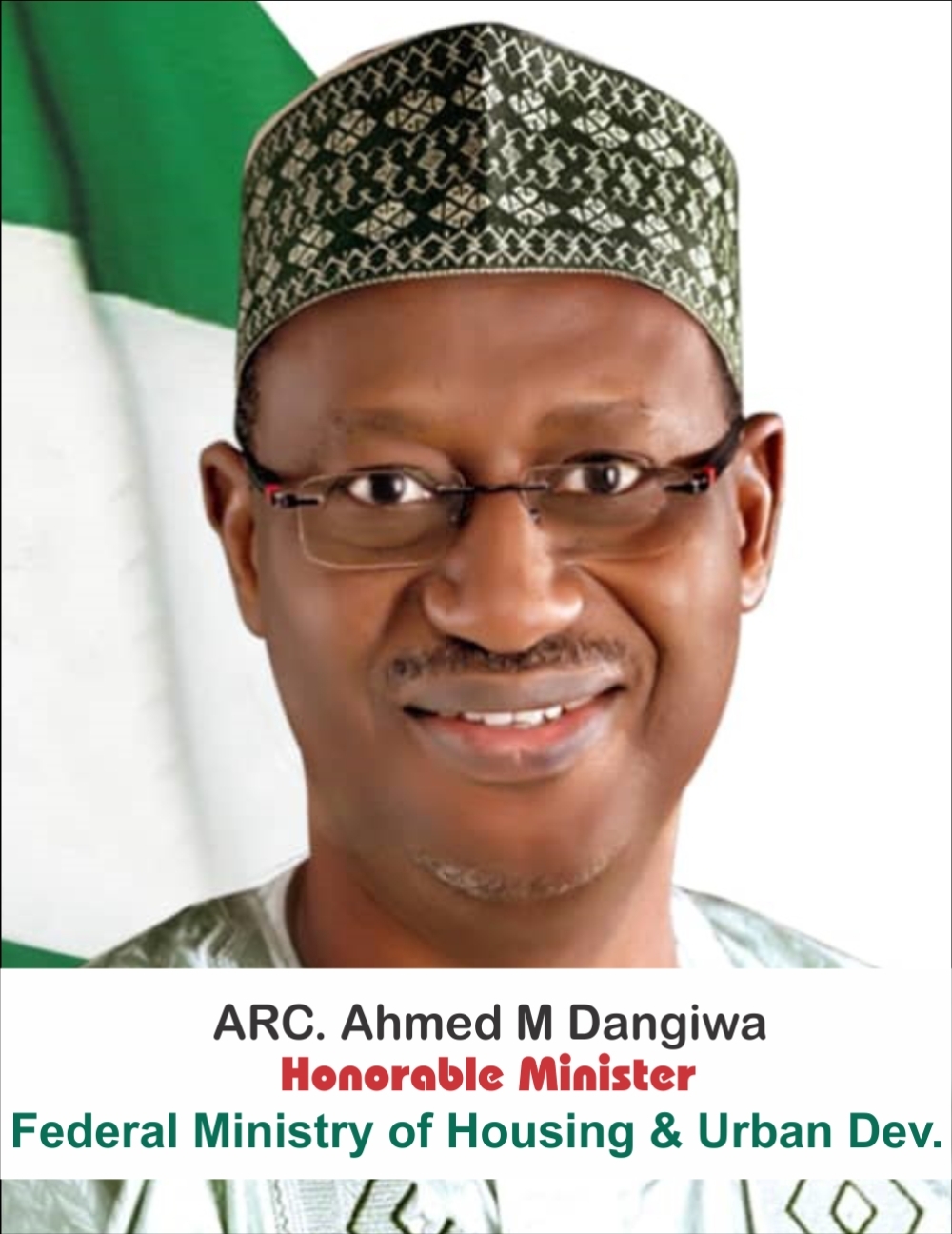
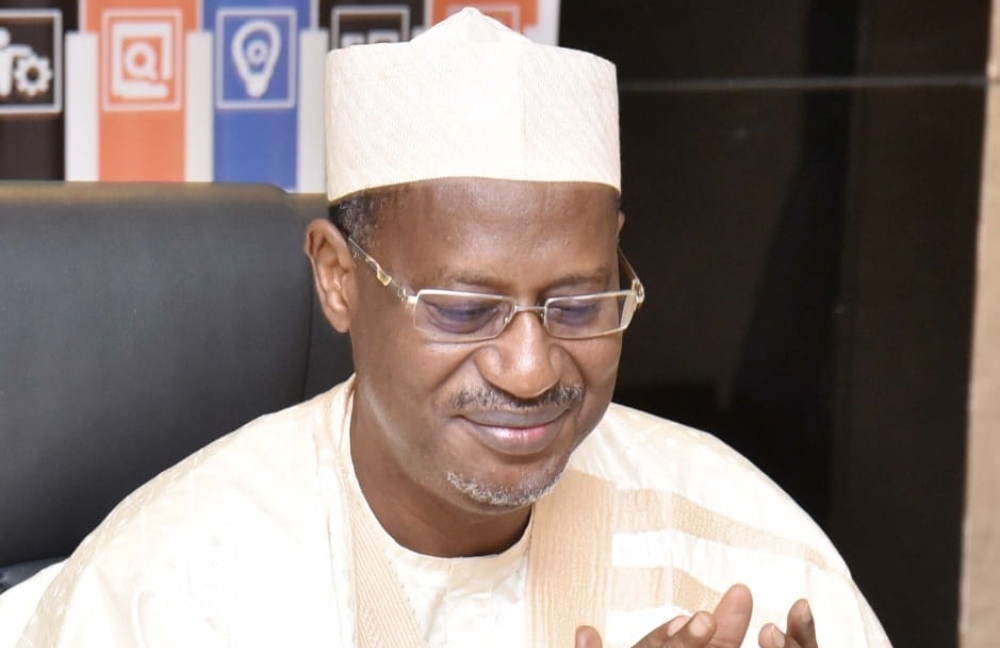
Minister of Housing and Urban Development, Arc. Ahmed Musa Dangiwa, has stated that a sustained capacity building and strong institutional collaboration is a strategic pathway to strengthening surveying practice, land administration, and sustainable urban development in Nigeria.
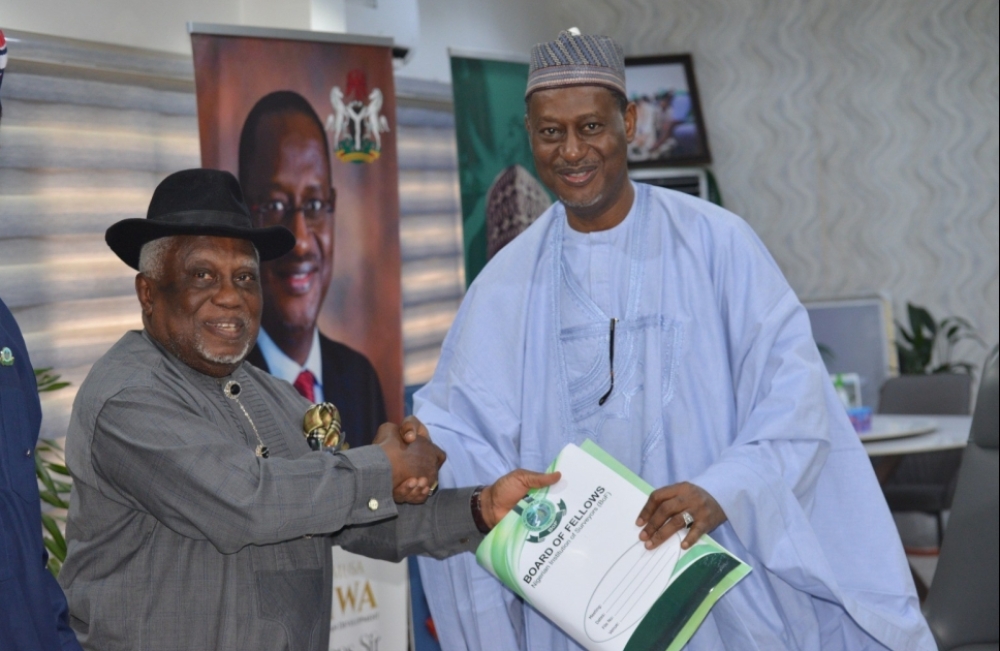
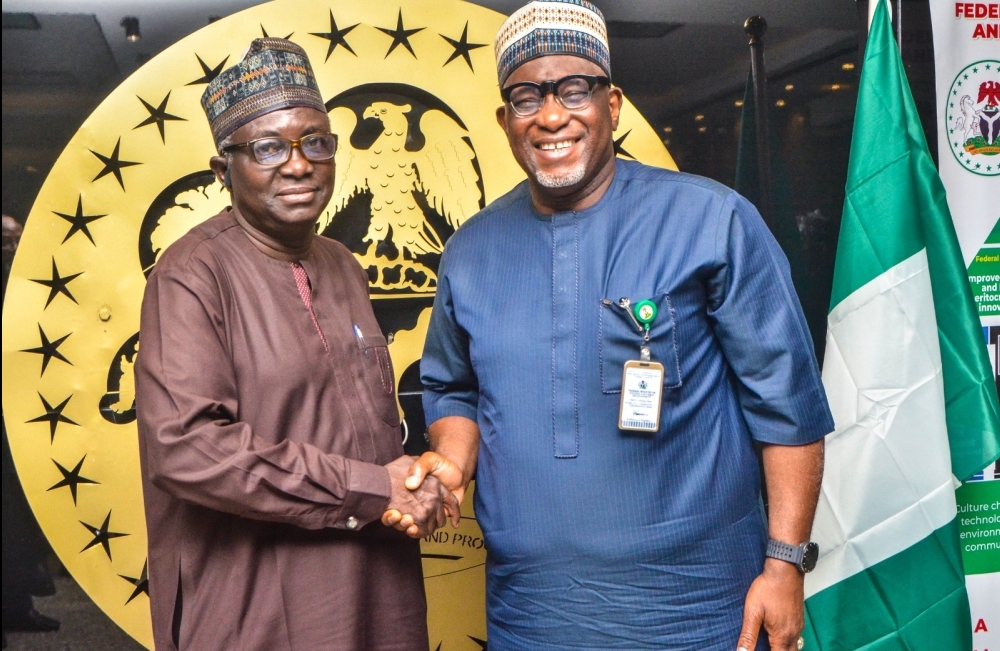
The Minister made this declaration when he received the chairman and members of the Board of Fellows of the Nigerian Institution of Surveyors who paid him a courtesy visit in his office, Thursday, February 26th, 2026
Arc. Dangiwa said that the Ministry is fully prepared to partner with the Nigerian Institution of Surveyors to develop and implement structured training and professional development programmes aimed at equipping surveyors—particularly young professionals.
According to the Minister, capacity building remains the most sustainable mechanism for institutional strengthening and professional excellence.
“Capacity building is the only way to properly develop the young professionals coming on board and raise our standards and best practices. It is critical to promoting professionalism in surveying and mapping and ensuring sustainable development across the country,” he stated.
Dangiwa disclosed that the Ministry is currently experiencing a significant human resource gap due to large-scale retirements, revealing that over one thousand staff members have retired within the last two years.
This development, he explained, makes collaboration with professional institutions even more imperative, particularly in the areas of training, mentorship, and knowledge transfer to ensure continuity, institutional memory, and improved service delivery.
He emphasized that the Ministry houses a substantial number of surveyors in the country and provides government oversight to relevant professional bodies. As such, strengthening synergy with the Nigerian Institution of Surveyors is both strategic and necessary.
Arc. Dangiwa further noted that the core mandates of the Ministry - housing development, land administration, and urban development—are inherently linked to surveying and geospatial services.
He stressed that effective land administration cannot be achieved without close collaboration with surveyors and other land professionals within the Ministry. He also highlighted that a branch of the Office of the Surveyor-General is domiciled within the Ministry under the Cadastral Department, further reinforcing the institutional linkage between both bodies.
Accordingly, he described the existing relationship between the Ministry and the Nigerian Institution of Surveyors as strong and evolving, adding that the collaboration must be deepened to support ongoing reforms and infrastructure expansion initiatives in the housing sector.
Earlier in his remarks, the Chairman of the Board of Fellows of the Nigerian Institution of Surveyors, Surv. Alabo Charlesye David Charles, stated that the visit was aimed at strengthening institutional cooperation and exploring strategic areas of mutual interest.
He listed the areas of collaboration to include;
* capacity building: development of tailored training and professional development programmes aligned with the Ministry’s operational needs.
* Institutional collaboration by strengthening structured engagement between the NIS and the Ministry to enhance policy implementation and professional standards.
* geoinformatics and technical support: Leveraging surveying and geospatial technologies to advance land administration, housing development, and urban planning initiatives.
* enhancing national geospatial data frameworks to support housing and urban development projects across the country, and
* promoting and enforcing high standards in surveying and mapping to ensure accuracy, transparency, and sustainable development outcomes.
Surv. Charles reaffirmed the Institution’s readiness to work closely with the Ministry in advancing professional excellence and supporting national development goals.
A major highlight of the visit was the conferment of the title of Honorary Fellow of the Nigerian Institution of Surveyors on the Honourable Minister in recognition of his contributions to housing and urban development and his support for professional advancement in the surveying sector.
The investiture ceremony is scheduled to hold on April 30, 2026. Arc. Dangiwa graciously accepted the honour and expressed appreciation to the Institution for the recognition.
The meeting underscored the shared commitment of both institutions to advancing professionalism, strengthening geospatial governance frameworks, and supporting Nigeria’s housing and urban development agenda through strategic collaboration, innovation, and human capital development.
The Federal Ministry of Housing and Urban Development remains committed to fostering partnerships that enhance technical capacity, promote best practices, and drive sustainable growth in the housing and land administration sectors.


Dangiwa Harps On Capacity Building, Institutional Collaboration To Strengthening Surveying Practice. * says strengthening synergy with the Nigerian Institution of Surveyors is strategic, necessary. Minister of Housing and Urban Development, Arc. Ahmed Musa Dangiwa, has stated that a sustained capacity building and strong institutional collaboration is a strategic pathway to strengthening surveying practice, land administration, and sustainable urban development in Nigeria. The Minister made this declaration when he received the chairman and members of the Board of Fellows of the Nigerian Institution of Surveyors who paid him a courtesy visit in his office, Thursday, February 26th, 2026 Arc. Dangiwa said that the Ministry is fully prepared to partner with the Nigerian Institution of Surveyors to develop and implement structured training and professional development programmes aimed at equipping surveyors—particularly young professionals. According to the Minister, capacity building remains the most sustainable mechanism for institutional strengthening and professional excellence. “Capacity building is the only way to properly develop the young professionals coming on board and raise our standards and best practices. It is critical to promoting professionalism in surveying and mapping and ensuring sustainable development across the country,” he stated. Dangiwa disclosed that the Ministry is currently experiencing a significant human resource gap due to large-scale retirements, revealing that over one thousand staff members have retired within the last two years. This development, he explained, makes collaboration with professional institutions even more imperative, particularly in the areas of training, mentorship, and knowledge transfer to ensure continuity, institutional memory, and improved service delivery. He emphasized that the Ministry houses a substantial number of surveyors in the country and provides government oversight to relevant professional bodies. As such, strengthening synergy with the Nigerian Institution of Surveyors is both strategic and necessary. Arc. Dangiwa further noted that the core mandates of the Ministry - housing development, land administration, and urban development—are inherently linked to surveying and geospatial services. He stressed that effective land administration cannot be achieved without close collaboration with surveyors and other land professionals within the Ministry. He also highlighted that a branch of the Office of the Surveyor-General is domiciled within the Ministry under the Cadastral Department, further reinforcing the institutional linkage between both bodies. Accordingly, he described the existing relationship between the Ministry and the Nigerian Institution of Surveyors as strong and evolving, adding that the collaboration must be deepened to support ongoing reforms and infrastructure expansion initiatives in the housing sector. Earlier in his remarks, the Chairman of the Board of Fellows of the Nigerian Institution of Surveyors, Surv. Alabo Charlesye David Charles, stated that the visit was aimed at strengthening institutional cooperation and exploring strategic areas of mutual interest. He listed the areas of collaboration to include; * capacity building: development of tailored training and professional development programmes aligned with the Ministry’s operational needs. * Institutional collaboration by strengthening structured engagement between the NIS and the Ministry to enhance policy implementation and professional standards. * geoinformatics and technical support: Leveraging surveying and geospatial technologies to advance land administration, housing development, and urban planning initiatives. * enhancing national geospatial data frameworks to support housing and urban development projects across the country, and * promoting and enforcing high standards in surveying and mapping to ensure accuracy, transparency, and sustainable development outcomes. Surv. Charles reaffirmed the Institution’s readiness to work closely with the Ministry in advancing professional excellence and supporting national development goals. A major highlight of the visit was the conferment of the title of Honorary Fellow of the Nigerian Institution of Surveyors on the Honourable Minister in recognition of his contributions to housing and urban development and his support for professional advancement in the surveying sector. The investiture ceremony is scheduled to hold on April 30, 2026. Arc. Dangiwa graciously accepted the honour and expressed appreciation to the Institution for the recognition. The meeting underscored the shared commitment of both institutions to advancing professionalism, strengthening geospatial governance frameworks, and supporting Nigeria’s housing and urban development agenda through strategic collaboration, innovation, and human capital development. The Federal Ministry of Housing and Urban Development remains committed to fostering partnerships that enhance technical capacity, promote best practices, and drive sustainable growth in the housing and land administration sectors.
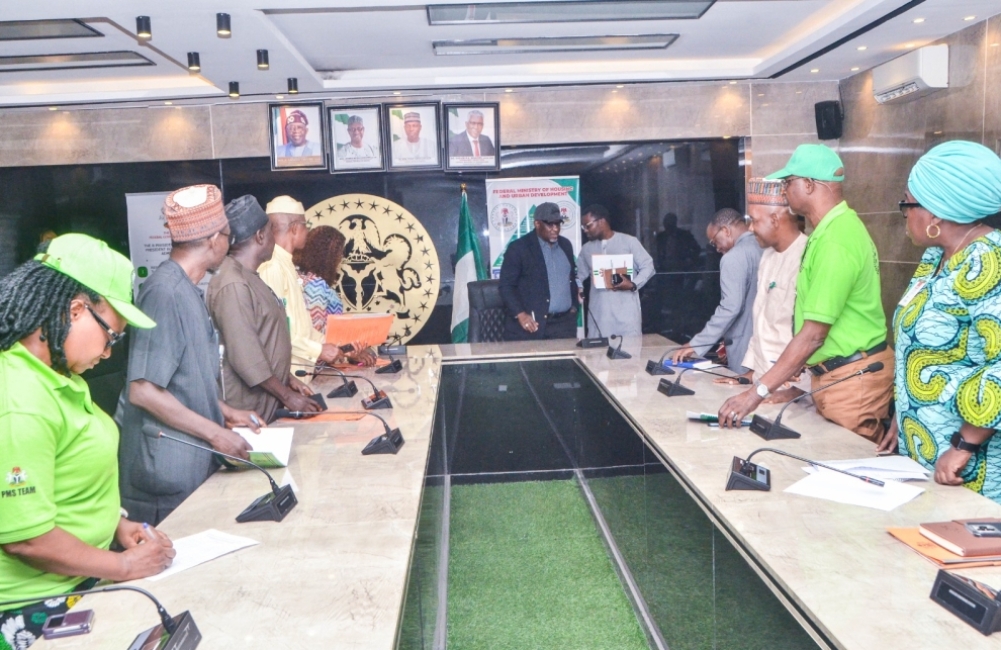
Belgore Inaugurates Housing Ministry 2025 Procurement Planning Committee. * Urges the committee to adhere to regulations of probity, transparency, accountability The Permanent Secretary, Ministry of Housing and Urban Development, Dr. Shuaib Belgore (OON), has inaugurated the Procurement Planning Committee (PPC) of the Ministry, for the 2025 financial year. The committee under the Chairmanship of the Permanent Secretary, comprises representatives from all departments of the Ministry At the inauguration, Dr. Belgore stated that despite the fact that the 2025 budget which has been signed by President Bola Tinubu awaits further communication from the Budget office, he informed that the Secretary General of the Federation (SGF), has authorized the commencement of the procurement activities for the year. “ I have had a preview of the budget that has been approved by Mr. President, and I gladly tell you that what the ministry proposed is largely in tact, we have additions from quite a substantial volume of constituency project. We’re closing in very close to an additional 50 billion, It's a lot of work”, he said. Accordingly, the Permanent Secretary outlined the Terms of Reference of the PPC to include; preparing the needs assessments and evaluation of procuring entities, Identifying goods, works, and services required, preparing an analysis of cost implications of the proposed procurement, and aggregating the requirements within the department to enable the possibility of obtaining an economy of scale. He also emphasized on the need to aggregate requirements between departments, particularly the training needs of departments under one umbrella so that nearly every ministry staff member would benefit from training this year, and in turn integrate the Ministry’s expenditure into the yearly budget. Belgore urged the members of the committee to adhere to regulations of probity, transparency, and accountability; emphasizing on the adoption of the template from the Bureau of Public Procurement (BPP) to help keep the mandate of the Ministry in view. Similarly, he charged the committee members with dedication and hard work to the mandate of the Ministry, saying that he would reward all diligence. He further encouraged all the departments to make their inputs required to get the Bills of Engineering Measurement and Evaluation (BEME), Bills of Quantities, and other required documents ready in due time, hoping that the 2025 budget would all commence by April, and contracts awarded by July, 2025. Earlier in her opening remarks, the Director Public Procurement of the Ministry, Koriotaa Okobiah, (mrs), stated that the inauguration was in line with the provisions of sections 16 (1B) and 18 of the public procurement Act, 2007. Mrs Okobiah informed that the inauguration also was in compliance with the circular from the Office of the Secretary General of the Federation (OSGF) for the preparation and submission of the procurement plan for the 2025 financial year and commencement of procurement activities. “Various departments of the Ministry submitted their nominees to serve in the committee”, she added. ...
Housing Ministry, Shelter Afrique Development Bank To Sign Historic Housing Development Agreement * partnership with ShafDB represents a key moment in our efforts to address Nigeria’s housing challenges - Dangiwa * We are committed to supporting Nigeria in achieving its housing and urban development goals - ShafDB CEO The Federal Ministry of Housing and Urban Development is set to sign a landmark Housing Development Partnership Agreement with Shelter Afrique Development Bank (ShafDB) on the sidelines of the Renewed Hope Housing PPP Summit, scheduled to hold on Monday, 17th March 2025, at the Shehu Musa Yar’Adua Center, Abuja. This historic agreement marks a significant step towards addressing Nigeria’s housing deficit and advancing sustainable urban development across the country. The partnership will leverage Shelter Afrique Development’s expertise in housing finance, advisory services, and technical assistance to support the Federal Ministry of Housing and Urban Development in delivering affordable, decent, and sustainable housing solutions for Nigerians. Under this partnership, Shelter Afrique Development Bank will provide technical advisory services to the Federal Ministry of Housing and Urban Development, focusing on several key areas, namely: to assist the government in conducting a comprehensive assessment of Nigeria’s housing market using its innovative “VIRAL” model. This initiative will result in the drafting of a Country Housing Deficit Reduction Strategy Paper (CHUPS), aimed at scaling up the development of affordable and decent housing programs nationwide. In addition, Shelter Afrique Development Bank will propose three Public-Private Partnership (PPP) transaction models to the Ministry. These models will focus on designing, mobilizing funding, and executing land development and affordable housing projects for low-income households. They will also address urban renewal programs, including the redesign and reconstruction of old housing estates, the elimination of slums and shanty towns, and the transformation of slum areas by creating new urban units across Nigeria. To ensure the successful implementation of these projects, Shelter Afrique Development Bank will assist the Ministry in identifying and selecting strategic private sector partners with proven expertise in the development, financing, construction, and maintenance of large-scale affordable housing projects. Similarly, the partnership will include capacity-building initiatives such as training, workshops, seminars, and policy development exercises to enhance the Ministry’s ability to address housing challenges and promote sustainable urban development. The intervention by Shelter Afrique Development Bank will also focus on setting up PPP-based transaction models for the mass production of affordable housing units. This includes structuring market-attractive PPP transactions for large-scale housing and urban renewal projects, developing an operational framework to match supply and demand for affordable housing using the VIRAL model, and assisting the government in raising funds for housing projects and urban development initiatives. This collaboration aligns with the Federal Government’s Renewed Hope Agenda, which prioritizes affordable housing and sustainable urban development as key drivers of economic growth and social inclusion. By leveraging Shelter Afrique Development Bank’s expertise and resources, the Ministry aims to significantly reduce Nigeria’s housing deficit and improve the living conditions of millions of Nigerians. The Honorable Minister of Housing and Urban Development, Arc. Ahmed Musa Dangiwa, has emphasized the importance of this partnership, stating, “This collaboration with Shelter Afrique Development Bank represents a key moment in our efforts to address Nigeria’s housing challenges. By combining our resources and expertise, we are poised to deliver affordable, decent, and sustainable housing solutions that will transform communities and improve the quality of life for all Nigerians.” Similarly, the CEO of Shelter Afrique Development Bank, Mr. Thierno Habib Hann has expressed enthusiasm for the partnership, saying, “We are honored to collaborate with the Federal Ministry of Housing and Urban Development on this transformative initiative. Shelter Afrique Development Bank is committed to supporting Nigeria in achieving its housing and urban development goals, and we look forward to working together to create lasting impact across the country.” The signing ceremony will take place during the Renewed Hope Housing PPP Summit on Monday, 17th March 2025, at the Shehu Musa Yar’Adua Center, Abuja. The event will bring together key stakeholders from the public and private sectors to discuss innovative solutions for addressing Nigeria’s housing deficit. Shelter Afrique Development Bank (ShafDB) is the Pan-African Multilateral Development Bank (MDB) dedicated to promoting and financing sustainable green housing, urban development and related infrastructure. It operates through a shareholding of 44 African governments and two institutional shareholders: The African Development Bank (AfDB) and the African Reinsurance Corporation (Africa-Re). The institution is involved in financing housing and related infrastructure across the value chain, both on the demand and supply sides, through its four (4) business lines: Financial Institutions Group (FIG), the Project Finance Group (PFG), the Sovereign and Public-Private partnerships (PPP) Group, and the Fund Management Group (FMG). ...
Housing Ministry Supports BUMPAN On Local Building Materials Needs of Nigerians Permanent Secretary, Ministry of Housing and Urban Development, Dr Shuaib Belgore has restated the commitment of the federal government to solving the Building Material needs of Nigerians. Belgore reiterated this when he received the President of Building Materials Producers Association of Nigeria (BUMPAN), Abdulhakeem Huthman and members of his Association on a visit to the Ministry. "The Ministry is interested in Partnering with the Association in ensuring that most building materials are built in Nigeria", he stated. Belgore explained that made in Nigeria building materials such as tiles, POP, carpet, cement and others will be looked into as it promotes and expands local manufacturers. He told the Association that in building 10,000, 20,000 homes and above, Nigerian made doors, tiles, glass, keys, as well as window frames etc can be used, stating that it will further help in creating more jobs for both manufacturers, builders, artisans and others at large. The Permanent Secretary noted that the ministry is open to Public Private Partnership (PPP), with the departments of Public Building and Procurement, serving as committees to further advance the solution to local building material needs and housing problems in Nigeria, urging the Association to work with the ministry to ensure more Nigerian building materials needs are timely provided. "The Committee will also use all incentives available in the ministry to look into partnership with the hubs in order to solve the housing problem and creating more jobs" he remarked. Earlier, the President of the Building Materials Producers Association of Nigeria, Mr. Abdulhareem Huthman, explained that their Association seeks the assistance of the Ministry to enable them establish a Secretariat and appoint an executive to run the affairs of the Association for the purpose of commitment and seriousness. Abdulhareem added that BUMPAN will welcome the role the ministry will play in the building material production as it is calling on the ministry for support. The President of the Association stated that in the 4th quarter of the year, evaluation of the total number of building materials manufactured can be done in order to understand the progress level of the local manufacturers. He further noted that the link between private and public sector are wide because they are not guided, stating that the Association cannot continue to export jobs while local producers are struggling. ...
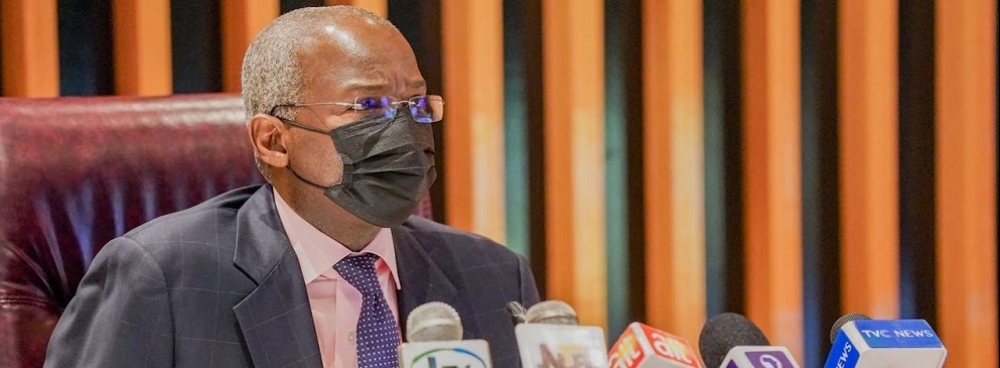
Keynote Address At The 2022 Inaugural Retreat Of The Federal Mortgage Bank Of Nigeria Held At Transcorp Hilton Hotel On Monday 1st August 2022
If there are any words which capture the necessity and the reality that beckons for the Federal Mortgage Bank of Nigeria, those words are best represented by Repositioning and Performance.
They underly the rationale for setting up the bank many years ago, which is to provide service to Nigerians.
Undeniably, the quantity and the need of those Nigerians has not remained the same since the creation of the bank, decades ago.
This is why I am enthused by the theme of the management retreat which is: “STRATEGY REPOSITIONING FOR OPTIMIZED PERFORMANCE,” with sub themes of culture change and informal sector integration; and delighted to be the Keynote speaker.
Since the inception of the Muhammadu Buhari administration in 2015, the bank has a positive story of service delivery to tell in the number of mortgages issued, housing schemes funded and completed; changes in eligibility conditions to improve access to funding to mention a few.
But this positive story is only a small part of what is possible if the bank imagines and reinvent itself.
As the promoter of the bank, the Federal Government has infused the board and management with a sense of how it should be repositioned by constituting a more representative board that is reflective of our national diversity of gender, religion, ethnicity, and this has been achieved whilst increasing the number of banking professionals in the management and board.
The intention is to ensure optimum service to the real owners of the bank – The Nigerian public and contributors to the National Housing Fund (NHF).
This is a type of repositioning the government envisions and welcomes; one that emphasizes the banking identity of the institution.
After all, it is called a bank, it collects people’s money and gives out loans therefore it must be a bank and is expected to act like one.
Government has therefore supported the acquisition by the bank of core banking applications and software that reflects the reality of its environment today as distinct from many decades ago.
In addition, and consistent with our current thinking, the National Council on Housing and Lands has adopted the recommendation for the bank to seek NDIC’s insurance of its contributors’ funds just as is done for depositors in other banks.
These are some of the actions and events of strategy repositioning, intended to deliver optimized performance.
It is not my intention to steal the thunder of the board and the management as they will reveal to you the granular details of steps and processes being undertaken at various stages to invigorate the bank; including the sustenance of the initiative by previous board and management to embrace the informal sector.
Ladies and gentlemen, one of the obstacles to access to housing that we must remove is the one that impedes access to finance.
There are various factors that constitute this impediment but it is clear to us that the FMBN must not be one of those factors or the causative agent of those factors.
That would defeat the essence of the vision of the founders of the bank.
I know that the Bank is issuing mortgages, Home Refurbishment Loans and has started a Rent-to-Own initiative.
But is that all that the bank can do?
What can the bank do for contributors who need to pay 2 to 3 years rent in advance for monthly salary received in Arrears?
I must therefore commend board and management for the vision and the action behind the conception and the undertaking of this retreat.
It offers an opportunity for honest self-review and introspection, as it does for teambuilding and strategy planning.
My Keynote message as you deliberate on all options is to ask yourselves these questions: -
Have we fulfilled the vision of the founders?
How can we serve the owners better?
I urge all present to optimize the opportunities the retreat offers by participating maximally.
I wish you very fruitful and successful deliberations.
Babatunde Raji Fashola, SAN
Honourable Minister for Works and Housing
Monday 1st August 2022
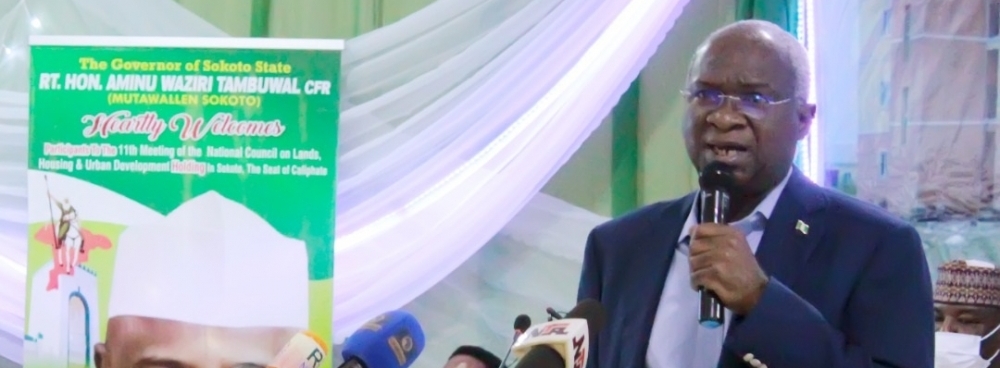
Remarks At The National Council On Lands, Housing And Urban Development Delivered On Thursday 28th Of July 2022 At Sokoto On The Theme, “Housing Our People, By All Of Government And All Our People”
On behalf of the Honourable Minister of State, the Permanent Secretary and all the staff of the Ministry of Works and Housing, I welcome all commissioners, state representatives and invited persons and organizations to this year’s National Council meeting on Lands, Housing and Urban Development, the 11th in the series.
On your behalf and on behalf of the Federal Ministry of Works and Housing and the Federal Government of Nigeria, I would like to thank our host, my dear brother, Governor Aminu Tambuwal, the people and government of Sokoto state for accepting to host this year’s meeting and for all the provisions they have made in that regard.
Let me start by telling you how pleased I am that the National Housing Programme that was initiated by our Ministry at the onset of the Muhammadu Buhari led administration is now delivering on its objective.
Apart from stimulating the economies of the 34 states and the FCT in the communities where work is being undertaken for the construction of houses, by providing work for artisans, builders, engineers, and other skilled persons in the built industry, the construction sites have been and remain centres of supply for building materials and other commodities.
Many people who hitherto were unemployed have had their dignity restored because they can leave home every day saying to their families – I AM GOING TO WORK.
This is the part of the change we promised, and Sokoto state has not been left out.
I am also pleased to report that we are now in a season of completion, as many of these houses have been completed and are now being handed over to the beneficiaries who follow the allocation procedure set out in the National Housing Programme web portal (https://nhp.worksandhousing.gov.ng ).
Across the states, the ministers of the Federal Republic have been representing President Muhammadu Buhari at the commissioning and handing over of these houses.
On the 22nd March 2022, the Minister of Police Affairs, Maigari Dingyadi, represented the President to Commission the Sokoto State National Housing Programme. This first phase included 80 units of housing comprising 4units one bedroom, 48 units two bedroom, 28 units three-bedroom bungalows.
Today, people who had long dreamt to be homeowners now live that reality as they have been successfully allocated some of these houses.
Again, that is change.
Perhaps one of the most pleasing impacts of this National Housing initiative by the Federal Government, is that it has been used by President Buhari, to redeem the housing promise made to the 22-man squad of the Super Eagles since winning the African Nations Cup in 1994.
A promise that remained unkept for 28 years has been redeemed by President Buhari, and if you ask the members of the Super Eagles, they will tell you that things have changed for them for the better.
But the National Housing Programme is only one initiative of the Federal Government to address the housing needs of our people.
There are others by the Federal Housing Authority (FHA) by way of direct construction in various states, just as the Federal Mortgage Bank has financed the construction of about 6000 housing units at various stages of completion.
Similarly, the Federal Government has increased its financing intervention support for housing through the Federal Mortgage Bank by increasing the number of mortgages that have been issued and reducing the equity contribution requirement to make it more accessible.
Of course, I cannot ignore the various interventions by State Governments who have sensibly deployed resources to provide housing in their states and our host, Sokoto state is a good example.
Let me use this platform to inform the meeting that State Governments can apply on behalf of their residents or indigenes to fund the acquisition of parts of the National Housing Programmes constructed in the states should they be so desirous.
Of course, whatever the States and Federal Governments can do by way of housing construction is limited, compared to what the private sector can do. The evidence out there shows very clearly that the bulk of housing in our society and across the world is delivered by the private sector - individuals and corporate.
In this regard, I am happy to report a visible increase in the participation of the private sector in Nigeria’s housing sector.
Nationwide on many media platforms, we daily see, hear and read about the development of one estate or the other across Nigeria and this is most welcome and must be encouraged.
And this brings me to the theme of this year’s council meeting, which is “HOUSING OUR PEOPLE, BY ALL OF GOVERNMENT AND ALL OUR PEOPLE.”
The message is that housing provision is a collaborative effort by all levels of government and the private sector.
From what I have said so far about what the Federal Government is doing, what the states are doing and what the private sector is doing, the Nigerian housing sector is heading in the right direction even if there is more work to be done.
It is to the work that needs to be done that I now intend to turn my attention.
The first thing I wish to address is that we all must remain conscious that not everybody wants a house built by government; as there are those who wish to build by themselves and only seek access to land.
We must therefore reform the process that governs allocation of land and issuance of title documents such as Certificates of Occupancy.
While the Federal Government has some land, mainly acquired from the states, the bulk of the work that needs to be done here lies with the State Governments because of their almost total control of land by virtue of the Land Use Act.
Some have argued that the Land Use Act is the problem about access to land. I beg to differ.
If there is a problem, my view is that the problem is not with law but with the administration of the law.
How much have we automated our land administration processes in order to make them efficient before complaining about that law.
States that have made this type of investment will report an improvement in their land administration system.
Today I can tell you that since 2017, when the President delegated his power under the Land Use Act to grant consent and issue certificate of occupancy, to the Minister we have issued over 5,000 certificates of occupancy and granted 2,738 consent to land transactions.
These are important documents to facilitate housing delivery and housing finance that we need to pay more attention to, in addition to the process involved in granting of construction permits and approvals.
Ladies and gentlemen, the other important matter we must pay attention to is the issue of rent.
Housing supply and demand must be seen beyond ownership alone and must include rental housing.
At the Federal Government level, we have introduced Rent-to-Own into our acquisition/sale model for the disposal of the Houses in the National Housing Programme.
I concede that majority of the houses belong to the private sector and they expect legitimate income from rent for the properties.
However, I hold a strong view that asking for 2 to 3 years rent in advance from working class people (as distinct from corporate tenants who may prefer to pay in advance) does more harm than good to all concerned and to the economy.
Interestingly, rent is a matter over which the Federal Government has no constitutional authority because it is a local matter and rightly so.
But I use the platform of this meeting to challenge and provoke all state representatives to thoughts and action about how we can make the payment of rent easier and comfortable for both tenants and landlords.
This would be a most revolutionary intervention when working class people can pay their rent when they receive their salaries.
This is possible if we try and this will give the fullest possible expression to the theme of this meeting which is “HOUSING OUR PEOPLE, BY ALL OF GOVERNMENT AND ALL OUR PEOPLE.”
Thank you for listening.
Babatunde Raji Fashola, SAN
Honourable Minister for Works and Housing
Thursday 28th July 2022
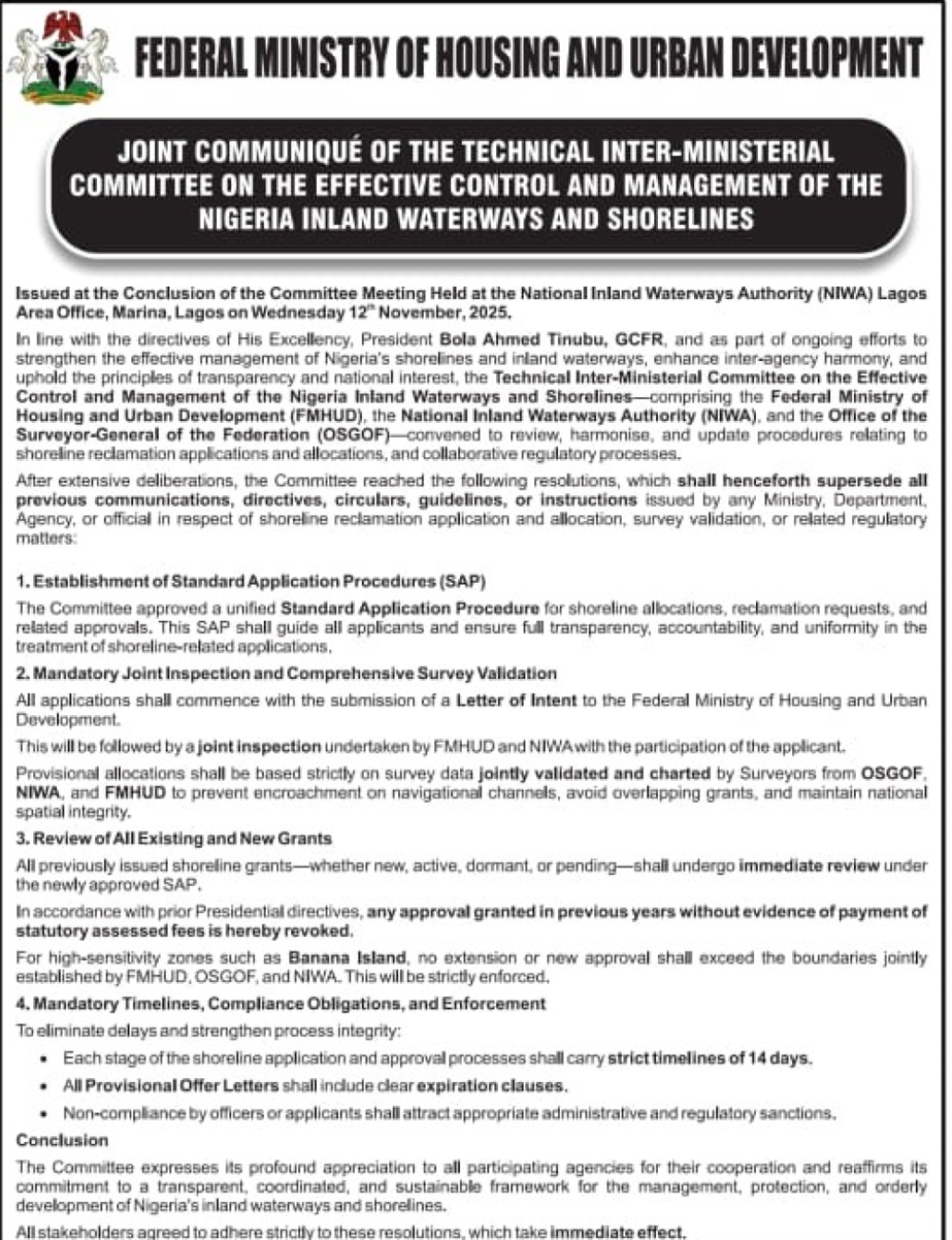
JOINT COMMUNIQUE OF THE TECHNICAL INTER-MINISTERIAL COMMITTEE ON THE EFFECTIVE CONTROL AND MANAGEMENT OF THE NIGERIA INLAND WATERWAYS AND SHORELINES

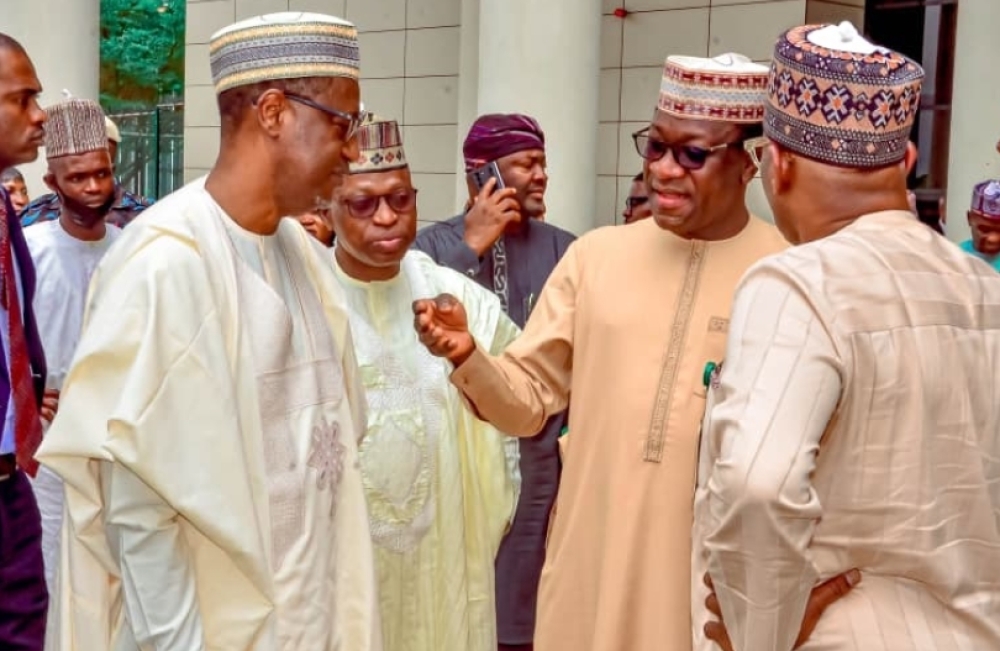
FMHUD MANAGEMENT APPEARS BEFORE REPS COMMITTEE FOR 2026 BUDGET DEFENSE
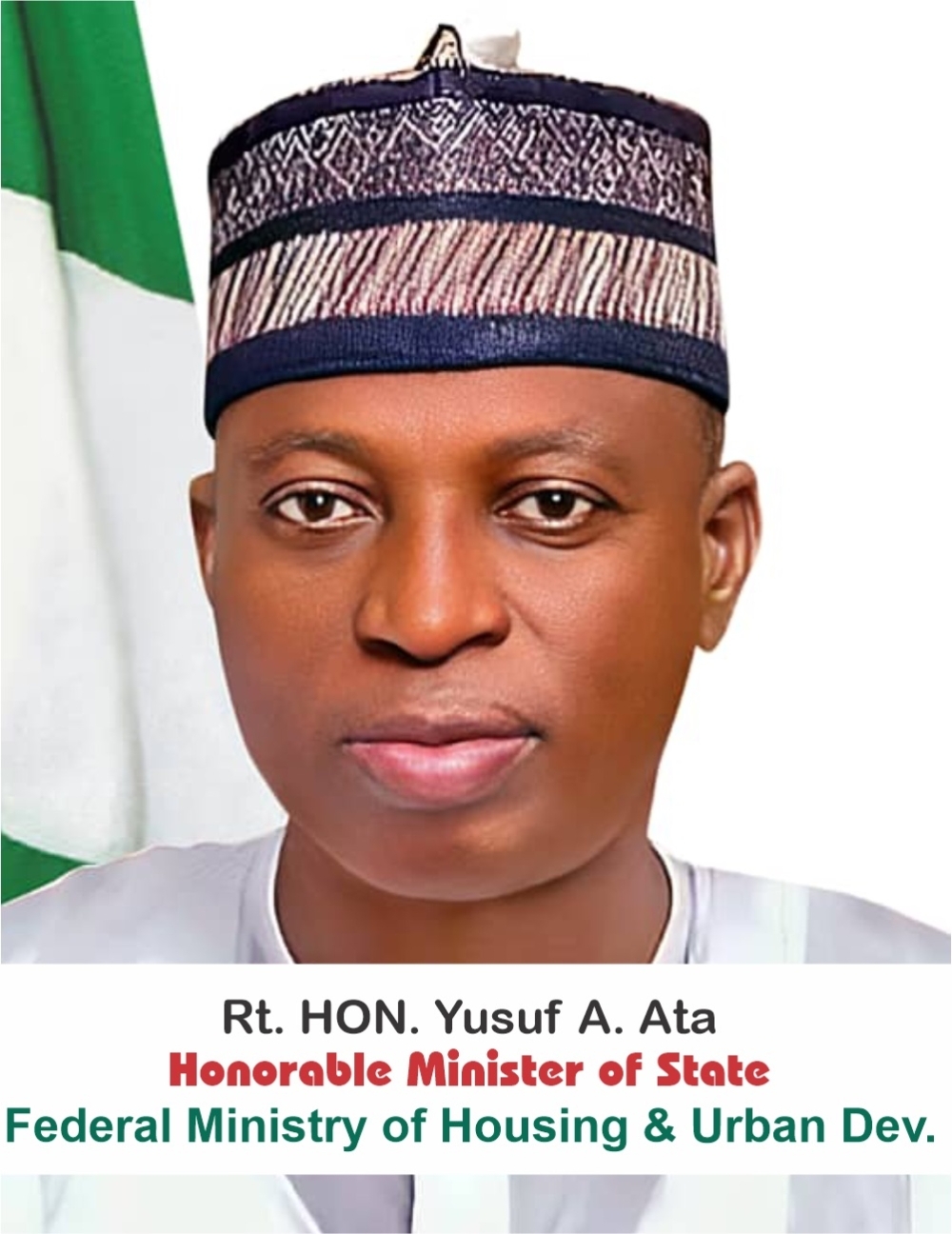
Hon Minister and Minister of State, FMHUD, Arch Ahmed Dangiwa and Rt Hon Yusuf Ata, led the Management Staff of the Ministry under the Permanent Secretary, Dr Shuaib Belgore to the 2026 Budget Defense before the House of Representatives Committee on Housing and Habitat, Tuesday, January 10th, 2026.
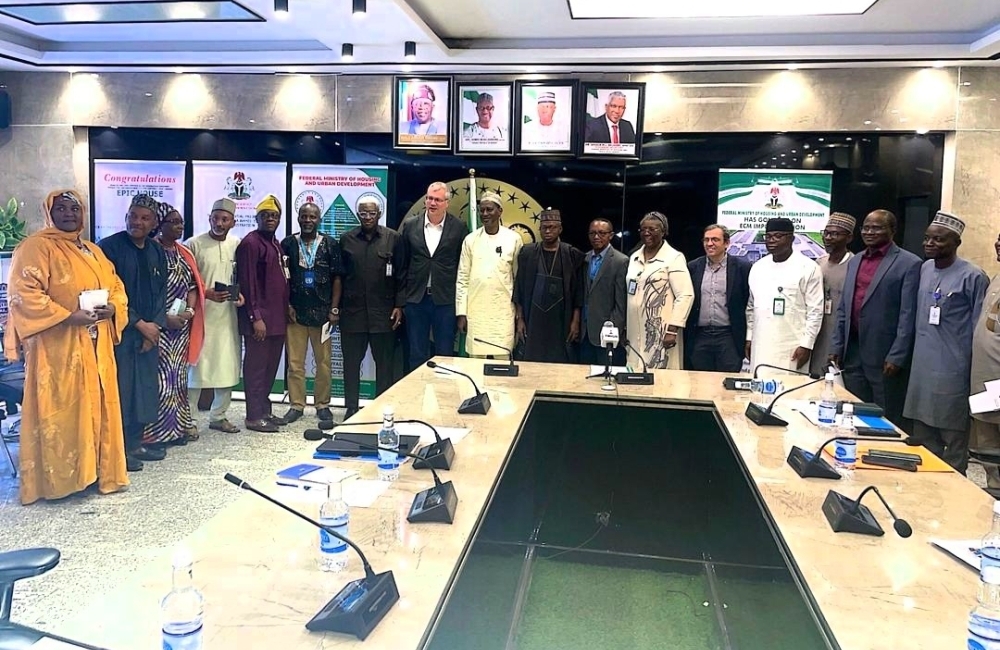
MEETING OF THE HON MINISTER, FMHUD AND HEAD OF UN HABITAT, WEST AFRICA HUB, DAKAR, MR MATHIAS, SPALIVIERO, WEDNESDAY, 25TH FEBRUARY, 2025
Meeting of the Hon Minister, FMHUD and Head of UN Habitat, West Africa Hub, Dakar, Mr Mathias, Spaliviero, Wednesday, 25th February, 2025