Dangiwa Harps On Capacity Building, Institutional Collaboration To Strengthening Surveying Practice.
* says strengthening synergy with the Nigerian Institution of Surveyors is strategic, necessary.
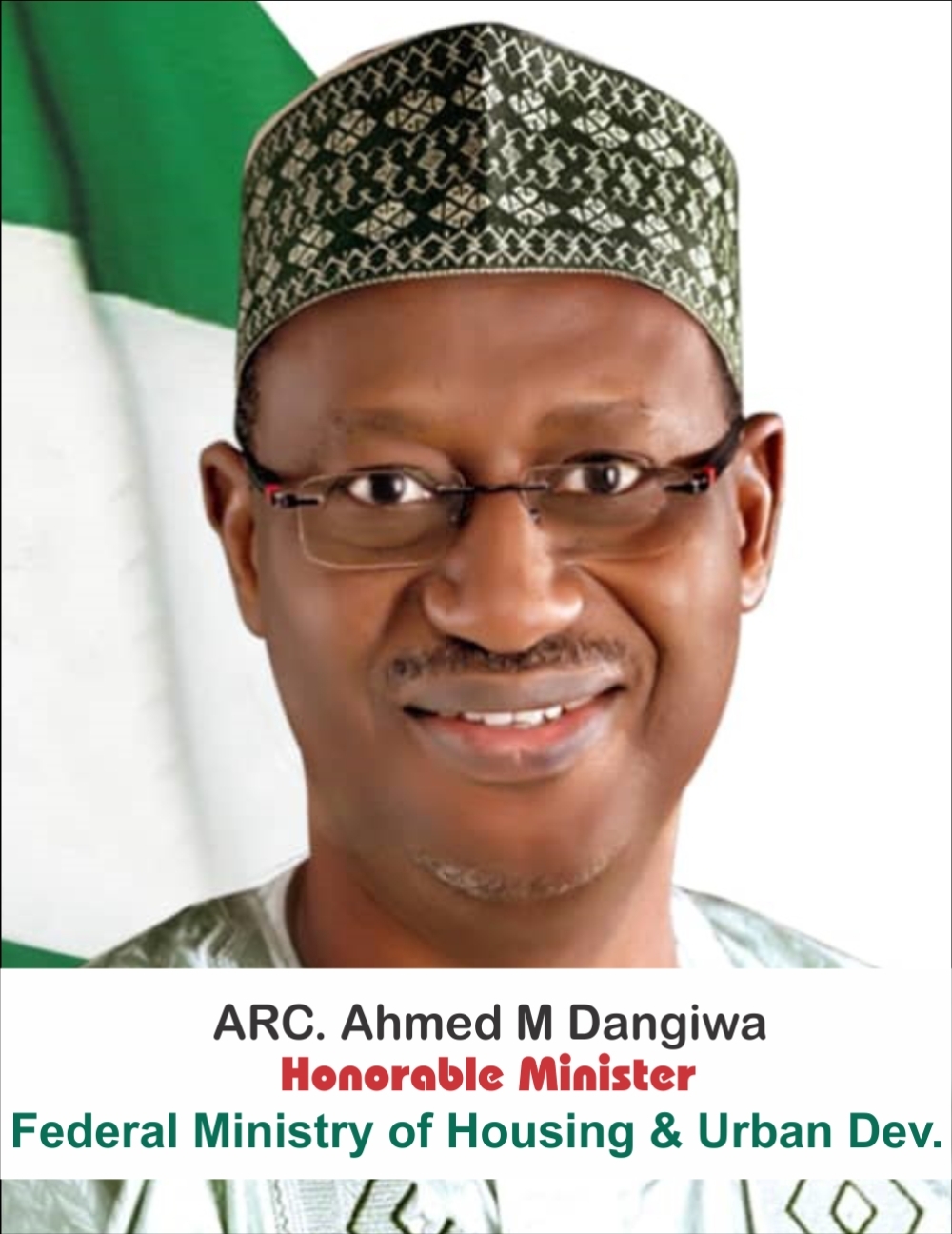
Minister of Housing and Urban Development, Arc. Ahmed Musa Dangiwa, has stated that a sustained capacity building and strong institutional collaboration is a strategic pathway to strengthening surveying practice, land administration, and sustainable urban development in Nigeria.
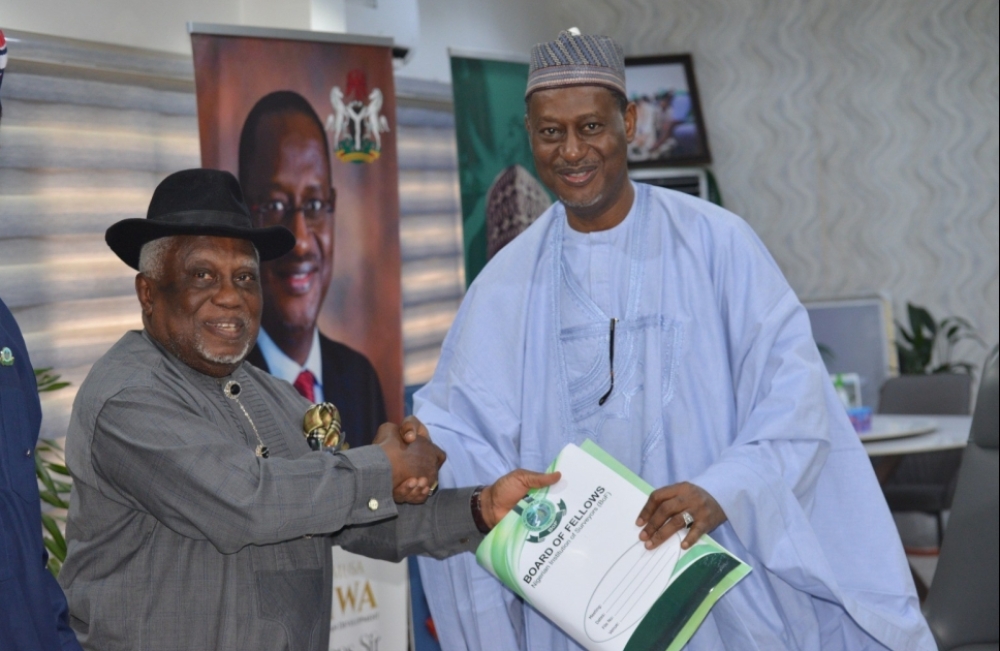
The Minister made this declaration when he received the chairman and members of the Board of Fellows of the Nigerian Institution of Surveyors who paid him a courtesy visit in his office, Thursday, February 26th, 2026
Arc. Dangiwa said that the Ministry is fully prepared to partner with the Nigerian Institution of Surveyors to develop and implement structured training and professional development programmes aimed at equipping surveyors—particularly young professionals.
According to the Minister, capacity building remains the most sustainable mechanism for institutional strengthening and professional excellence.
“Capacity building is the only way to properly develop the young professionals coming on board and raise our standards and best practices. It is critical to promoting professionalism in surveying and mapping and ensuring sustainable development across the country,” he stated.
Dangiwa disclosed that the Ministry is currently experiencing a significant human resource gap due to large-scale retirements, revealing that over one thousand staff members have retired within the last two years.
This development, he explained, makes collaboration with professional institutions even more imperative, particularly in the areas of training, mentorship, and knowledge transfer to ensure continuity, institutional memory, and improved service delivery.
He emphasized that the Ministry houses a substantial number of surveyors in the country and provides government oversight to relevant professional bodies. As such, strengthening synergy with the Nigerian Institution of Surveyors is both strategic and necessary.
Arc. Dangiwa further noted that the core mandates of the Ministry - housing development, land administration, and urban development—are inherently linked to surveying and geospatial services.
He stressed that effective land administration cannot be achieved without close collaboration with surveyors and other land professionals within the Ministry. He also highlighted that a branch of the Office of the Surveyor-General is domiciled within the Ministry under the Cadastral Department, further reinforcing the institutional linkage between both bodies.
Accordingly, he described the existing relationship between the Ministry and the Nigerian Institution of Surveyors as strong and evolving, adding that the collaboration must be deepened to support ongoing reforms and infrastructure expansion initiatives in the housing sector.
Earlier in his remarks, the Chairman of the Board of Fellows of the Nigerian Institution of Surveyors, Surv. Alabo Charlesye David Charles, stated that the visit was aimed at strengthening institutional cooperation and exploring strategic areas of mutual interest.
He listed the areas of collaboration to include;
* capacity building: development of tailored training and professional development programmes aligned with the Ministry’s operational needs.
* Institutional collaboration by strengthening structured engagement between the NIS and the Ministry to enhance policy implementation and professional standards.
* geoinformatics and technical support: Leveraging surveying and geospatial technologies to advance land administration, housing development, and urban planning initiatives.
* enhancing national geospatial data frameworks to support housing and urban development projects across the country, and
* promoting and enforcing high standards in surveying and mapping to ensure accuracy, transparency, and sustainable development outcomes.
Surv. Charles reaffirmed the Institution’s readiness to work closely with the Ministry in advancing professional excellence and supporting national development goals.
A major highlight of the visit was the conferment of the title of Honorary Fellow of the Nigerian Institution of Surveyors on the Honourable Minister in recognition of his contributions to housing and urban development and his support for professional advancement in the surveying sector.
The investiture ceremony is scheduled to hold on April 30, 2026. Arc. Dangiwa graciously accepted the honour and expressed appreciation to the Institution for the recognition.
The meeting underscored the shared commitment of both institutions to advancing professionalism, strengthening geospatial governance frameworks, and supporting Nigeria’s housing and urban development agenda through strategic collaboration, innovation, and human capital development.
The Federal Ministry of Housing and Urban Development remains committed to fostering partnerships that enhance technical capacity, promote best practices, and drive sustainable growth in the housing and land administration sectors.




Dangiwa Harps On Capacity Building, Institutional Collaboration To Strengthening Surveying Practice. * says strengthening synergy with the Nigerian Institution of Surveyors is strategic, necessary. Minister of Housing and Urban Development, Arc. Ahmed Musa Dangiwa, has stated that a sustained capacity building and strong institutional collaboration is a strategic pathway to strengthening surveying practice, land administration, and sustainable urban development in Nigeria. The Minister made this declaration when he received the chairman and members of the Board of Fellows of the Nigerian Institution of Surveyors who paid him a courtesy visit in his office, Thursday, February 26th, 2026 Arc. Dangiwa said that the Ministry is fully prepared to partner with the Nigerian Institution of Surveyors to develop and implement structured training and professional development programmes aimed at equipping surveyors—particularly young professionals. According to the Minister, capacity building remains the most sustainable mechanism for institutional strengthening and professional excellence. “Capacity building is the only way to properly develop the young professionals coming on board and raise our standards and best practices. It is critical to promoting professionalism in surveying and mapping and ensuring sustainable development across the country,” he stated. Dangiwa disclosed that the Ministry is currently experiencing a significant human resource gap due to large-scale retirements, revealing that over one thousand staff members have retired within the last two years. This development, he explained, makes collaboration with professional institutions even more imperative, particularly in the areas of training, mentorship, and knowledge transfer to ensure continuity, institutional memory, and improved service delivery. He emphasized that the Ministry houses a substantial number of surveyors in the country and provides government oversight to relevant professional bodies. As such, strengthening synergy with the Nigerian Institution of Surveyors is both strategic and necessary. Arc. Dangiwa further noted that the core mandates of the Ministry - housing development, land administration, and urban development—are inherently linked to surveying and geospatial services. He stressed that effective land administration cannot be achieved without close collaboration with surveyors and other land professionals within the Ministry. He also highlighted that a branch of the Office of the Surveyor-General is domiciled within the Ministry under the Cadastral Department, further reinforcing the institutional linkage between both bodies. Accordingly, he described the existing relationship between the Ministry and the Nigerian Institution of Surveyors as strong and evolving, adding that the collaboration must be deepened to support ongoing reforms and infrastructure expansion initiatives in the housing sector. Earlier in his remarks, the Chairman of the Board of Fellows of the Nigerian Institution of Surveyors, Surv. Alabo Charlesye David Charles, stated that the visit was aimed at strengthening institutional cooperation and exploring strategic areas of mutual interest. He listed the areas of collaboration to include; * capacity building: development of tailored training and professional development programmes aligned with the Ministry’s operational needs. * Institutional collaboration by strengthening structured engagement between the NIS and the Ministry to enhance policy implementation and professional standards. * geoinformatics and technical support: Leveraging surveying and geospatial technologies to advance land administration, housing development, and urban planning initiatives. * enhancing national geospatial data frameworks to support housing and urban development projects across the country, and * promoting and enforcing high standards in surveying and mapping to ensure accuracy, transparency, and sustainable development outcomes. Surv. Charles reaffirmed the Institution’s readiness to work closely with the Ministry in advancing professional excellence and supporting national development goals. A major highlight of the visit was the conferment of the title of Honorary Fellow of the Nigerian Institution of Surveyors on the Honourable Minister in recognition of his contributions to housing and urban development and his support for professional advancement in the surveying sector. The investiture ceremony is scheduled to hold on April 30, 2026. Arc. Dangiwa graciously accepted the honour and expressed appreciation to the Institution for the recognition. The meeting underscored the shared commitment of both institutions to advancing professionalism, strengthening geospatial governance frameworks, and supporting Nigeria’s housing and urban development agenda through strategic collaboration, innovation, and human capital development. The Federal Ministry of Housing and Urban Development remains committed to fostering partnerships that enhance technical capacity, promote best practices, and drive sustainable growth in the housing and land administration sectors.
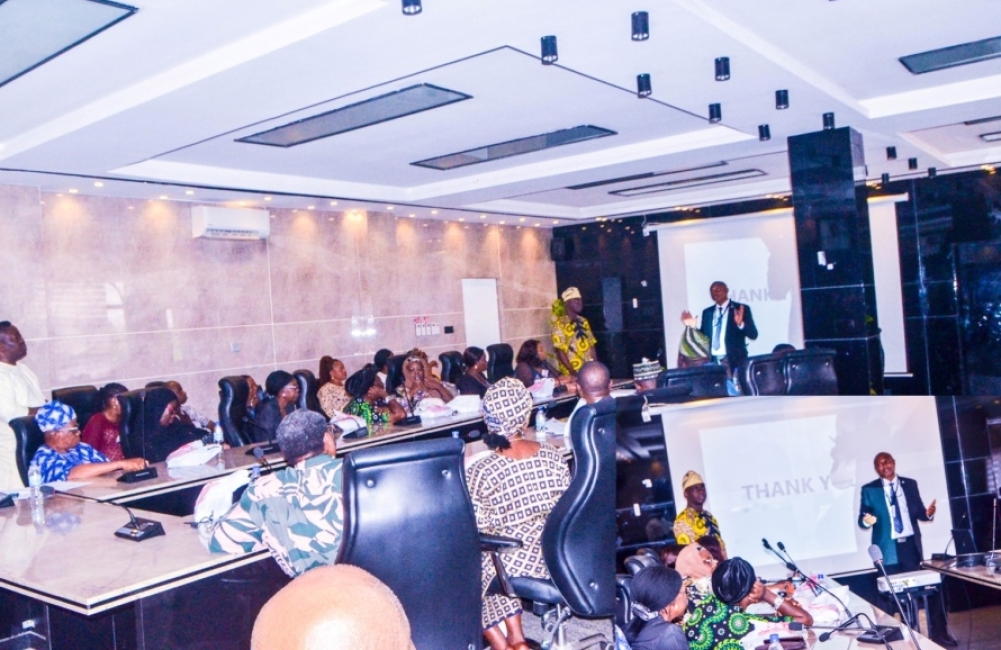
FCSSIP 25: HOUSING MINISTRY SENSITISES STAFF ON INNOVATION As part of the ongoing reforms in the Federal Civil Service, the Ministry of Housing and Urban Development has successfully organized a sensitization programme on Innovation Challenge for staff of the Ministry. The training which held at the Ministry’s headquarters in Abuja, was conducted by the department of Reform Coordination and Service Improvement, a department saddled with the responsibility of coordinating Innovative Ideas and competition in the Ministry. The training was in compliance with the provisions of a recent circular from the Head of Service on the creation of Innovation Division in the MDAs. Innovation which is one of the pillars of the Federal Civil Service Strategy and Implementation Plan (FCSSIP 25), is a systematic introduction of new or significantly improved products, services, or processes, crucial for the improvement of efficiency, effectiveness, and citizen satisfaction. In her address, the Director overseeing the department, Philips Ogoniba Ibifuro informed that the aim of the sensitization programme was to prepare members of staff on how to strategize for emerging innovation technologies, and encourage participation in the upcoming innovation challenge, with an objective to identify innovative high fliers for proper engagement in the Service, as well as ensure full usage and commendations for all adopted innovative initiatives in the MDAs. She stated that the Department has always been in the forefront of driving Government reform initiatives and therefore takes inventions, new ideas and innovations seriously because of its ability to enhance efficient delivery of the mandate of the Ministry. The Director said that the Housing Ministry and its Agencies as a specialized Sector, yearly discover creative works and ideas, which sadly doesn’t receive deserved attention due to stereotypes and bureaucracy bottlenecks, hence the need for the sensitization program. She also recognized the effort of a member of staff who developed an electronic Certificate of Occupancy (e-C of O), adding that it was a tip of the creative mind sets that abound at the Ministry and are yet to be discovered. The program featured a presentation of an overview of the Federal Civil Service Strategy and Implementation Plan (FCSSIP 25) delivered by Henry Nwaedo, from the Office of the Head of Civil Service, and a lecture on ‘Strategies for Emerging Technologies with a Focus on FCSSIP25’, presented by Ojiyovwi Michael, an innovation consultant. Some proposed innovations for the Ministry emanated from the lectures includes; Capacity Building on emerging technologies such as Artificial Intelligence (AI) and cybersecurity awareness, Development Project Management (DPM) methodologies and Facility usage and management. Others are: Process and Service Delivery Re-engineering and Stakeholder Engagements on the use of technologies for citizen feedback on housing policies, as well the establishment of a contact centre with connectivity to critical departments for real time information dissemination and internal communication. In her closing remarks, the Assistant Director of the department Zainab Idris, expressed appreciation to the staff of the Ministry for gracing the sensitization program with their presence. While noting that the resource persons had shared adequate knowledge about innovation, expressing the hope that interested members of staff would participate in the upcoming innovation challenge for the betterment of the Ministry, as well as effective service delivery. ...
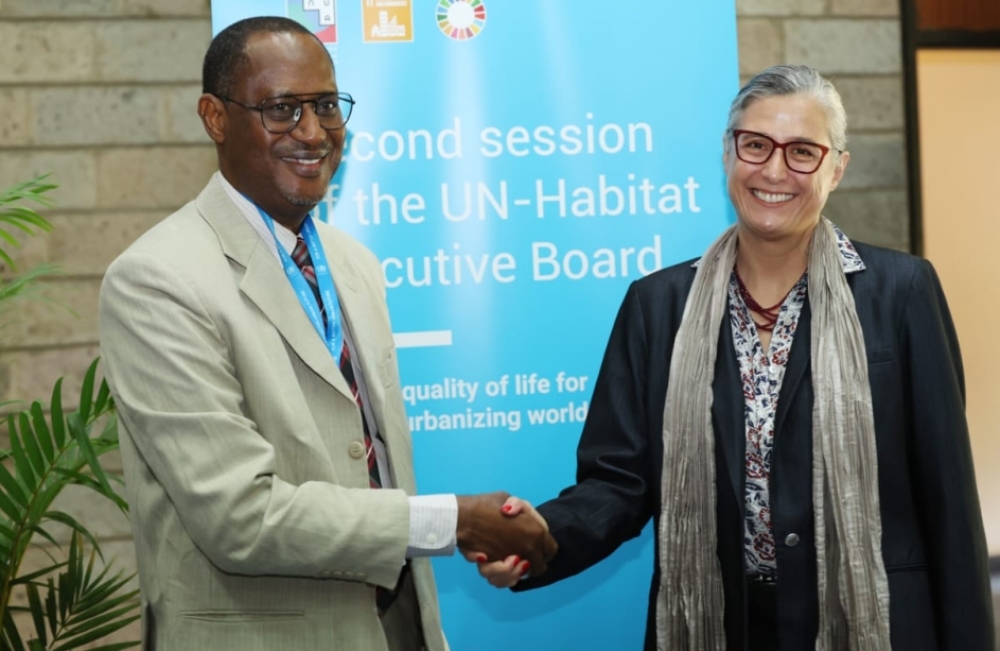
UN-HABITAT COMMENDS NIGERIA’S COMMITMENT TO TACKLING HUMAN SETTLEMENT CHALLENGES • As Dangiwa Announces FG’s $500,000 Contribution to UN-Habitat Country Office to Boost Multi-Bilateral Fund Mobilization, Advisory Services, and Technical Capacity for Housing and Urban Development Thursday, December 5, 2024: The United Nations Human Settlements Programme (UN-Habitat) has commended Nigeria for its commitment to fostering transformative change in human settlements and improving urban environments. The new Executive Director of UN-Habitat, Ms. Anaclaudia Rossbach, gave the commendation yesterday in Nairobi, Kenya, during the opening session of the second meeting of the 2024 Executive Board, chaired by Nigeria’s Minister of Housing and Urban Development, Arc. Ahmed Musa Dangiwa. She praised Nigeria’s effective leadership of the UN-Habitat Executive Board and lauded Arc. Dangiwa for his focused stewardship as Chair. Ms. Rossbach also expressed gratitude for Nigeria’s recent approval of a $500,000 contribution to UN-Habitat. “I greatly appreciate Nigeria’s commitment, exemplified by the Chair of the Executive Board, Arc. Ahmed Musa Dangiwa, in advancing the mandate of UN-Habitat. Nigeria’s approval of $500,000 to UN-Habitat reflects its dedication to our partnership. This funding will bolster the UN-Habitat Country Office in Nigeria, enhancing its capacity to provide multi-level support for achieving Nigeria’s housing and urban development goals,” she stated. Earlier, Arc. Dangiwa, in his opening remarks at the Executive Board Meeting, announced that His Excellency, President Bola Ahmed Tinubu, had approved the Ministry’s request for a $500,000 contribution to UN-Habitat. This aligns with the terms of the Memorandum of Understanding (MoU) between Nigeria and UN-Habitat for the period 2022–2027. The amount covers the outstanding Tranche 1 contribution for 2022–2023. Under the MoU, UN-Habitat is tasked with working with the Ministry of Housing and Urban Development towards mobilizing technical expertise, capacity, and financial resources at national, regional, and international levels to drive impactful projects. The MoU also supports the development and implementation of projects and activities, provision of technical advisory services, and capacity-building assistance to federal, state, and local governments. Additionally, UN-Habitat will help foster partnerships and establish effective collaboration with bilateral and multilateral development partners. “We recognize the critical importance of enhanced funding to support UN-Habitat’s objectives and appreciate the contributions of member states and partners in this regard. Nigeria remains steadfast in its commitment to UN-Habitat. Just last week, our President approved a $500,000 contribution to cover Nigeria’s outstanding obligations for 2022–2023, reaffirming our dedication to the organization through our partnership framework,” Dangiwa stated. The Hon. Minister added that the Ministry is determined to maximize the value of its relationships with bi-lateral institutions such as the UN Habitat towards actualizing the Renewed Hope Agenda for housing and urban development. He acknowledged the support of delegates, and the progress achieved during Nigeria’s tenure as Chair of the Executive Board. Notable accomplishments include evaluating progress in implementing Assembly resolutions, reviewing the organization’s work plan and budget, and advancing the strategic plan for 2026–2029. “These milestones are expected to strengthen the realization of the global vision for human settlements at the national level. The emphasis on the sustainability and inclusiveness of the strategic plan is particularly reassuring,” he added. ...
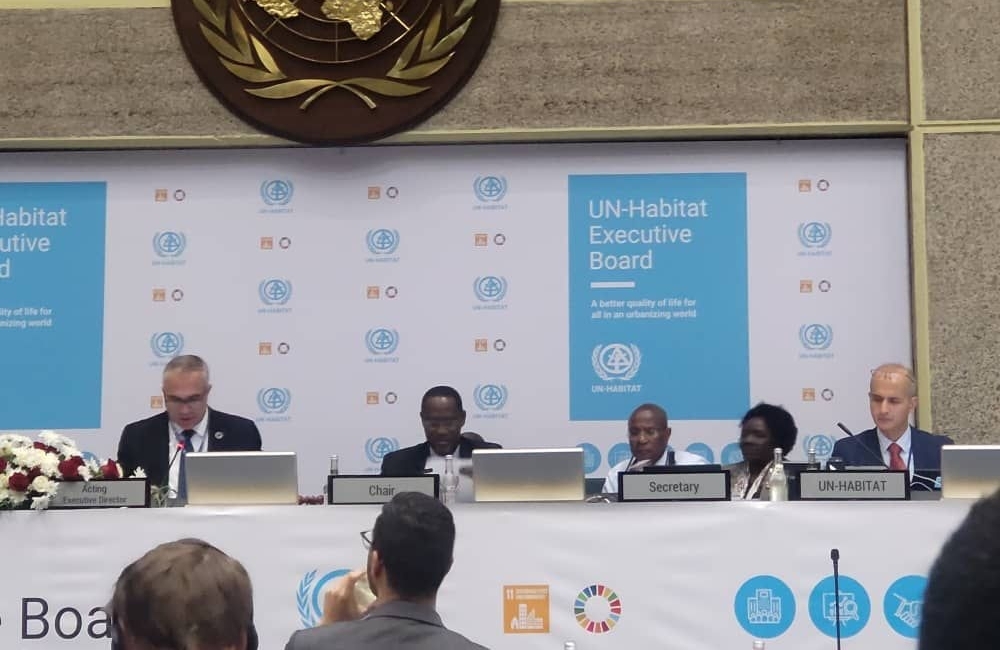
Dangiwa to Chair UN-HABITAT Executive Board Meeting in Nairobi The Honourable Minister of Housing and Urban Development, Arc. Ahmed Musa Dangiwa, will chair the second 2024 session of the United Nations Human Settlements Programme (UN-HABITAT) Executive Board Meeting, scheduled to take place in Nairobi, Kenya, from December 4 to 6, 2024. This session will address critical global urban development challenges, including housing, urban regeneration, climate resilience, and sustainable development, in line with the 2030 Agenda for Sustainable Development. During the meeting, the Executive Board will, among other responsibilities, consider and potentially approve the draft work programme of UN-HABITAT and the draft budget for the United Nations Habitat and Human Settlements Foundation for 2025. The Board will also review reports on UN-HABITAT’s activities for 2020–2025, receive updates on the development of the Strategic Plan for 2026–2029, and assess the implementation of the organization’s normative and operational activities. This includes reporting on its 2024 programmatic initiatives, subprogrammes, flagship projects, technical cooperation efforts, and its engagement in countries, territories, and areas affected by conflicts and disasters. Nigeria’s leadership role as Chair of the UN-HABITAT Executive Board underscores the country’s commitment to advancing global sustainable urban development. It elevates Nigeria’s visibility and influence on the global stage, positioning the nation as a pivotal player in shaping the urban development discourse. Arc. Dangiwa’s chairmanship will amplify Nigeria’s voice in crafting policies and initiatives for sustainable global urbanization. It also reaffirms Nigeria’s dedication to addressing urban challenges, including housing deficits, slum development, and climate resilience. The meeting presents a significant opportunity for Nigeria to foster partnerships with international organizations, donors, and development agencies. It provides a platform to showcase Nigeria’s achievements and best practices in housing and urban development while cementing its position as a leader in Africa’s urban agenda. Moreover, the session aims to promote and adopt innovative, inclusive solutions for urban planning, housing, and sustainability across Africa and beyond. Under the leadership of Arc. Dangiwa, who also chairs the African Ministers of Housing Caucus, Nigeria is well-positioned to attract international funding and technical assistance for urban development projects, including real estate and infrastructure. The meeting is expected to enhance Nigeria’s capacity for knowledge exchange, strengthen regional alliances, and improve institutional frameworks by exposing participants to global best practices. Key focus areas for Nigeria include advocating for international support to address the nation’s housing deficit and promoting affordable housing solutions. Nigeria will also champion sustainable cities and climate adaptation on the global stage. A major anticipated outcome of the meeting is the strengthening of global partnerships to drive sustainable urban growth in Nigeria. This is expected to attract increased investments and resources to tackle urban challenges, fostering a more sustainable and inclusive future. ...
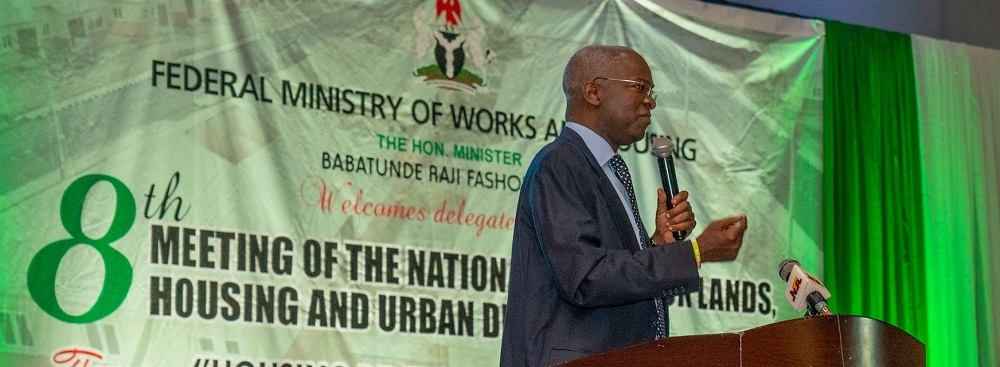
Address Delivered By H.E Babatunde Raji Fashola, SAN At The 8th Meeting Of The National Council On Lands, Housing & Urban Development
On behalf of the Minister of State, the Permanent Secretary, Directors, Heads of our various parastatals and staff of the Ministry of Works and Housing, it is my pleasure to welcome you all to this year’s National Council on Lands, Housing and Urban Development.
For the record and for information basis, it is important to mention that the National Council offers a platform of convergence for representatives of the federal government , for those of the 36 states and the Federal Capital Territory to consider policy, agree programmes, form consensus about how life changing and beneficial policies, programmes and projects can be implemented not only by the federal government alone, but by all state governments and the FCT.
This is important in order to achieve wholesome and widespread delivery, access to as many as possible, and impact on an equitable scale.
While I welcome returning commissioners in some states, I am mindful of the changes that the general elections have brought in some states and therefore the change of personnel that have come with them.
I also therefore welcome very enthusiastically new members of the council and assure them of our commitment to assist them in achieving their developmental objectives for their state.
Let me point out that of all the National Councils that I know, I cannot recall easily any council for which the need for federal government and state government collaboration is so pivotal and defining for success like this Council for Lands, Housing and Urban Development.
This is due to many reasons, not the least of which is the Land Use Act, which vests control of lands in the territory of each state in the governor; and in minister of the Federal capital Territory (FCT) in the case of the FCT.
Added to this is the fact that the Supreme Court has decided since 2003, that urban planning and development control is the sole responsibility of the state governments in their territory, and that of the FCT in Abuja (34 states).
In other words, the use of land, whether for a house, office, market, school, hospital, petrol filling station or any other purpose is a matter solely for the state government.
Nevertheless, Housing is a social, developmental and economic objective of the federal government who cannot own land, unless allocated by the state government, and who cannot build unless urban planning department of states approve the development (Gwagwalada).
It is the foundation for that cooperation that we seek to continuously strengthen at each year’s national council meeting and then follow up with each state on a case by case basis.
The theme for this year’s meeting is “Housing Development and Consumer Credit as Strategies for National Prosperity”, and it is informed by recent developments in the economy and also by the commitment made by the federal government in its Next Level Agenda.
Permit me to recall that on the 12th June 2019, the President Muhammadu Buhari, in his address at Eagle Square, committed to lifting one hundred million people out of poverty. This is what Mr President said:
“China and Indonesia succeeded under authoritarian regimes. India succeeded in a democratic setting. We can do it. With leadership and a sense of purpose, we can lift 100 million Nigerians out of poverty in 10 years.”
Since Mr. President made this progressive, ambitious and forward looking commitment, not a few have agonised about how. Some have divided the number of people by the number of years and wonder how 10 million people will come out of poverty, every year.
To yet another group, they understood it only in terms of employment.
I do not.
I understand it is a combination of employment, access to opportunities, value asset renewal, increase in income for those already employed, access to nutrition, freedom from disease, access to shelter and many more life enhancing opportunities that move people from want and poverty to access and prosperity.
This Council meeting emphasizes the need for the understanding that poor people are indigenes of the 36 states and FCT and it will require more than Mr President alone to achieve the commitment.
The impact of prosperity will be felt in the states and the governors and their commissioners have a role to play and they are already playing it, as I will show.
So too the Legislators at National and state levels.
However, let me point out that after that statement of June 12, which I choose to call the June 12 Charter for Prosperity, Mr President at the Retreat Preceding the inauguration of Ministers on the 21st day of August 2019 identified the following areas of focus for the administration over the term of four years namely:
i. Agriculture
ii. Health
iii. Education
iv. Energy (Petroleum products); and
v. Power
vi. Security
vii. Infrastructure
viii. Housing and Consumer Credit
Although all areas listed have a direct impact on poverty, improvement of quality of life, cost of living and prosperity, the focal areas for the Ministry of Works and Housing are infrastructure, generally for works, and Housing and consumer credit for the Ministry of Housing.
Whenever I visit the sites of the pilot National Housing project being undertaken across the 34 States who provided land, I see an ecosystem of commerce, employment and entrepreneurship.
From the contractor/construction company who wins the bid to the labourers on site who earn N3000 a day, (N18, 000 a week (for six days) and approximately N72,000 a month) ; to the owner of the concrete mixer I met in Oyo state who charges N20,000 a day: to suppliers and vendors of building materials, and employees of companies that manufacture paint, tiles, roofing materials, the federal government, and state government collaboration provided a step up towards the ladder of prosperity.
On each site, there were averagely at least 1000 people employed.
Therefore if we could have more sites per state and all states involved, clearly many more people will get an opportunity to work, to supply, to produce and to earn an income. This is a step on to the ladder of prosperity and a big contribution to the achievement of the June 12 Charter of Prosperity.
This is why we have resolved to use cooperatives as the vehicle to achieve more construction in many states in order to expand the scale of construction, and therefore maximize the scale of opportunities.
The Federal Mortgage Bank, which is our parastatal for providing construction and acquisition finance has been designated as the focal agency to drive this initiative and they will be providing a detailed presentation to the council shortly after my address.
What we see is that cooperatives have been successful in transportation, agriculture, trades and markets and among artisans. We think it can be successful in delivering large scale affordable housing if cooperatives acquire their own land, design what they want to build, get state urban planning approval, and federal government gives them, through the Federal Mortgage Bank, loans to construct and loans to members to buy.
This is our broad vision for enabling access to housing and consumer credit (loans) through construction.
Other policies and programmes are the issuance of backlog of certificates of occupancy and consent to land transactions ( 3,000) and (1,708) respectively.
These instruments strengthen and support access to credit and also contribute to improving value of land by 30%-40% and this asset value appreciation is a contribution towards the prosperity ladder.
Site and Service Schemes: Where Government provides roads and other infrastructure to land, improves the value of land by 30%-40% and this asset value appreciation is a contribution towards prosperity .
Slum Upgrade Projects: also being undertaken through the Urban Development department of the Ministry are other ways by which we improve quality of life and move people out of poverty. Every completed project not only renews the environment, replaces squalor with service, but it also improves the rental income to house owners and capital value of their property.
While I urge you all to listen attentively to the presentation by Architect Ahmed Musa Dangiwa, the Managing Director of Federal Mortgage Bank when he presents the plan on cooperatives, I urge you all to start thinking about :
Cooperatives and how they can register, own lands, contribute to the National Housing Fund and benefit.
How many cooperatives in your states can qualify and what you can do to help them
How to keep proper data and records of cooperatives and also the number of people employed on each site when work commences
How in your states you can use site and service schemes, prompt issuance of certificate of occupancy and consent to land transaction to drive poverty to the rear and propel people towards prosperity.
I have no doubt in my mind that the vision is achievable and surpassable, the building blocks for achieving it are already in place, and it is for all states and federal government, with the private sector to commit to work on the road to prosperity, through housing delivery, and access to credit on a massive scale.
Thank you for listening and I hope we have very faithful deliberations.
Babatunde Raji Fashola, SAN
Minister of Works and Housing
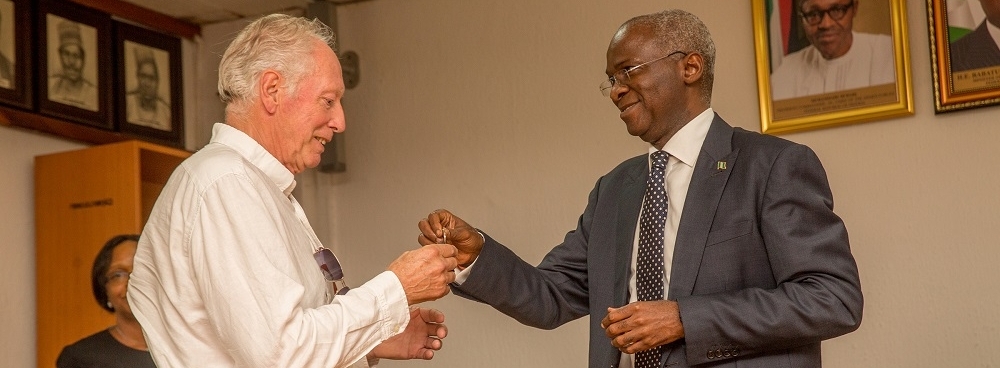
Remarks By H.E, Mr Babatunde Raji Fashola, SAN During The Courtesy Call And Handing Over Of Keys Of The Government Allocated House To Coach Bonfrere Jo At The Conference Room Of The Ministry On Tuesday, 5th June, 2018
If you know Emmanuel Okala, Martins Eyo, Tunde Bamidele, Kadiri Ikhana, John Orlando, Best Ogedegbe, Muda Lawal, and Segun Odegbami you will remember that the team used to be known as the Green Eagles until they were renamed Super Eagles. You will remember that they became Super for doing something Superlative - They won the African Nations Cup for Nigeria for the first time.
For this act of patriotism, they were allocated houses since 1980, but while they had possession these members of the Super Eagles had no documentation.
But 38 years after, the Buhari Government has changed that. Letters of Allocation have been issued to these remaining 8 (Eight) allottees.
They will tell you that change means solving a 38 year old problem.
We gather today because another problem in our Sports Sector that is 24 years old has been resolved by the Buhari Government.
This is the case of Mr Bonfrere Jo, the Assistant Technical Adviser of the Super Eagles who won the 1994 Nations Cup and were given houses by the Government of Nigeria.
Sadly, Mr Jo never got his own and his lawyer wrote a letter to Government to this effect on 20/9/1996.
We gather today because Mr Bonfrere Jo knows what change means.
Change means that the Buhari Government has solved a 24 year old problem.
Change means that Mr Bonfrere Jo now has his house 24 years after.
Change means that a 24 year old pledge has been redeemed and this is how Mr Bonfrere Johannes Franciscus puts it in his letter of 13th February 2018.
“I wish to first and foremost register my
profound gratitude to the Hon. Minister
for his kind gesture in redeeming the
pledge made by the Federal Government
of Nigeria pursuant to our historic
feat in clinching the 1994 Africa Cup of Nations”
As we prepare for the 2018 World Cup this story of change must serve as an inspiration to our players and our officials that promises made will be kept.
Change means that the Buhari Government is solving difficult and old problems not only in Sports, but in infrastructure , like the Bodo – Bonny Bridge in Rivers State and the Mambilla Hydro Power Project which have been in conception for almost 40 years.
I thank you all for your attention.
Babatunde Raji Fashola, SAN
Honourable Minister of Power, Works and Housing
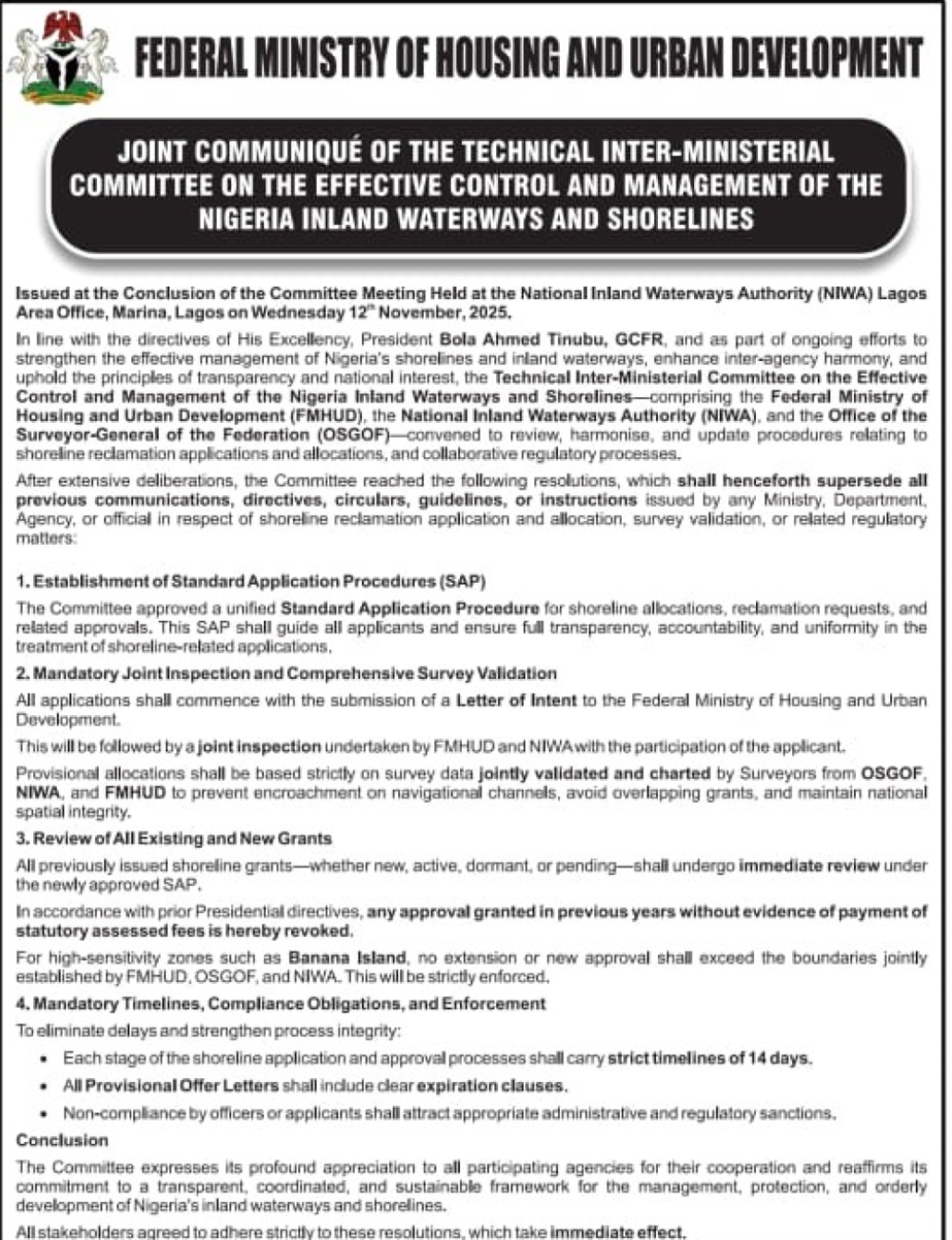
JOINT COMMUNIQUE OF THE TECHNICAL INTER-MINISTERIAL COMMITTEE ON THE EFFECTIVE CONTROL AND MANAGEMENT OF THE NIGERIA INLAND WATERWAYS AND SHORELINES

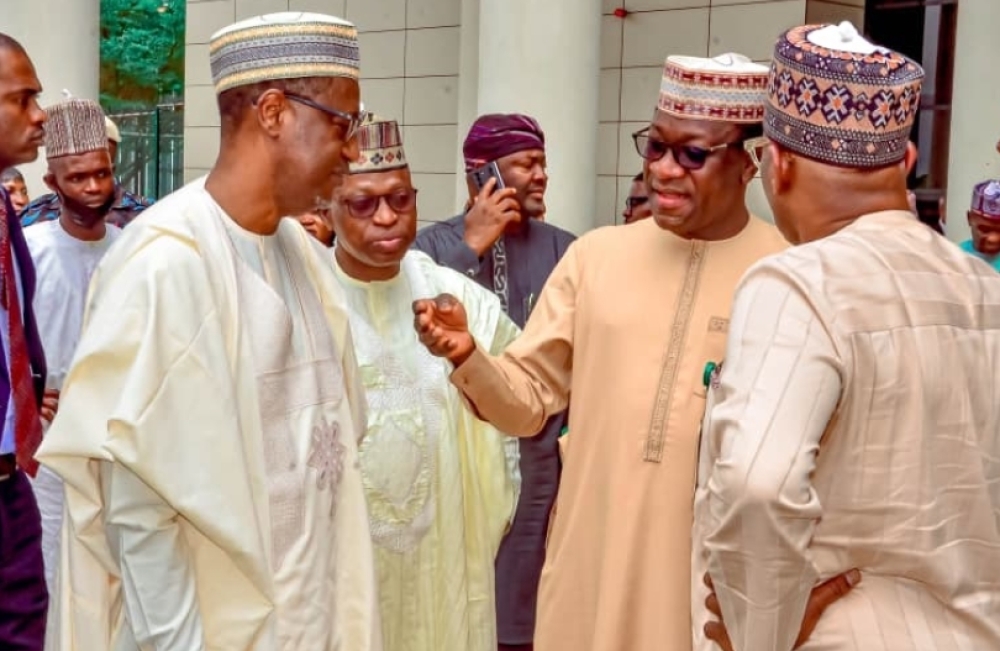
FMHUD MANAGEMENT APPEARS BEFORE REPS COMMITTEE FOR 2026 BUDGET DEFENSE
Hon Minister and Minister of State, FMHUD, Arch Ahmed Dangiwa and Rt Hon Yusuf Ata, led the Management Staff of the Ministry under the Permanent Secretary, Dr Shuaib Belgore to the 2026 Budget Defense before the House of Representatives Committee on Housing and Habitat, Tuesday, January 10th, 2026.
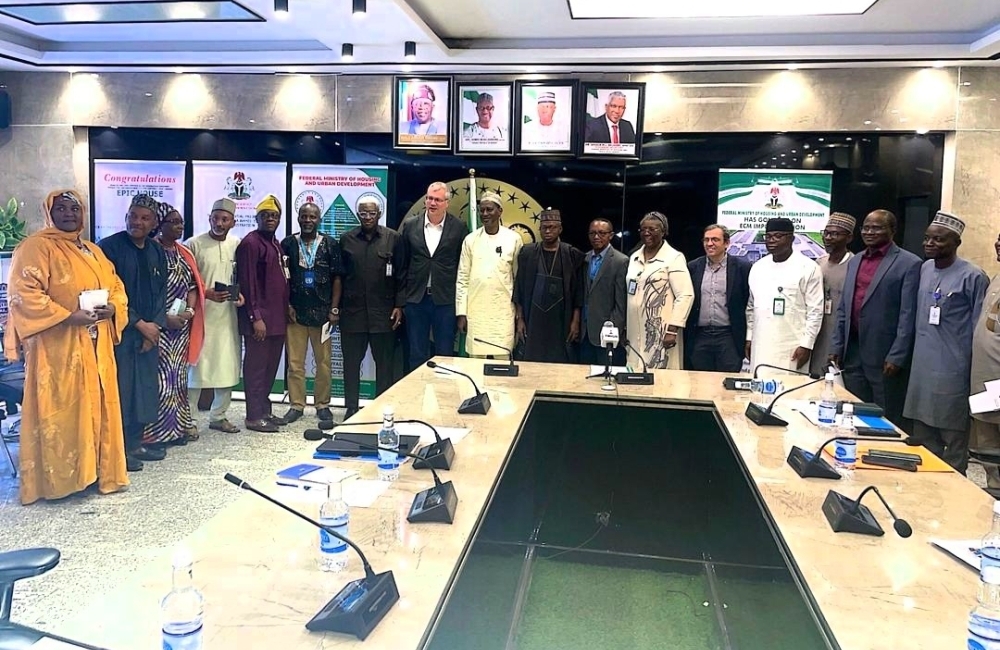
MEETING OF THE HON MINISTER, FMHUD AND HEAD OF UN HABITAT, WEST AFRICA HUB, DAKAR, MR MATHIAS, SPALIVIERO, WEDNESDAY, 25TH FEBRUARY, 2025
Meeting of the Hon Minister, FMHUD and Head of UN Habitat, West Africa Hub, Dakar, Mr Mathias, Spaliviero, Wednesday, 25th February, 2025