Dangiwa Harps On Capacity Building, Institutional Collaboration To Strengthening Surveying Practice.
* says strengthening synergy with the Nigerian Institution of Surveyors is strategic, necessary.
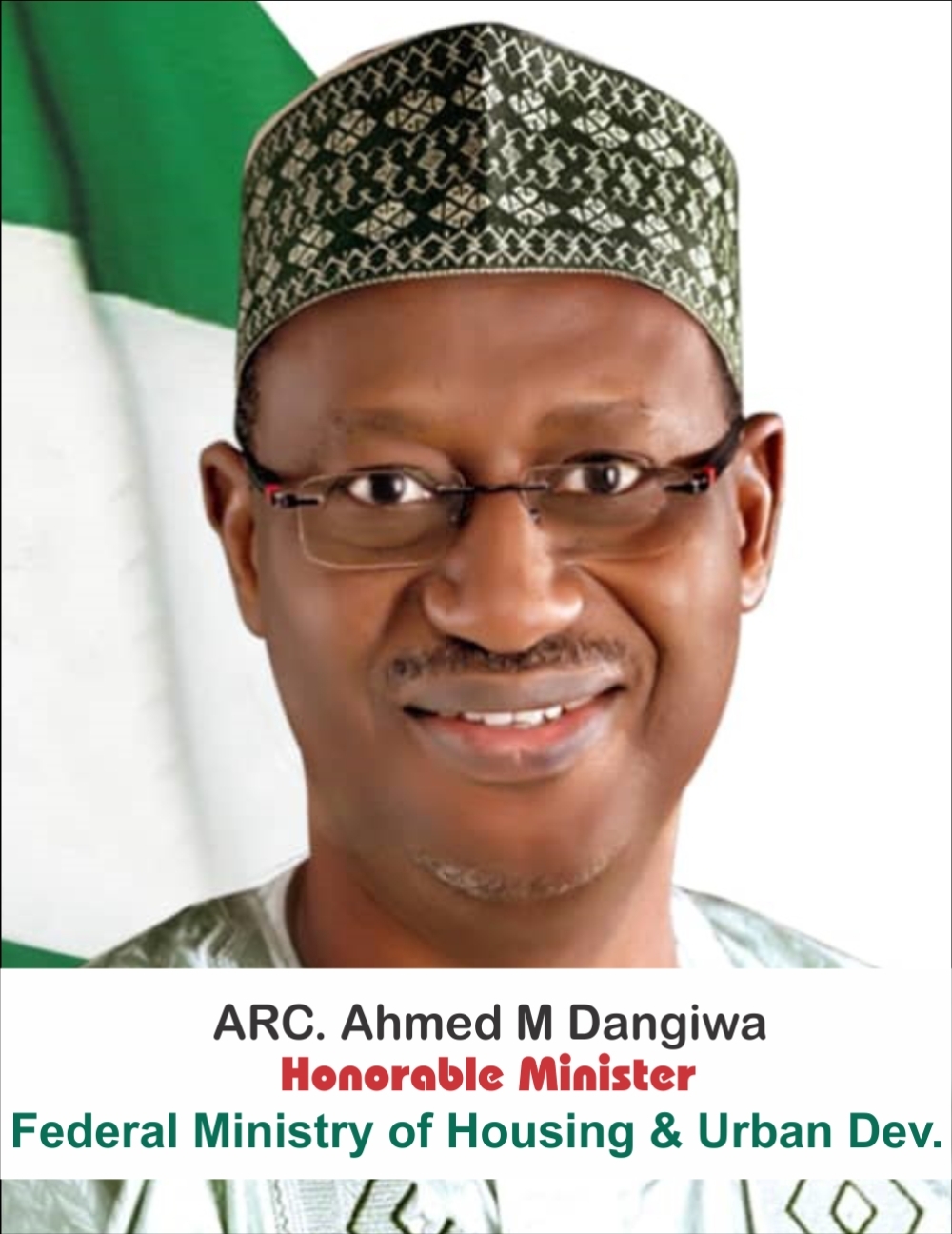
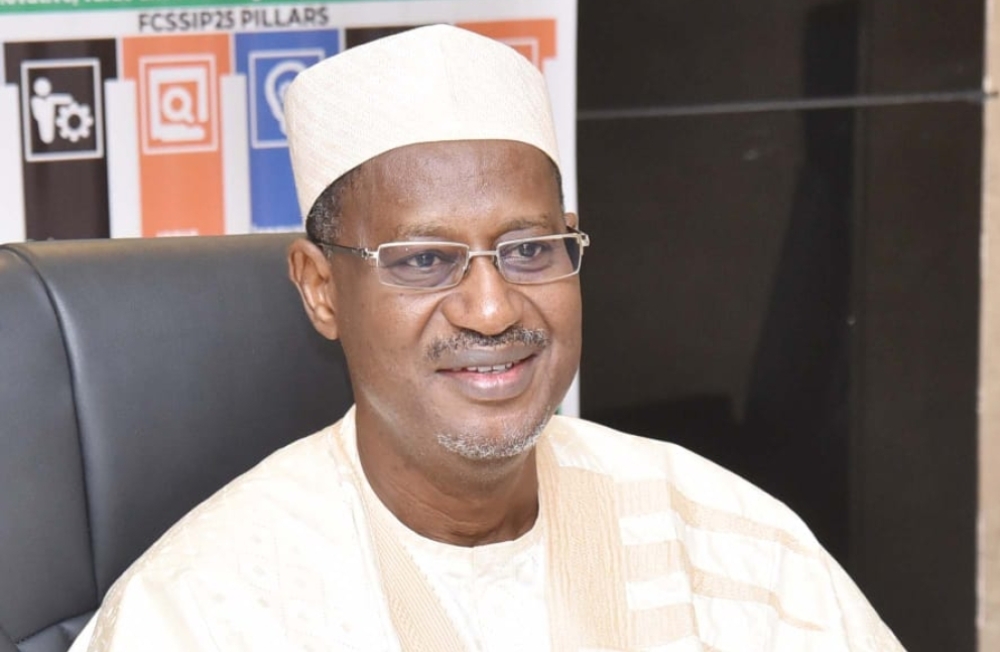
Minister of Housing and Urban Development, Arc. Ahmed Musa Dangiwa, has stated that a sustained capacity building and strong institutional collaboration is a strategic pathway to strengthening surveying practice, land administration, and sustainable urban development in Nigeria.
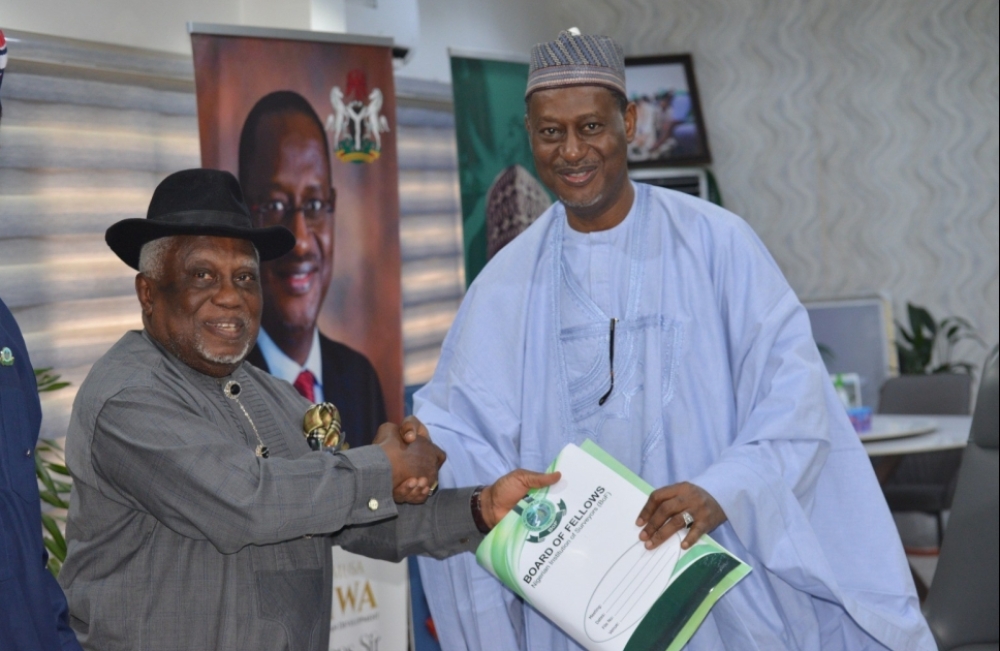
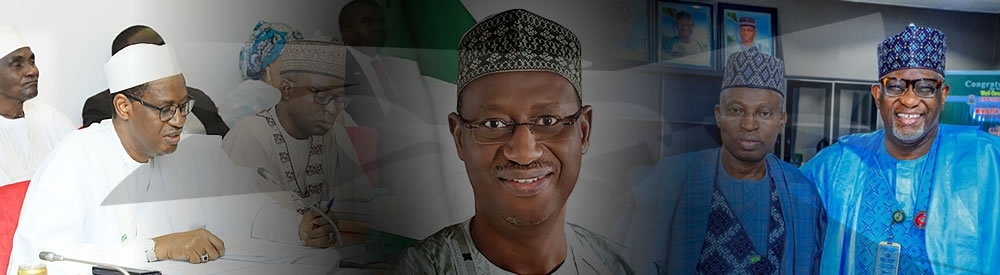
The Minister made this declaration when he received the chairman and members of the Board of Fellows of the Nigerian Institution of Surveyors who paid him a courtesy visit in his office, Thursday, February 26th, 2026
Arc. Dangiwa said that the Ministry is fully prepared to partner with the Nigerian Institution of Surveyors to develop and implement structured training and professional development programmes aimed at equipping surveyors—particularly young professionals.
According to the Minister, capacity building remains the most sustainable mechanism for institutional strengthening and professional excellence.
“Capacity building is the only way to properly develop the young professionals coming on board and raise our standards and best practices. It is critical to promoting professionalism in surveying and mapping and ensuring sustainable development across the country,” he stated.
Dangiwa disclosed that the Ministry is currently experiencing a significant human resource gap due to large-scale retirements, revealing that over one thousand staff members have retired within the last two years.
This development, he explained, makes collaboration with professional institutions even more imperative, particularly in the areas of training, mentorship, and knowledge transfer to ensure continuity, institutional memory, and improved service delivery.
He emphasized that the Ministry houses a substantial number of surveyors in the country and provides government oversight to relevant professional bodies. As such, strengthening synergy with the Nigerian Institution of Surveyors is both strategic and necessary.
Arc. Dangiwa further noted that the core mandates of the Ministry - housing development, land administration, and urban development—are inherently linked to surveying and geospatial services.
He stressed that effective land administration cannot be achieved without close collaboration with surveyors and other land professionals within the Ministry. He also highlighted that a branch of the Office of the Surveyor-General is domiciled within the Ministry under the Cadastral Department, further reinforcing the institutional linkage between both bodies.
Accordingly, he described the existing relationship between the Ministry and the Nigerian Institution of Surveyors as strong and evolving, adding that the collaboration must be deepened to support ongoing reforms and infrastructure expansion initiatives in the housing sector.
Earlier in his remarks, the Chairman of the Board of Fellows of the Nigerian Institution of Surveyors, Surv. Alabo Charlesye David Charles, stated that the visit was aimed at strengthening institutional cooperation and exploring strategic areas of mutual interest.
He listed the areas of collaboration to include;
* capacity building: development of tailored training and professional development programmes aligned with the Ministry’s operational needs.
* Institutional collaboration by strengthening structured engagement between the NIS and the Ministry to enhance policy implementation and professional standards.
* geoinformatics and technical support: Leveraging surveying and geospatial technologies to advance land administration, housing development, and urban planning initiatives.
* enhancing national geospatial data frameworks to support housing and urban development projects across the country, and
* promoting and enforcing high standards in surveying and mapping to ensure accuracy, transparency, and sustainable development outcomes.
Surv. Charles reaffirmed the Institution’s readiness to work closely with the Ministry in advancing professional excellence and supporting national development goals.
A major highlight of the visit was the conferment of the title of Honorary Fellow of the Nigerian Institution of Surveyors on the Honourable Minister in recognition of his contributions to housing and urban development and his support for professional advancement in the surveying sector.
The investiture ceremony is scheduled to hold on April 30, 2026. Arc. Dangiwa graciously accepted the honour and expressed appreciation to the Institution for the recognition.
The meeting underscored the shared commitment of both institutions to advancing professionalism, strengthening geospatial governance frameworks, and supporting Nigeria’s housing and urban development agenda through strategic collaboration, innovation, and human capital development.
The Federal Ministry of Housing and Urban Development remains committed to fostering partnerships that enhance technical capacity, promote best practices, and drive sustainable growth in the housing and land administration sectors.

Dangiwa Harps On Capacity Building, Institutional Collaboration To Strengthening Surveying Practice. * says strengthening synergy with the Nigerian Institution of Surveyors is strategic, necessary. Minister of Housing and Urban Development, Arc. Ahmed Musa Dangiwa, has stated that a sustained capacity building and strong institutional collaboration is a strategic pathway to strengthening surveying practice, land administration, and sustainable urban development in Nigeria. The Minister made this declaration when he received the chairman and members of the Board of Fellows of the Nigerian Institution of Surveyors who paid him a courtesy visit in his office, Thursday, February 26th, 2026 Arc. Dangiwa said that the Ministry is fully prepared to partner with the Nigerian Institution of Surveyors to develop and implement structured training and professional development programmes aimed at equipping surveyors—particularly young professionals. According to the Minister, capacity building remains the most sustainable mechanism for institutional strengthening and professional excellence. “Capacity building is the only way to properly develop the young professionals coming on board and raise our standards and best practices. It is critical to promoting professionalism in surveying and mapping and ensuring sustainable development across the country,” he stated. Dangiwa disclosed that the Ministry is currently experiencing a significant human resource gap due to large-scale retirements, revealing that over one thousand staff members have retired within the last two years. This development, he explained, makes collaboration with professional institutions even more imperative, particularly in the areas of training, mentorship, and knowledge transfer to ensure continuity, institutional memory, and improved service delivery. He emphasized that the Ministry houses a substantial number of surveyors in the country and provides government oversight to relevant professional bodies. As such, strengthening synergy with the Nigerian Institution of Surveyors is both strategic and necessary. Arc. Dangiwa further noted that the core mandates of the Ministry - housing development, land administration, and urban development—are inherently linked to surveying and geospatial services. He stressed that effective land administration cannot be achieved without close collaboration with surveyors and other land professionals within the Ministry. He also highlighted that a branch of the Office of the Surveyor-General is domiciled within the Ministry under the Cadastral Department, further reinforcing the institutional linkage between both bodies. Accordingly, he described the existing relationship between the Ministry and the Nigerian Institution of Surveyors as strong and evolving, adding that the collaboration must be deepened to support ongoing reforms and infrastructure expansion initiatives in the housing sector. Earlier in his remarks, the Chairman of the Board of Fellows of the Nigerian Institution of Surveyors, Surv. Alabo Charlesye David Charles, stated that the visit was aimed at strengthening institutional cooperation and exploring strategic areas of mutual interest. He listed the areas of collaboration to include; * capacity building: development of tailored training and professional development programmes aligned with the Ministry’s operational needs. * Institutional collaboration by strengthening structured engagement between the NIS and the Ministry to enhance policy implementation and professional standards. * geoinformatics and technical support: Leveraging surveying and geospatial technologies to advance land administration, housing development, and urban planning initiatives. * enhancing national geospatial data frameworks to support housing and urban development projects across the country, and * promoting and enforcing high standards in surveying and mapping to ensure accuracy, transparency, and sustainable development outcomes. Surv. Charles reaffirmed the Institution’s readiness to work closely with the Ministry in advancing professional excellence and supporting national development goals. A major highlight of the visit was the conferment of the title of Honorary Fellow of the Nigerian Institution of Surveyors on the Honourable Minister in recognition of his contributions to housing and urban development and his support for professional advancement in the surveying sector. The investiture ceremony is scheduled to hold on April 30, 2026. Arc. Dangiwa graciously accepted the honour and expressed appreciation to the Institution for the recognition. The meeting underscored the shared commitment of both institutions to advancing professionalism, strengthening geospatial governance frameworks, and supporting Nigeria’s housing and urban development agenda through strategic collaboration, innovation, and human capital development. The Federal Ministry of Housing and Urban Development remains committed to fostering partnerships that enhance technical capacity, promote best practices, and drive sustainable growth in the housing and land administration sectors.
Dangiwa Lauds Mr. President for FEC Approval of N31bn Access Road to Karsana Renewed Hope City Abuja, Nigeria – Tuesday, February 4, 2025 – The Honourable Minister of Housing and Urban Development, Arc. Ahmed Musa Dangiwa, has extended his deepest appreciation to His Excellency, President Bola Ahmed Tinubu, GCFR, for his bold vision for housing development and consistent support towards achieving the goals of the Renewed Hope Agenda for housing and urban development. This commendation follows the approval of N31.66 billion by the Federal Executive Council (FEC) for the construction of a critical access road to the 3,112 Housing Unit Renewed Hope City in Karsana, Federal Capital Territory (FCT). The approval was granted during the FEC meeting held today, following the presentation of a memo by the Honourable Minister of the Federal Capital Territory (FCT), Bar. Nyesom Wike. The memo was in line with the Presidential Directive issued last year during the launch of the Karsana Renewed Hope City project by President Tinubu. The directive emphasized the need for proper infrastructure and accessibility to all Renewed Hope Housing Project sites across the country. Arc. Dangiwa described the approval as a significant milestone in the Tinubu administration’s efforts to address Nigeria’s housing deficit and ensure sustainable urban development. He noted that the construction of the access road will not only ease transportation to the Karsana Renewed Hope City but also open up the axis for rapid housing development and economic activities. “This approval demonstrates Mr. President’s unwavering commitment to providing affordable housing for Nigerians and ensuring that all Renewed Hope Housing Projects are supported with the necessary infrastructure. The construction of this road will enhance accessibility to the Karsana Renewed Hope City, making it easier for Nigerians to benefit from this landmark housing project,” Arc. Dangiwa stated. The Karsana Renewed Hope City is a flagship project under the Tinubu administration’s Renewed Hope Housing Programme, designed to deliver 3,112 housing units to Nigerians. The project is part of a broader strategy to bridge Nigeria’s housing gap and provide decent, affordable housing for all citizens. The Honourable Minister also commended the Honourable Minister of the FCT, Bar. Nyesom Wike, for his diligence in presenting the memo and ensuring that the project aligns with the administration’s vision. He reiterated the Ministry of Housing and Urban Development’s commitment to working closely with all stakeholders to deliver the Renewed Hope Housing Projects on time and to the highest standards. The construction of the access road is expected to commence soon, with the project being closely monitored to ensure timely delivery. ...
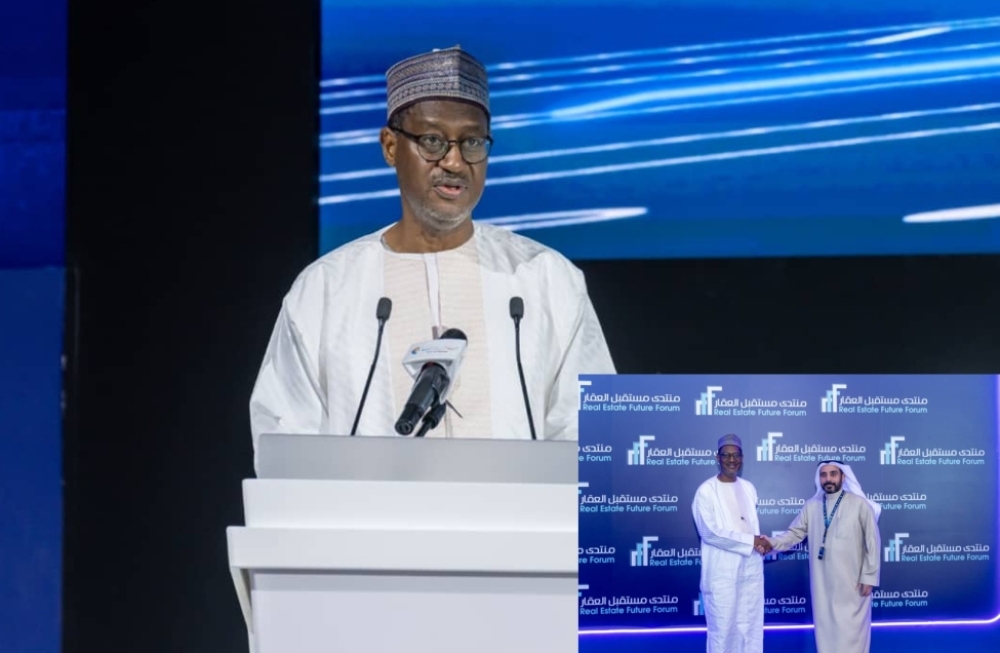
Housing Deficit a Big Opportunity for Transformative Change – Dangiwa • Advocates Public-Private Partnerships at the Saudi Arabia Real Estate Forum Riyadh, Saudi Arabia – The Honourable Minister of Housing and Urban Development, Federal Republic of Nigeria, Arc. Ahmed Musa Dangiwa, has described Nigeria’s housing deficit as both a challenge and an opportunity for transformative change. Speaking on Wednesday 29th January 2025 at the 4th Edition of the Real Estate Future Forum in Riyadh, Saudi Arabia, the Minister highlighted the Nigerian government’s commitment to addressing the housing shortfall through a blend of government finance and strategic public-private partnerships (PPP). Dangiwa commended the Kingdom of Saudi Arabia for its advancements in housing and urban development, noting that well-planned housing is essential for sustainable urban growth, economic prosperity, and improved living conditions. “With a housing deficit of over 20 million units and a rapidly growing population, Nigeria presents a vast opportunity for investment in affordable housing,” the Minister stated. “To bridge this gap, we need to build about 500,000 housing units annually over the next decade. He outlined Nigeria’s ambitious Renewed Hope Cities and Estates Programme, a government-driven initiative to deliver 100,000 housing units in the first phase. These developments, designed as integrated communities, will cater to all income levels, including high-end residences and affordable units for low- and middle-income earners. The Hon. Minister emphasized that affordability is central to the programme’s success, with mortgage loans, rent-to-own options, made available through the Federal Mortgage Bank of Nigeria. Beyond housing construction, Dangiwa listed the government’s plans to establish Building Materials Manufacturing Hubs (BMMHs) in each of Nigeria’s six geo-political zones. These hubs aim to reduce dependence on imported building materials, lower construction costs, and drive industrial growth. Additionally, he noted that the government is working to implement a Comprehensive Nationwide Social Housing Delivery Programme targeting vulnerable groups, aiming to provide 100,000 social housing units across Nigeria’s 774 Local Government Areas. Recognizing the scale of investment required, the Minister called on international investors, housing finance institutions, and reputable global developers to partner with the Nigerian government through Public-Private Partnerships. He assured investors of a conducive environment, including access to land, bankable offtake guarantees, and necessary concessions to ensure mutually beneficial collaborations. “The housing challenge in Nigeria is not just a problem; it is a massive opportunity for investment,” Dangiwa concluded. “By partnering with us, investors can play a crucial role in shaping the future of Nigerian housing while securing substantial returns on investment.” The Honourable Minister reaffirmed the government’s dedication to fostering an inclusive and sustainable housing sector and invited stakeholders to collaborate in building a prosperous and resilient urban future for Nigeria. The last day of the Saudi Real Estate Foprum featured presentations from notable international figures such as the former President of the United States, Mr. Bill Clinton, Mr. Tucker Carlson, Global Media Influencer and several other high profile speakers. ...
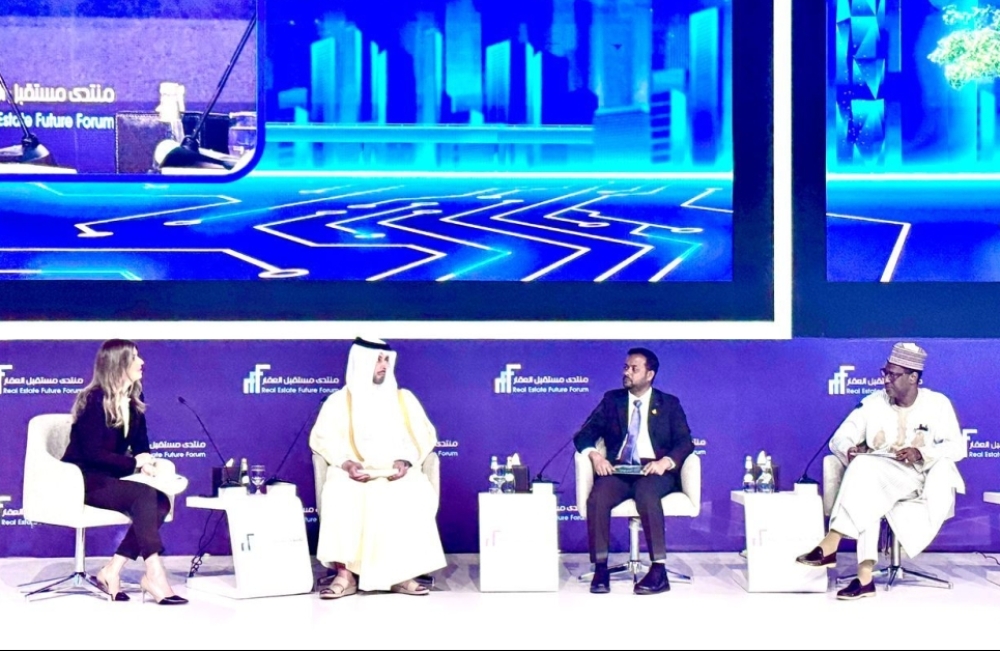
DANGIWA WOOS FOREIGN INVESTORS FOR RENEWED HOPE HOUSING PROGRAMME AT SAUDI REAL ESTATE FORUM Tuesday, January 28, 2025, Riyadh - Hon. Minister of Housing and Urban Development, Arc. Ahmed Musa Dangiwa has called on global investors in Saudi Arabia to take advantage of the huge opportunities in Nigeria's housing sector, specifically the Renewed Hope Cities and Estates Programme of the Federal Government. Speaking in a Panel Discussion at the Saudi Arabia Real Estate Forum yesterday, he disclosed that Nigeria's huge housing deficit offers enormous business opportunities, and the Renewed Hope Cities and Estates Programme serves as a low-hanging fruit for investors in the Middle Eastern nation to take advantage of and get good returns. The Forum themed, "Balance and Innovation in the Real Estate Landscape." was held at the Four Points Hotel in Riyadh and featured esteemed panelists including HE Eng. Abdullah Al-Attiya, Minister of Municipality, Qatar, and HE Dr. Abdulla Muththalib, Minister of Construction, Housing, and Infrastructure, Republic of Maldives. "Nigeria's real estate sector contributed around 5.2% to the nation's GDP in 2024, and will increase in market volume to $2.25 trillion by the end of 2025. Despite this, there is still tremendous opportunity for investment, especially in the Residential Real Estate segment. Nigerians need homes now more than ever and you can partner with the Nigerian government to deliver these houses at scale," he said. Dangiwa noted that Nigeria faces an estimated housing deficit of 28 million units, a situation exacerbated by rapid urbanization and migration. "The government is tackling this by prioritizing large-scale housing delivery through public-private partnerships, innovative financing, and government-led interventions. Additionally, efforts are underway to engage state governments in unlocking land for affordable housing projects, as difficulties in land acquisition continue to hinder progress," he added. Speaking on the theme, Dangiwa set the context by emphasizing that housing is a fundamental driver of economic growth, social stability, and national development. However, achieving a balance in the real estate sector between affordability and profitability means that the challenges of sustainability and cost efficiency, as well as policy and private sector incentives must be addressed. "In Nigeria, rapid urbanization, population growth, and economic pressures necessitate a rethinking of housing delivery strategies. The Federal Government is committed to addressing these challenges through initiatives like the Renewed Hope Cities and Estates Programme, the National Social Housing Fund, and strategic partnerships with local and international stakeholders," he said. Addressing the tension between affordable housing and profitability for developers, he acknowledged concerns that affordability often conflicts with commercial viability. "To counter this in Nigeria, the government is using incentives such as bankable offtake guarantees, facilitated land access, and low-interest financing to encourage investment in affordable housing. "The planned National Social Housing Fund aims to mobilize long-term concessional financing to ensure accessibility for lower and middle-income Nigerians. Furthermore, innovative models such as off-plan sales and bulk purchasing by cooperatives are being explored to reduce financial risks for developers while ensuring affordability for buyers," he noted. The Minister also touched on the subject of sustainability, stressing that energy-efficient buildings, the use of local materials, and smart construction techniques ultimately lower maintenance and operational costs. On this note, he said the Ministry is working with international partners like IFC EDGE to integrate green building practices into Nigeria’s housing sector through capacity building, technology transfer, and financial incentives. "Additionally, the establishment of Building Materials Manufacturing Hubs across Nigeria’s six geopolitical zones is expected to reduce reliance on imported materials, cut costs, create jobs, and support sustainable housing solutions," he said. He further assured the investors of the government's commitment and actions towards enhancing the affordability of Nigerians to purchase homes through mortgage. Dangiwa pointed out that high-interest mortgage rates, which can reach up to 30% per annum, have historically made homeownership difficult for many Nigerians. To address this, he said the government is expanding the Federal Mortgage Bank of Nigeria’s reach and recapitalizing it with N500 billion to provide more accessible single-digit mortgage products. "Additionally, collaborations with the Ministry of Finance Incorporated are in progress to leverage the Nigerian Capital Market and mobilize private sector funding for housing development. The Real Estate Investment Fund, targeting 12% mortgage interest rates instead of the market’s 28-30%, aims to provide bankable offtaker guarantees for developers. Meanwhile, rent-to-own schemes are being introduced to facilitate homeownership through flexible payment structures, including a rental assistance product that enables qualifying applicants to pay rent in monthly installments rather than upfront lump sums," he added. Technology and digital transformation in real estate also formed part of the Minister’s discussions. He underscored the importance of PropTech in digitizing property transactions and management, making them more efficient and secure. He revealed that this was being done in collaboration with the World Bank, who is undertaking a National Land Registration and Documentation Programme to streamline land titling, enhance transparency, and improve formalization in the sector. "Localization of housing production remains a priority, with the Ministry championing modular and prefabricated housing technologies to accelerate delivery and reduce costs. By promoting local production and reducing dependence on expensive imports, Nigeria aims to build more homes efficiently and affordably," he stressed. Declaring that Nigeria's Real Estate sector is open for business, Dangiwa reaffirmed the government’s commitment to creating an enabling environment for real estate growth through strong policies, regulatory frameworks, and investment incentives. "Collaboration with the Nigeria Governors’ Forum is also ongoing to improve land access, streamline approval processes, and enhance urban planning policies. Furthermore, urban renewal and slum upgrading initiatives are being expanded to improve living conditions in rural, semi-urban, and urban areas," he explained. While he acknowledged the headache investors feel with regards to achieving balance in the sector, he urged all not to treat balance and innovation in real estate as mutually exclusive, noting that they can be pursued simultaneously through smart policies, innovative financing, sustainable construction, and digital transformation. He reiterated his commitment to advancing policies that make housing more accessible, affordable, and sustainable in alignment with the Renewed Hope Agenda of the Tinubu Administration. ...
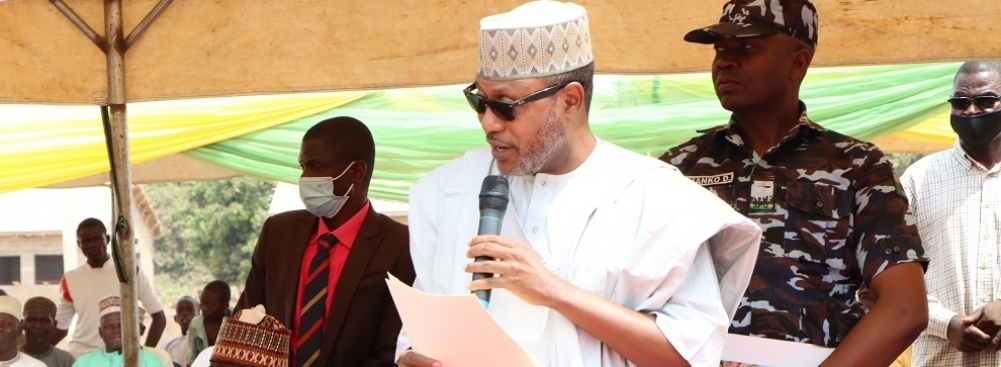
SPEECH BY REPRESENTATIVE OF MR PRESIDENT, BARR. MOHAMMED ABDULLAHI, HONOURABLE MINISTER OF STATE FOR SCIENCE & TECHNOLOGY, AT THE COMMISSIONING OF THE NATIONAL HOUSING PROJECTS IN NASARAWA STATE ON MONDAY 7TH MARCH, 2022
Distinguished Ladies and Gentlemen, I am extremely proud to undertake the Commissioning of this Housing Estate in Nasarawa State, on behalf of the Federal Government.
This is one of the projects undertaken by our Government in Phases since 2016.
When our party, the All Progressives Congress (APC), sought your mandate to form the Government in 2015, one of the things we promised was change.
This housing estate is an example of the fulfillment of that promise of change.
With the support of the Nasarawa State Government who provided the land, this place which was once unused land, amounting to no more than idle capital, has come alive and will now provide shelter for ordinary Nigerians.
This is a good example of some of the developmental possibilities that Inter-Governmental collaboration can produce and I am optimistic that with the provision of more land, the Federal Government certainly can do more.
Of course, the progressive ideals of our Government seeks to achieve one primary objective, which is to IMPROVE the human condition.
This housing estate has achieved that in many ways.
The Micro, Small and Medium size businesses who drive our economy were the ones who won the contracts to build these houses. Not only did their successful bids offer an opportunity for these companies and their employees, through them we have unleashed a value chain of economic activities that improved the conditions of the ordinary Nigerians.
They engaged suppliers who benefit from sub-contracts for the supply of building materials from sand to cement, roofing and plumbing material to doors and electrical fitting.
In the process, the ordinary Nigerians at the bottom of the pyramid such as artisans, builders, skilled and unskilled workers and food vendors were not left out of this economic value chain.
These are some of the people our Country remains committed to move towards prosperity and away from poverty and we are already reaching them by providing opportunities for employment for those who were hitherto unemployed.
We certainly cannot meet every one of those Nigerians in person, but our economic policies and investment in infrastructure such as this National Housing Programme and others will reach and positively impact many of them.
Our desire and commitment towards improving the human condition and our message of change, have another facet beyond job creation.
It responds to those who have long aspired to own a home, and that dream has come true with this project.
But there is more to our message of change and improving the human condition in these housing projects.
They make possible, that which had seemed impossible.
In the states where the houses have been completed, we have issued maintenance contracts to small businesses to ensure that the estates are maintained and kept in good repair.
These are jobs that did not exist that we have created.
Of course we must not overlook the capital appreciation of the value of the adjoining land and the income benefit to the land owners from our investment in infrastructure.
Finally, I offer my appreciation to the Government and people of Nasarawa State for their cooperation towards the successful completion and the commissioning of a project that will help improve and promote the welfare of the people of this State.
It is therefore my honour and privilege to declare this Housing Estate completed and open for use, for the benefit of humanity.
President Muhammadu Buhari
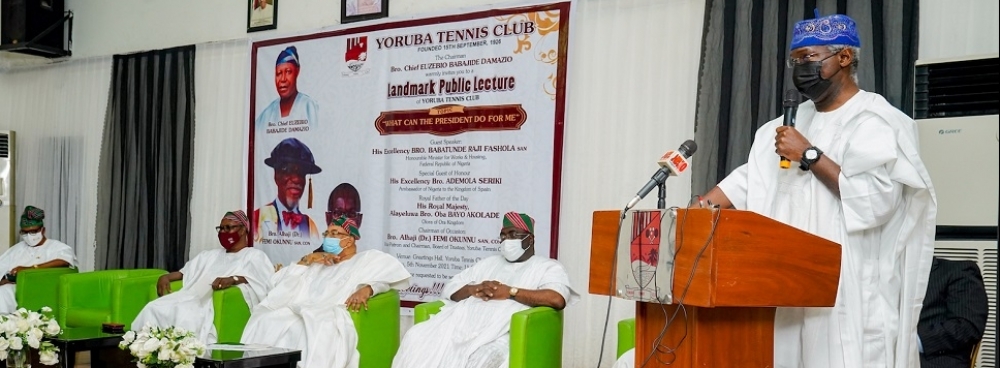
THE KEYNOTE SPEECH BY H.E BABATUNDE RAJI FASHOLA, SAN AT THE EKITI STATE UNIVERSITY ALUMNI ASSOCIATION 2021 GENERAL ASSEMBLY AND CONVENTION LECTURE
Ladies and Gentlemen,
Let me start my speech by thanking you for inviting me to be your guest speaker at your convention for this year.
I sincerely hope that this year’s convention is not only successful but extremely rewarding of the efforts that have gone into arranging it.
The history of Alumni Associations of universities is quite dated and well reported and you have become part of a global network of similar associations who have contributed to enriching the human civilisation worldwide.
I however have some concerns about the negative presumption in the title you have selected, which is “Tragedy of leadership without legacy; Safeguarding the next generation of Nigerian leaders.”
I prefer to always see my glass and that of Nigeria as half full and not half empty.
In this regard, I look for triumphs and not tragedies.
So, let me share with you a triumph and a legacy.
Up until 21st of March 1982, there was no state university in the old Ondo state and there was no Ekiti state as a legal entity. Indeed, the idea that an Ekiti state would one day own a university was not in contemplation.
But all of these changed on the 22nd of March 1982 by the action of Chief Michael Adekunle Ajasin, as the Governor of the then Ondo state, when he created the Ondo State University.
That was an act of leadership, to create an institution of higher learning to prepare the next generation and make them ready to lead.
That action was triumphant and not tragic.
And it would seem that the then Ondo state university was a worthy legacy that any leader in the public or private sector would be proud of.
But the triumphs and legacies did not stop there.
To the credit of the Babangida Administration and in response to the yearnings of the people of Ekiti who were then part of Ondo State, Ekiti state was birthed as a legal entity in 1996.
It is extremely doubtful that if a referendum were held today to return Ekiti to become part of the old Ondo state, that such a referendum will find majority support if it finds any support at all.
The reason why such a referendum will almost certainly fail, if it ever emanates in the first place, is that the people of Ekiti are proud of their state.
That is a legacy, and I dare say, a triumph, not a tragedy of leadership.
Yes, there are those who at the time did not want the military to remain and I am one of them, but we cannot dismiss something as worthy as Ekiti state, because we dislike those who produced it or the system by which they did it.
It might interest you to find out how the law that finally abolished slavery in America was passed and the efforts of Abraham Lincoln to get parliamentary support for it.
The process by which the support of the law makers was obtained for the Abolition Law are not necessarily worthy of badges of honour, but the abolition of slavery, the freedoms they delivered for the human mind and dignity remain enduring and triumphant legacies of leadership.
Some of you may be aware of the Battle of Normandy. This was the last push of a global coalition in 1944 to stop a German advance on Europe and by extension the whole world.
Recent declassification of military records now reveals that it was not just bravery alone that won the contest.
But the legacies of freedom that the triumph of the coalition forces delivered is with us today.
The aftermath of that effort led to the birth of the United Nations and the prescription of a new global legal order that has regulated the conduct of human affairs till today.
Away from history and back to Ekiti, the triumphs do not end, and the legacies continue.
One of them is the Alumni Association whose guest I am today. Without Ekiti State, and without Ekiti State University, from where would an alumni association of an Ekiti State University sprung forth?
So, to you my dear brothers and sisters, do away with negativity, look for possibilities, acknowledge little and modest successes, and let us work together to build for a better tomorrow.
Those who propel us to think negatively are not only thinking positively and acting positively, they are benefiting from our negativities. Therefore, I urge you to seek to do good things for a good reason not because we want to correct a bad thing.
For too long, our developmental aspirations have been anchored on “correcting what was wrong” when it can be anchored on an aspiration for self-improvement.
As someone once put it, we should not delegitimize in order to legitimize.
So for example, a Government in office, should build a waterworks for the people not because it has never been built before or because the previous government failed to build it, but because water is life, water is good for sanitation and for health care and water promotes wellness.
Therefore, at a recent event where I was invited to speak about the role of private sector in funding infrastructure gap and housing deficit, I modified the subject by removing “gap” and “deficit” from the topic.
I did so for a couple of reasons not least of which is the negativity that I perceived about those words and my subject.
I did so in part because I am aware that every part of the world is committing to building more infrastructure and housing because it helps the economy, and it creates jobs and not because they want to fill the “gap” or bridge a “deficit.”
I did so also because I know that President Buhari’s investment in infrastructure and housing is not meant to fill a gap or bridge a deficit; but to grow the Nigerian economy to global competitiveness and to invest in the Nigerian people.
Therefore, we must not only acknowledge what has been done by those before us, we as the leaders of today must embrace our responsibility to safeguard the next generation of Nigerian leaders.
We must then ask ourselves what we can do, to improve on the triumph of the legacy of Chief Michael Ajasin, in order to prepare the future for our children and our children’s children.
In this regard, we must be aspirational, forward-looking and ready to take responsibility for what happens in one generation.
If we keep looking backwards, we will be looking for who to blame. The energy spent in looking for “scapegoats” and there are none, can be spent visioning and planning for tomorrow.
So let us look at today and what we have, in order to possibly project what we will need and prepare how to do them.
In this regard I can only offer suggestions as I do not profess to have all the ideas or answers.
But a good starting point is to accept that our world is changing and will continue to change. Therefore, we must prepare to adapt in order to safeguard the next generation.
At the onset of the industrial revolution, the subsequent discovery of crude oil and its amenability to being refined was the Holy Grail of that period.
It birthed a new economy of high-powered petrol and diesel driven machines that created global prosperity.
That is going away now as the world commits to a Net Zero carbon world from around 2050 and beyond. That is one generation away and we must prepare.
We must prepare by getting ready to acquire skills that will be useful to thrive in a Net Zero carbon environment and build our prosperity away from the carbon environment.
Another area is financial services. When last did you write a cheque? That was the ultimate symbol of financial inclusion or the ownership of a passbook, for those with savings accounts.
All of that is gone, many jobs have been lost with the disappearance of cheque books and replaced, but we still undertake financial transactions using different skills.
Bitcoins, cryptocurrency and of course our E-Naira are the new faces of financial transactions. To quote a popular saying in an adapted form - What will we think of next and how ready are we?
Of course, I cannot but discuss my personal passion which is Sports.
In about two generations, a pastime has become a profession that supports lives and livelihoods across the world among young people in the main, who are now professional sports men and woman.
A massive economy has been built around it including innovation, research and development for equipment, medicine, nutrition and officiating.
The sports that our parents told us was for “never do wells” is not only a major income earner globally, it is a source of projecting global sovereign strength.
Our plan for the next generation must include preparing our children to proudly deploy their skills in a professional way in the sporting arena.
While sports has struggled, the other sides of the talent based vocation such as music, dance, theatre and arts are prospering in varying degrees.
We must prepare the next generation to multiply the gains and consolidate on the success of today.
There are many things that we need to do and this occasion and the time permitted, do not lend themselves to an exhaustive consideration of those things.
But one thing that this occasion lends itself to, and which time permits us to do, is that this convention can (and I recommend that it must) be used to liberate our minds.
We must at this convention resolve to unshackle our minds from negativity, and embrace positive and aspirational thoughts.
After all, we can only do things that we can think of.
Therefore, the greatest bequest we can give the next generation is a gift of a belief in possibilities. If we do not believe how can we pass it on?
I do, I believe in the endless possibilities of Nigeria. What about you?
I acknowledge the triumphs and legacies of many who came before me, and even if I criticize some of their choices, I do not disown the foundations they contributed to where I stand today.
I am resolved to improve on what I inherited and pass it on to those who will come after me. This in part explains why the Federal Government through the Ministry of Works and Housing is undertaking repairs and reconstruction of internal Roads in 44 Tertiary institutions and the list of beneficiaries is growing.
What about you? What are you prepared to do to improve on what you inherited?
Thank you once again for inviting me. Thank you for listening.
Babatunde Raji Fashola, SAN
Honourable Minister of Works and Housing
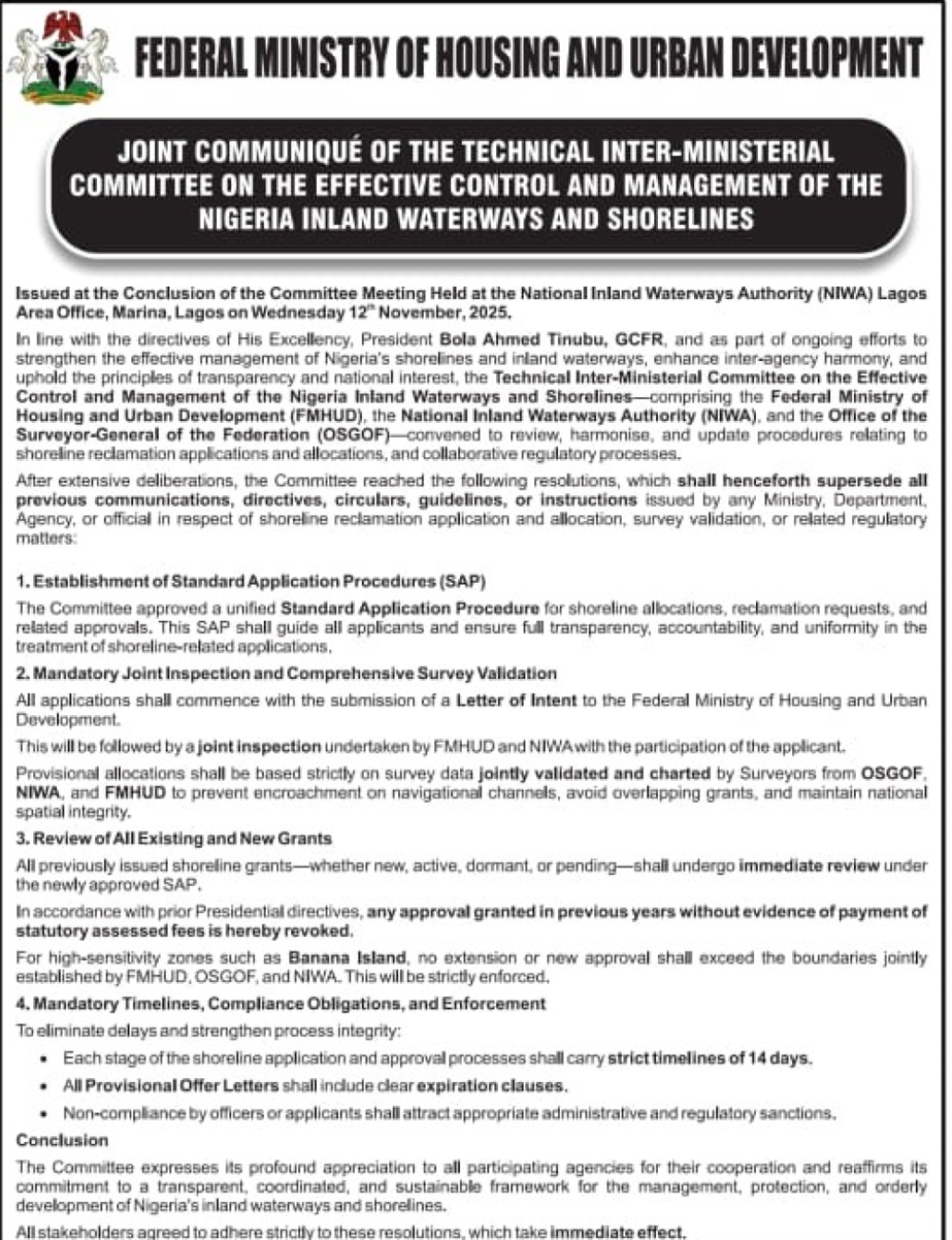
JOINT COMMUNIQUE OF THE TECHNICAL INTER-MINISTERIAL COMMITTEE ON THE EFFECTIVE CONTROL AND MANAGEMENT OF THE NIGERIA INLAND WATERWAYS AND SHORELINES

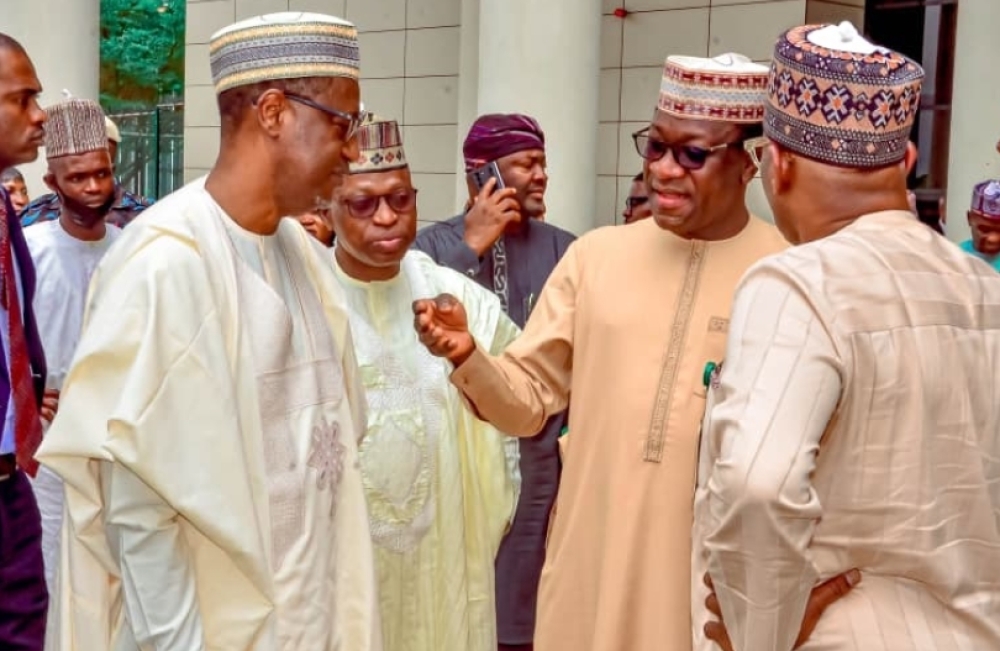
FMHUD MANAGEMENT APPEARS BEFORE REPS COMMITTEE FOR 2026 BUDGET DEFENSE
Hon Minister and Minister of State, FMHUD, Arch Ahmed Dangiwa and Rt Hon Yusuf Ata, led the Management Staff of the Ministry under the Permanent Secretary, Dr Shuaib Belgore to the 2026 Budget Defense before the House of Representatives Committee on Housing and Habitat, Tuesday, January 10th, 2026.
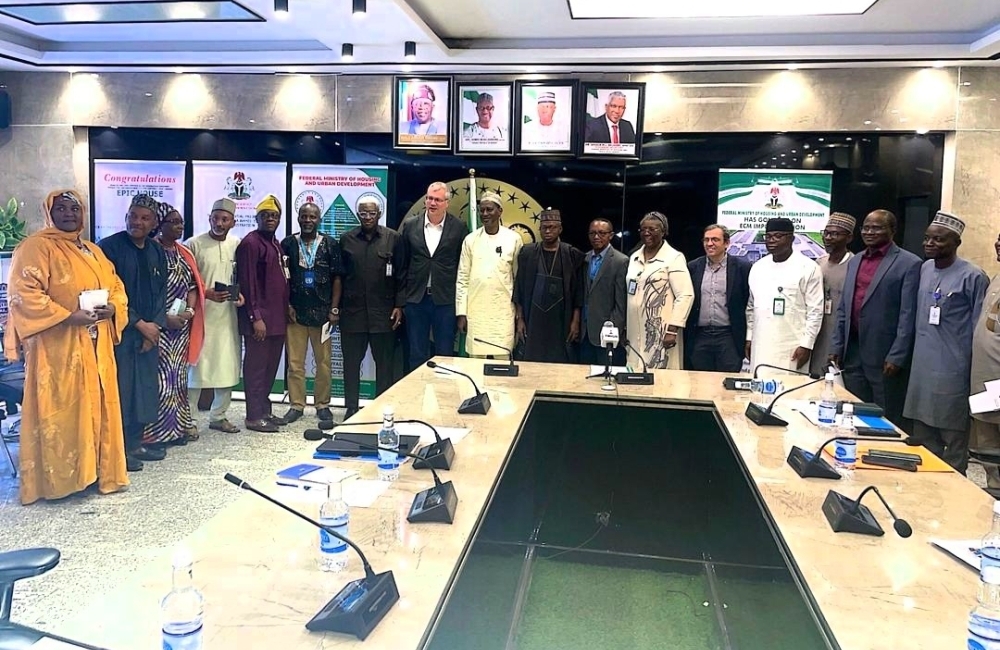
MEETING OF THE HON MINISTER, FMHUD AND HEAD OF UN HABITAT, WEST AFRICA HUB, DAKAR, MR MATHIAS, SPALIVIERO, WEDNESDAY, 25TH FEBRUARY, 2025
Meeting of the Hon Minister, FMHUD and Head of UN Habitat, West Africa Hub, Dakar, Mr Mathias, Spaliviero, Wednesday, 25th February, 2025