Dangiwa Harps On Capacity Building, Institutional Collaboration To Strengthening Surveying Practice.
* says strengthening synergy with the Nigerian Institution of Surveyors is strategic, necessary.
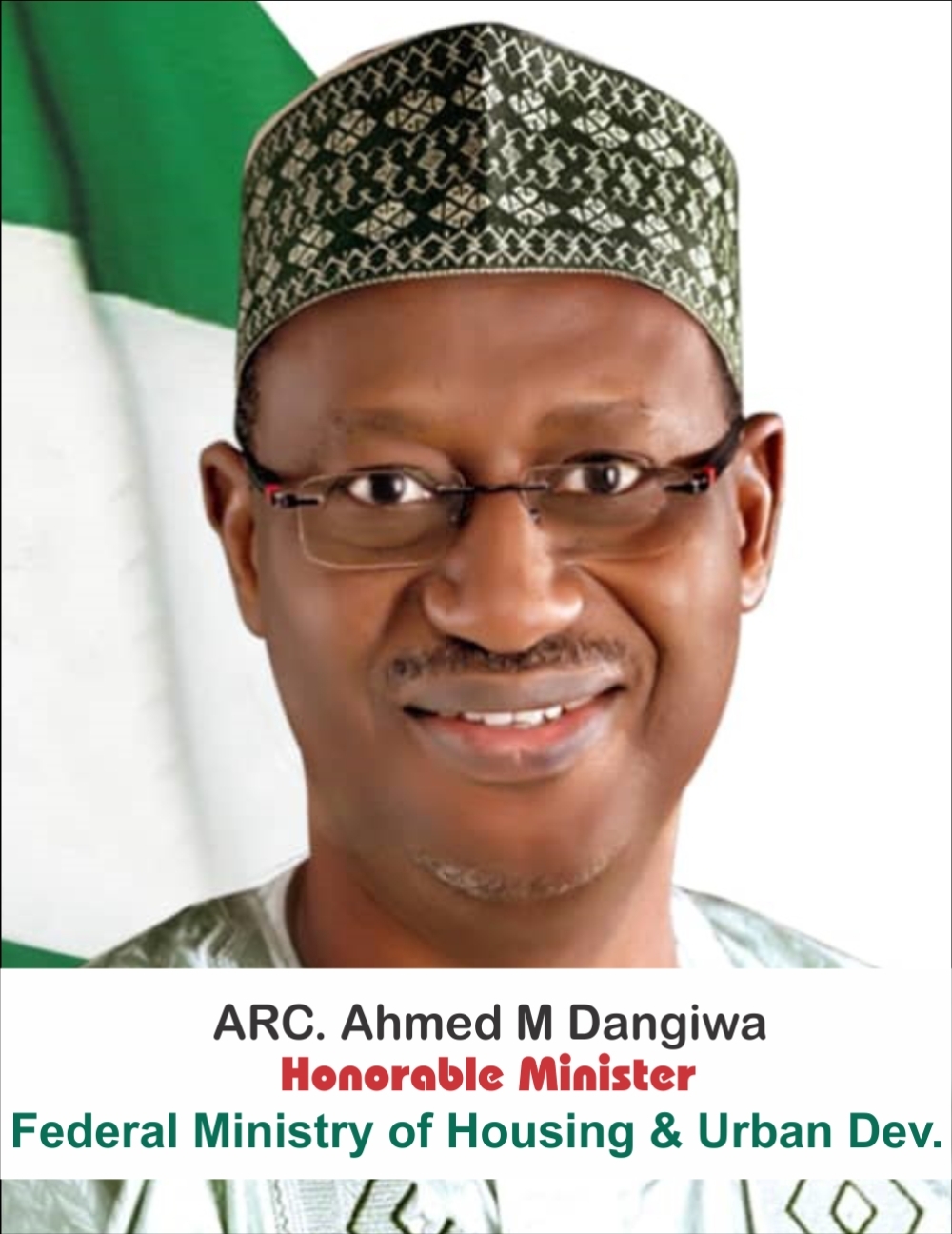
Minister of Housing and Urban Development, Arc. Ahmed Musa Dangiwa, has stated that a sustained capacity building and strong institutional collaboration is a strategic pathway to strengthening surveying practice, land administration, and sustainable urban development in Nigeria.
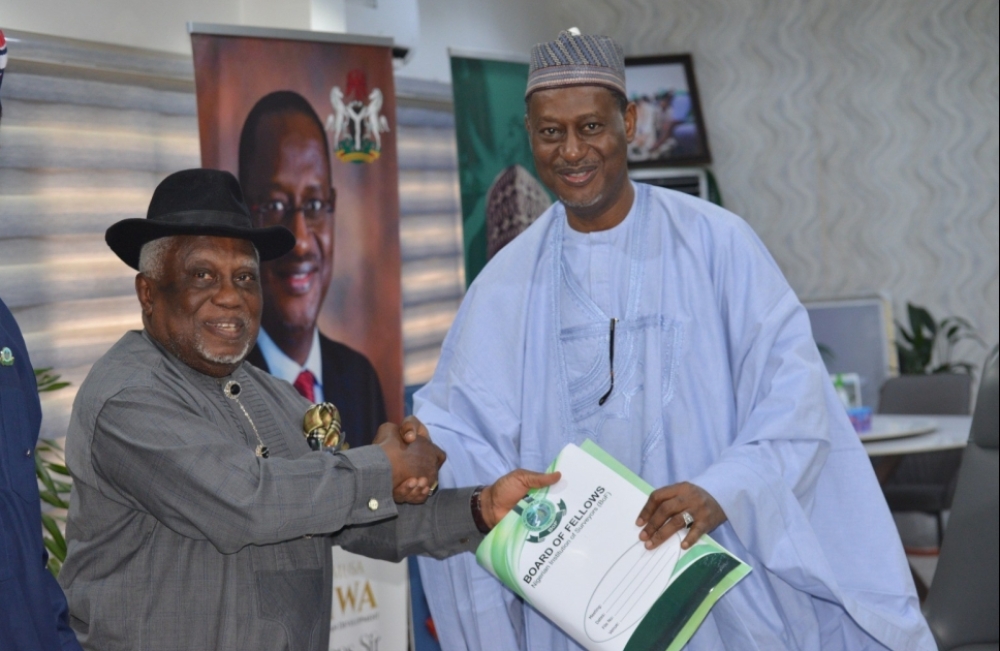
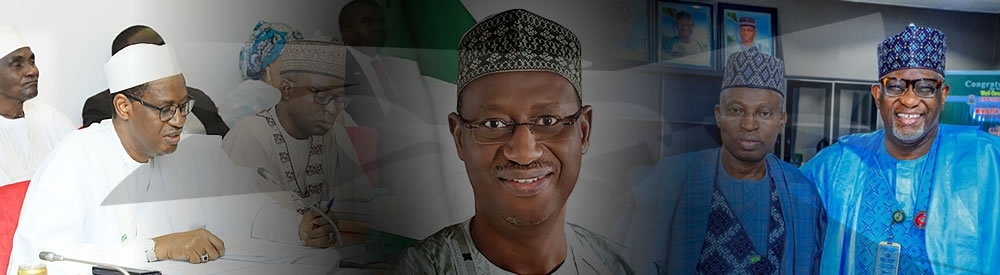
The Minister made this declaration when he received the chairman and members of the Board of Fellows of the Nigerian Institution of Surveyors who paid him a courtesy visit in his office, Thursday, February 26th, 2026
Arc. Dangiwa said that the Ministry is fully prepared to partner with the Nigerian Institution of Surveyors to develop and implement structured training and professional development programmes aimed at equipping surveyors—particularly young professionals.
According to the Minister, capacity building remains the most sustainable mechanism for institutional strengthening and professional excellence.
“Capacity building is the only way to properly develop the young professionals coming on board and raise our standards and best practices. It is critical to promoting professionalism in surveying and mapping and ensuring sustainable development across the country,” he stated.
Dangiwa disclosed that the Ministry is currently experiencing a significant human resource gap due to large-scale retirements, revealing that over one thousand staff members have retired within the last two years.
This development, he explained, makes collaboration with professional institutions even more imperative, particularly in the areas of training, mentorship, and knowledge transfer to ensure continuity, institutional memory, and improved service delivery.
He emphasized that the Ministry houses a substantial number of surveyors in the country and provides government oversight to relevant professional bodies. As such, strengthening synergy with the Nigerian Institution of Surveyors is both strategic and necessary.
Arc. Dangiwa further noted that the core mandates of the Ministry - housing development, land administration, and urban development—are inherently linked to surveying and geospatial services.
He stressed that effective land administration cannot be achieved without close collaboration with surveyors and other land professionals within the Ministry. He also highlighted that a branch of the Office of the Surveyor-General is domiciled within the Ministry under the Cadastral Department, further reinforcing the institutional linkage between both bodies.
Accordingly, he described the existing relationship between the Ministry and the Nigerian Institution of Surveyors as strong and evolving, adding that the collaboration must be deepened to support ongoing reforms and infrastructure expansion initiatives in the housing sector.
Earlier in his remarks, the Chairman of the Board of Fellows of the Nigerian Institution of Surveyors, Surv. Alabo Charlesye David Charles, stated that the visit was aimed at strengthening institutional cooperation and exploring strategic areas of mutual interest.
He listed the areas of collaboration to include;
* capacity building: development of tailored training and professional development programmes aligned with the Ministry’s operational needs.
* Institutional collaboration by strengthening structured engagement between the NIS and the Ministry to enhance policy implementation and professional standards.
* geoinformatics and technical support: Leveraging surveying and geospatial technologies to advance land administration, housing development, and urban planning initiatives.
* enhancing national geospatial data frameworks to support housing and urban development projects across the country, and
* promoting and enforcing high standards in surveying and mapping to ensure accuracy, transparency, and sustainable development outcomes.
Surv. Charles reaffirmed the Institution’s readiness to work closely with the Ministry in advancing professional excellence and supporting national development goals.
A major highlight of the visit was the conferment of the title of Honorary Fellow of the Nigerian Institution of Surveyors on the Honourable Minister in recognition of his contributions to housing and urban development and his support for professional advancement in the surveying sector.
The investiture ceremony is scheduled to hold on April 30, 2026. Arc. Dangiwa graciously accepted the honour and expressed appreciation to the Institution for the recognition.
The meeting underscored the shared commitment of both institutions to advancing professionalism, strengthening geospatial governance frameworks, and supporting Nigeria’s housing and urban development agenda through strategic collaboration, innovation, and human capital development.
The Federal Ministry of Housing and Urban Development remains committed to fostering partnerships that enhance technical capacity, promote best practices, and drive sustainable growth in the housing and land administration sectors.


Dangiwa Harps On Capacity Building, Institutional Collaboration To Strengthening Surveying Practice. * says strengthening synergy with the Nigerian Institution of Surveyors is strategic, necessary. Minister of Housing and Urban Development, Arc. Ahmed Musa Dangiwa, has stated that a sustained capacity building and strong institutional collaboration is a strategic pathway to strengthening surveying practice, land administration, and sustainable urban development in Nigeria. The Minister made this declaration when he received the chairman and members of the Board of Fellows of the Nigerian Institution of Surveyors who paid him a courtesy visit in his office, Thursday, February 26th, 2026 Arc. Dangiwa said that the Ministry is fully prepared to partner with the Nigerian Institution of Surveyors to develop and implement structured training and professional development programmes aimed at equipping surveyors—particularly young professionals. According to the Minister, capacity building remains the most sustainable mechanism for institutional strengthening and professional excellence. “Capacity building is the only way to properly develop the young professionals coming on board and raise our standards and best practices. It is critical to promoting professionalism in surveying and mapping and ensuring sustainable development across the country,” he stated. Dangiwa disclosed that the Ministry is currently experiencing a significant human resource gap due to large-scale retirements, revealing that over one thousand staff members have retired within the last two years. This development, he explained, makes collaboration with professional institutions even more imperative, particularly in the areas of training, mentorship, and knowledge transfer to ensure continuity, institutional memory, and improved service delivery. He emphasized that the Ministry houses a substantial number of surveyors in the country and provides government oversight to relevant professional bodies. As such, strengthening synergy with the Nigerian Institution of Surveyors is both strategic and necessary. Arc. Dangiwa further noted that the core mandates of the Ministry - housing development, land administration, and urban development—are inherently linked to surveying and geospatial services. He stressed that effective land administration cannot be achieved without close collaboration with surveyors and other land professionals within the Ministry. He also highlighted that a branch of the Office of the Surveyor-General is domiciled within the Ministry under the Cadastral Department, further reinforcing the institutional linkage between both bodies. Accordingly, he described the existing relationship between the Ministry and the Nigerian Institution of Surveyors as strong and evolving, adding that the collaboration must be deepened to support ongoing reforms and infrastructure expansion initiatives in the housing sector. Earlier in his remarks, the Chairman of the Board of Fellows of the Nigerian Institution of Surveyors, Surv. Alabo Charlesye David Charles, stated that the visit was aimed at strengthening institutional cooperation and exploring strategic areas of mutual interest. He listed the areas of collaboration to include; * capacity building: development of tailored training and professional development programmes aligned with the Ministry’s operational needs. * Institutional collaboration by strengthening structured engagement between the NIS and the Ministry to enhance policy implementation and professional standards. * geoinformatics and technical support: Leveraging surveying and geospatial technologies to advance land administration, housing development, and urban planning initiatives. * enhancing national geospatial data frameworks to support housing and urban development projects across the country, and * promoting and enforcing high standards in surveying and mapping to ensure accuracy, transparency, and sustainable development outcomes. Surv. Charles reaffirmed the Institution’s readiness to work closely with the Ministry in advancing professional excellence and supporting national development goals. A major highlight of the visit was the conferment of the title of Honorary Fellow of the Nigerian Institution of Surveyors on the Honourable Minister in recognition of his contributions to housing and urban development and his support for professional advancement in the surveying sector. The investiture ceremony is scheduled to hold on April 30, 2026. Arc. Dangiwa graciously accepted the honour and expressed appreciation to the Institution for the recognition. The meeting underscored the shared commitment of both institutions to advancing professionalism, strengthening geospatial governance frameworks, and supporting Nigeria’s housing and urban development agenda through strategic collaboration, innovation, and human capital development. The Federal Ministry of Housing and Urban Development remains committed to fostering partnerships that enhance technical capacity, promote best practices, and drive sustainable growth in the housing and land administration sectors.
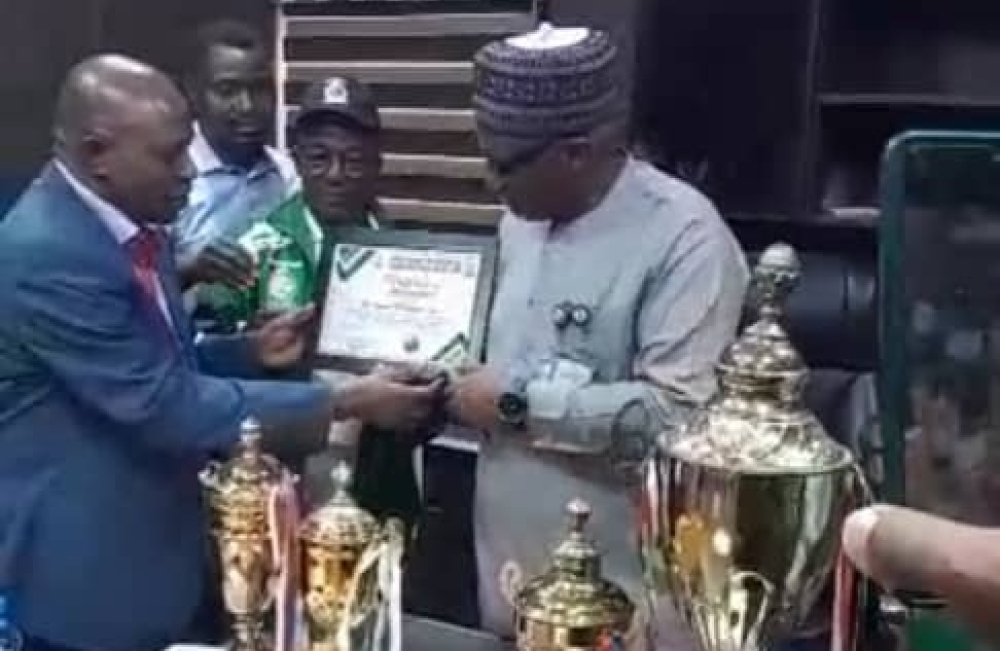
Housing Ministry Presents Awards to Sports Club Members for Winning FEPSGA Medals * Inaugurates Staff Bus Committee The Federal Ministry of Housing and Urban Development has presented awards to the sports staff members of the Ministry who won medals at the Federation Public Service Games (FEPSGA) 2024, which took place at the Sharks stadium, Alfred Diette Spiff Sports Complex, Port Harcourt, Rivers State. The Permanent Secretary, Dr Shuaib Belgore presented the awards at a specially organised ceremony that took place in his conference room. The medals won includes four (4) golds, six (6) silver and four (4) bronze medals, from different categories of sport games they participated. In his address, Dr. Shuaib Belgore, expressed profound congratulations to the sports club members of the Ministry for their outstanding achievements at the FEPSGA 2024. While praising the team for their dedication and team work, Belgore revealed his extreme keen interest in sporting activities, mentioning his past active participation in football game as well as his current involvement in squash game. He declared his love for success in sports, emphasizing on the health, brain and social benefits of sports; “it builds a spirit of competitiveness that you will bring into your endeavors in life. It is very important for humans to play”, he said. He also expressed pride in the teams performance, and the representation given to the Ministry not just at the FEPSGA game, but also at the just concluded May 2025 edition of the monthly walking Jogging exercise where the team won two Trophies in the categories of best Kitted Ministry, and the third highest in attendance. He called on the team to encourage other staff members who were not already involved in the sporting activities to join. While presenting the medals to the winners, Belgore announced that the gold medal winners will get a hundred thousand naira (₦ 100,000), the silver medal winners, seventy five thousand naira (₦ 75,000), and the bronze winners fifty thousand naira (₦ 50,000). Accordingly, Belgore promised to provide necessary support, facilities, and allowances for the team, while wishing them continued success and injury-free performances. Earlier, the Director Human Resource Management (HRM), Adesina Akinola, informed that the medals won by the sports team at the May 2025 edition of the monthly walking Jogging exercise, was the first in the history of the Ministry. While congratulating the team, he acknowledged their commitment and hard work, further appreciating the support of the Permanent Secretary in providing the resources. Mr. Adesina also expressed optimism in the future achievements of the sports team. In his remarks, the Team Manager of the Federal Ministry of Housing and Urban Development Sports Club, Comrade Salisu Achineje, said that the event was not just collection of individual achievements but a testament to the unwavering dedication, relentless effort, and exceptional teamwork that defines the group of athletes. He thanked the Permanent Secretary for his support and belief in the sports club, as well as resources, encouragement, and vision provided, which has enabled the team reach great heights. Mr. Achineje further congratulated his team members and looked forward to building on the successes achieved to make the Ministry more proud in the future. The high point of the ceremony was the decoration of the Permanent Secretary as the Grand Patron of the sports club, and presentation of a certificate of appreciation to him, as well as to the Director of Human Resource Management, for their support. In another development, the Permanent Secretary, Dr Belgore inaugurated a ten-member bus committee who would oversee matters concerning the Ministry's staff buses. The committee has the Director, Human Resource Management as the chairman; other members are; i) Ayodele Ademola -D (PA-PS) ii) Hikmat A. Aderibigbe- D ( ES) iii) Stephen Jude -DD (SW&T Iv)) Hajiya Hussaina Sarki AD (SW) V) Salamatu M. Omar CAO (SW) Desk Officer Vi) Com. Eno Efughi Chairperson (JUC) vii) Com. Davou Ezeikel Chairperson (AUPCTRE) Viii). Com. Okeowo Alaba (NUPSRAW) ix) Com. Afiniki Yerima (ASCSN The committee is saddled with the responsibility of ensuring proper accountability, technical oversight, and maintenance of the staff buses. In his remarks, the Permanent Secretary assured that the Ministry was already in the process of acquiring some new staff busses. While thanking the committee for their efforts, he emphasized on the importance of maintaining the buses for staff use. Belgore strictly warned on the usage of the buses, saying that they are not to be used for personal or external trips such as burials, naming ceremonies, and the likes, in order to ensure their longevity. He urged the committee to work conscientiously towards maintaining the buses and ensuring they are used only for ministry activities. Accordingly, The Permanent Secretary informed that the committee is expected to generate revenue by charging token fees for trips, which will be reinvested into maintenance and potentially used to purchase more buses. ...
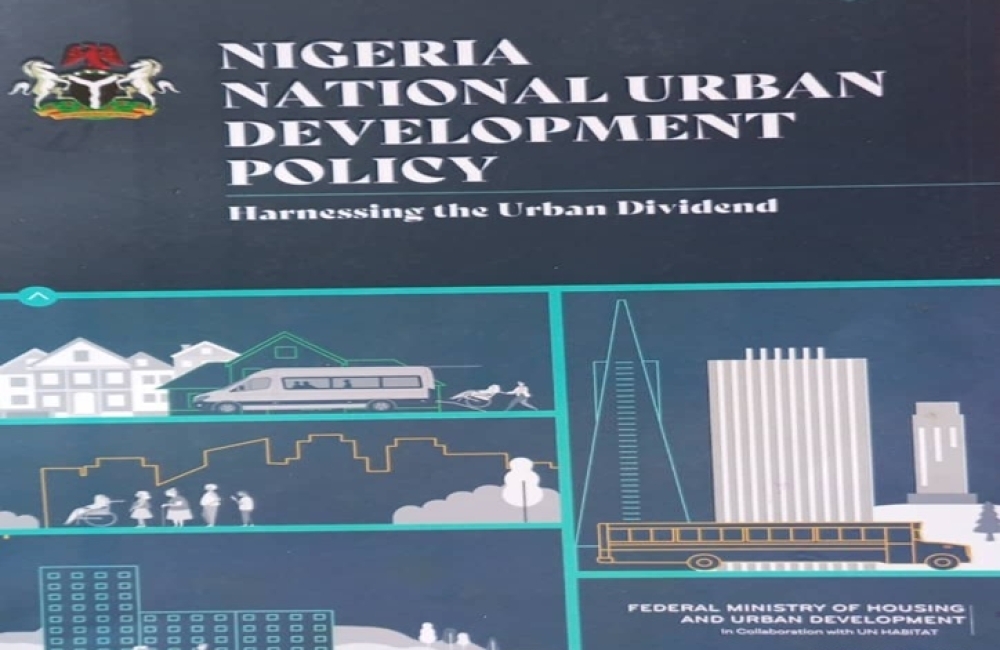
Federal Executive Council Approves Revised National Urban Development Policy To Transform Nigeria’s Urban Future * NUDP, a critical milestone in Nigeria’s urban journey - Dangiwa * Policy aligns with Renewed Hope Agenda, SDGs obligations, New Urban Agenda, Paris Agreement on Climate Change, AU Agenda 2063 In a landmark decision that underscores the Federal Government’s commitment to sustainable urbanisation, the Federal Executive Council (FEC) has approved the revised National Urban Development Policy (NUDP). The Policy provides a transformative framework to guide urban planning, development, and governance across Nigeria, over the next decade. The revised policy, developed by the Federal Ministry of Housing and Urban Development in collaboration with UN-Habitat and other key stakeholders, replaces the previous 2012 edition. It reflects the pressing realities of Nigeria’s urban challenges and the country’s global development commitments. The policy aligns closely with the President Bola Ahmed Tinubu’s Renewed Hope Agenda as well as Nigeria’s obligations under the Sustainable Development Goals (SDGs), the New Urban Agenda, the Paris Agreement on Climate Change, and the Africa Union Agenda 2063. With over 70% of Nigeria's population projected to live in urban areas by 2050, the need for a new, integrated urban development framework has become urgent. The NUDP responds to this challenge by introducing a "business unusual" approach that departs from fragmented, reactive planning, and embraces proactive, inclusive, and long-term strategies. It recognises that effective urban development requires strong institutions, strategic leadership, and citizen participation. A major focus of the policy is the strengthening of urban governance. It advocates for the creation of metropolitan commissions and regional planning bodies to manage Nigeria's fast-growing urban regions and conurbations that cut across administrative boundaries. This includes enabling a more coherent system of cities, improved intergovernmental coordination, and decentralised urban management structures. In terms of social inclusion, the policy embeds a pro-poor, pro-vulnerable urban design philosophy. It calls for planning and development that prioritise women, youth, persons with disabilities, and the informal sector. By improving access to housing, infrastructure, public spaces, and basic services, the NUDP aims to create cities where all residents can live with dignity and opportunity. Climate change is another critical pillar of the new policy. Nigeria faces escalating climate risks including flooding, drought, desertification, and extreme weather events. In response, the NUDP mainstreams climate resilience into urban planning. It promotes green infrastructure, nature-based solutions, renewable energy adoption, and spatial strategies like compact, walkable neighbourhoods-commonly known as the "15-minute city" model-to build cities that are not just liveable but also sustainable. Equally important is the policy's emphasis on urban economic transformation. It positions cities as engines of economic growth, job creation, and diversification beyond oil. By promoting spatial efficiency, mixed-use development, and better integration of land use and transport systems, the NUDP seeks to harness the productivity and innovation potential of dense, well-connected urban centres. The policy also supports improved municipal finance systems to enable cities to raise more own-source revenues and reduce over-reliance on federal allocations. Recognising the importance of technology and data in effective urban management, the policy encourages the adoption of Geographic Information Systems (GIS), Light Detection and Ranging (LIDAR) mapping, and other digital tools to support evidence-based planning, land administration, disaster preparedness, and efficient service delivery. To ensure success, the NUDP provides a clear implementation framework with defined roles for federal, state, and local governments. It calls for capacity building, public awareness campaigns, and strong partnerships with the private sector, academia, and civil society. Monitoring and evaluation mechanisms are embedded to ensure accountability and track progress. The approval of the National Urban Development Policy (NUDP) marks a significant milestone and a major achievement for the Ministry. In addition to this success, the Ministry is actively advancing several other key initiatives, including the National Physical Planning Standards, which is currently undergoing extensive stakeholder engagement at various levels. Another important initiative, the National Policy on Rural Settlements Planning and Development, seeks to address the challenges of rapid urbanization by identifying development gaps in rural areas and providing targeted solutions. This approach aims to reduce the pressure on urban centers by discouraging rural-to-urban migration through improved rural development. Furthermore, a number of regional development plans are presently in progress across the country. These initiatives collectively demonstrate the Ministry’s strong alignment with the Renewed Hope Agenda of President Bola Ahmed Tinubu, an agenda that prioritizes not only housing delivery but also the broader goal of sustainable urban development. Speaking on the significance of the policy approval, the Honourable Minister of Housing and Urban Development, Arc. Ahmed Musa Dangiwa, stated: "The NUDP is a critical milestone in Nigeria's urban journey. It provides us with a clear roadmap to plan and build cities that are productive, liveable, inclusive, and climate-resilient. With this policy, we are better positioned to harness the full potential of our urban spaces to drive national development and uplift the quality of life for all Nigerians." The Ministry will immediately begin nationwide sensitisation and capacity-building engagements to support the effective rollout of the policy. The NUDP document can be accessed on the Ministry’s website via https://www.fmhud.gov.ng/themes/front_end_themes_01/images/download/25060893318.pdf ...
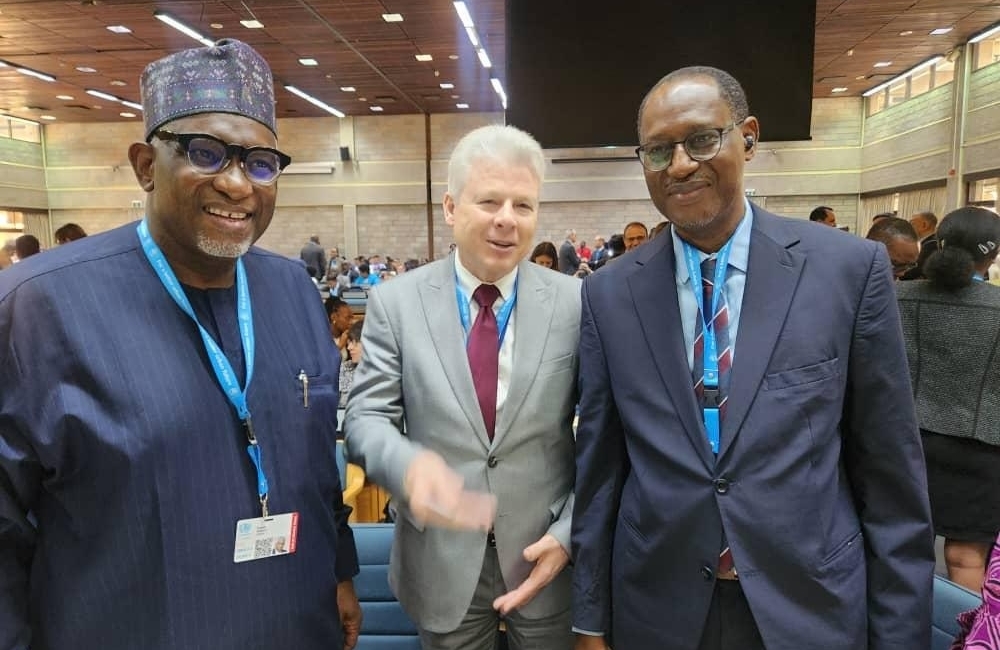
Dangiwa Champions Adequate Housing as Catalyst for Poverty Reduction, Job Creation and Climate Action at UN-Habitat Assembly The Hon. Minister of Housing and Urban Development, Arc. Ahmed Musa Dangiwa, has called on global leaders to prioritize housing as a strategic tool for tackling poverty, creating jobs, and accelerating climate action. Speaking at the High-Level Ministerial Dialogue on Adequate Housing for All during the resumed second session of the UN-Habitat Assembly, taking place in Nairobi, Kenya, from 29 to 30 May 2025, the Minister presented Nigeria’s ambitious, people-focused housing reforms as a model of inclusive and sustainable urban development. Reaffirming Nigeria’s support for the 2026–2029 UN-Habitat Strategic Plan, Dangiwa commended the Executive Director, Ms. Anaclaudia Rossbach, for placing adequate housing, the transformation of slums and informal settlements, and access to basic services at the heart of the Plan’s vision. “Nigeria believes that adequate housing policies are among the most powerful tools for reducing poverty, creating jobs, strengthening climate resilience, and driving post-crisis recovery,” Dangiwa stated. He outlined the achievements of President Bola Ahmed Tinubu’s Renewed Hope Housing Programme, which targets the delivery of 50,000 homes in its first phase, with 10,112 housing units already under construction across 14 states and the FCT. This has created over 250,000 direct and indirect jobs, with the potential for much more. To meet national housing needs and keep pace with population growth, he noted that Nigeria requires to build at least 550,000 homes annually—an effort that if executed sustainably could generate up to 13.7 million direct and indirect jobs each year thus turning a problem into an opportunity for job creation and poverty eradication. This potential for catalyzing national growth, he said, firmly positions housing as a central pillar of Nigeria’s economic renewal strategy. He also highlighted the Renewed Hope Social Housing Estates initiative, which aims to build 100 homes in each of Nigeria’s 774 Local Government Areas, totaling 77,400 homes. This is projected to create over 1.9 million jobs and stimulate rural economies. On affordability, the Minister emphasized that low-income households would not pay more than one-third of their income toward a social housing home, with the government absorbing the balance through targeted subsidies, tax incentives, and bulk procurement. In addition, 30% of the homes will be allocated free of charge to the most vulnerable Nigerians. He underscored the transformational impact of the National Urban Renewal and Slum Upgrade Programme, which has already delivered over 150 completed projects, with more than 100 ongoing. These interventions, the Minister noted, provide clean water, sanitation, access roads, solar street lighting, and improved public facilities to underserved communities. “When aligned with social equity, economic inclusion, and climate goals, housing becomes more than shelter—it becomes a catalyst for national development and human dignity,” Dangiwa said. He concluded by affirming Nigeria’s readiness to collaborate with UN-Habitat and other Member States to scale these solutions globally. The resumed second session of the United Nations Habitat Assembly—the world’s highest decision-making body on sustainable urbanization and human settlements—brings together 193 UN Member States, alongside UN entities, civil society, the private sector, academia, youth, women, grassroots organizations, and more. The Assembly features over 1,200 delegates, including 42 ministers, 14 deputy ministers, and 8 governors and mayors. ...
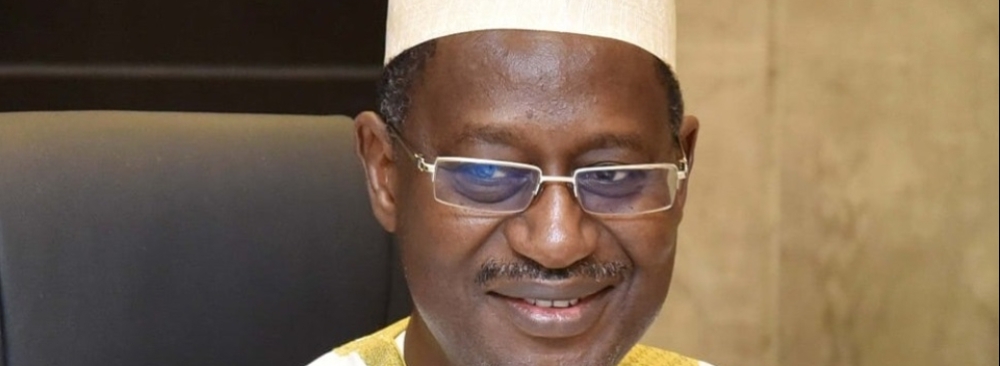
REMARKS BY THE HON. MINISTER OF HOUSING AND URBAN DEVELOPMENT, ARC. AHMED MUSA DANGIWA AT THE MEETING WITH THE FISCAL RESPONSIBILITY COMMISSION (FRC) AT THE MINISTRY’S HEAD OFFICE IN ABUJA ON TUESDAY, NOVEMBER 28, 2023
Protocols
1. It is my pleasure to welcome you all to the Federal Ministry of Housing and Urban Development and to thank you for the good work that you are doing in upholding the values of transparency and accountability in our nation's financial governance.
2. The establishment of the Fiscal Responsibility Commission through the Fiscal Responsibility Act of 2007 marked a pivotal milestone in our nation's pursuit of transparent and accountable financial governance.
3. Over the years, FRC’s dedication to fostering an environment of economic prudence has provided an institutional framework for ensuring efficient resource allocation, and effective debt management.
4. We are keenly aware of the Commission’s commitment to mainstreaming international best practices and facilitating greater efficiency in public expenditure, revenue collection, and fiscal transparency by all organs of government.
5. I sincerely believe that your efforts in undertaking fiscal and financial studies, analyzing key economic indicators, and sharing these insights with the public are invaluable for informed decision-making.
6. As the Minister of Housing and Urban Development, I clearly understand the important role that fiscal responsibility should play in guiding the management of the Ministry’s affairs. For me, fiscal responsibility is not just merely a concept; it is a cornerstone that should shape our decisions, policies, and strategies, ensuring the judicious management of the Ministry’s resources so that we can give Nigerians value for money as we conceive, develop, and implement our affordable housing and urban development plans.
7. I also recognize that the responsible management of finances within our Ministry is not an option but a fundamental obligation to Nigerians. Every decision that we make, every resource that we allocate, carries the weight of public trust and expectation. Therefore, instilling fiscal responsibility is indeed an ethical imperative and a commitment to transparent and accountable governance.
8. So, I want to assure you of our commitment to fostering the ideals and values that FRC promotes.
9. I am eager to explore synergies between our entities and identify areas where our combined expertise and mandates can create meaningful impact.
10. Thank you for gracing this meeting with your esteemed presence. I look forward to a fruitful collaboration.
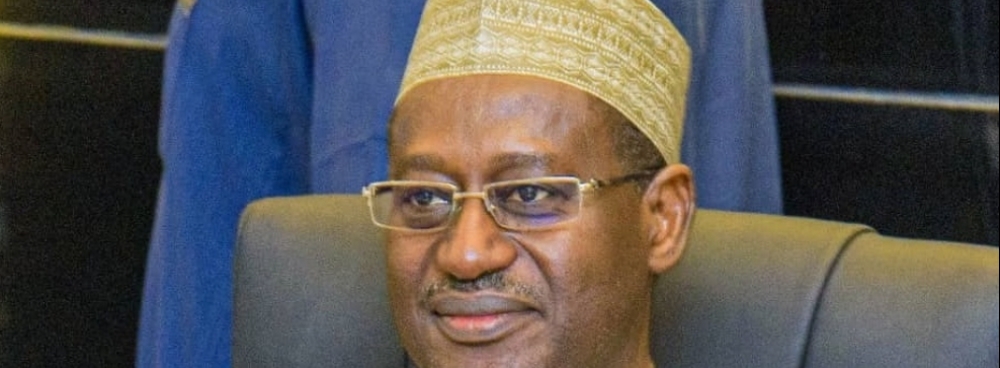
REMARKS BY THE HON. MINISTER OF HOUSING AND URBAN DEVELOPMENT, ARC. AHMED MUSA DANGIWA AT THE MEETING WITH THE INSTITUTE OF DIRECTORS (IoD) AT THE MINISTRY’S HEAD OFFICE IN ABUJA ON TUESDAY, NOVEMBER 28, 2023
Protocols
1. First, I would like to thank the Board of Governor led by Mr. U.K. Eke, MFR, FIoD of the IoD Center for Corporate Governance for paying me this courtesy visit.
2. I am a very proud member of the Center, so I know and acknowledge the good and important work that you are doing in promoting good governance practices in Nigerian companies and the Public Sector.
3. The ideals that the Center promotes align seamlessly with the fundamental principles that underpin effective and responsible leadership. This includes Integrity, Meritocracy, Professionalism, Accountability and Probity, Customer Centricity and Teamwork.
4. I recall that as the Managing Director/Chief Executive of the Federal Mortgage Bank of Nigeria (FMBN) IoD was a strong partner and insightful resource during the series of Board/Management Retreats and Capacity Building/Training programs that we carried out.
5. During these sessions we sought to build a new culture of high performance that delivers results even while confronting systemic and institutional bottlenecks.
6. I believe that the robust contributions and input from IoD helped to bring clarity to our initiatives and increase staff capacity. All these resulted in the historic performance that I was able to lead the Management to record within our five years at the Bank.
7. I am proud to say that what we achieved in five years at FMBN was far more than what previous managements had achieved in 25 years before we came on board.
8. As the Minister of Housing and Urban Development, I plan to continue this collaboration with IoD.
9. Fortunately, the FMBN is under the supervision of our Ministry, so we are going to promote and encourage that engagement. We will do the same for the Federal Housing Authority.
10. We would leverage your capacities and resources to boost professionalism and effective leadership at all levels within the Ministry and Agencies towards powering our Action Plan for Housing and Urban Development.
11. We hope that we can do this through periodic retreats, seminars, brainstorming sessions to empower our professionals with the right leadership techniques.
12. In line with the Renewed Hope Agenda of His Excellency, President Bola Ahmed Tinubu, GCFR, we intend to build a Ministry of Housing and Urban Development that embraces the performance-driven culture of the private sector so that we can more effectively deliver homes and livable communities for Nigerians.
13. I acknowledge the challenges and past failed attempts in the housing sector. But I am hopeful that by leveraging the wealth of expertise of groups such as the IoD Center for Corporate Governance, and the cooperation of our Directors and Ministry staff, we shall deliver the Renewed Hope vision of His Excellency, President Bola Ahmed Tinubu, GCFR, for the housing and urban development sectors.
14. Thank you all for your attention.
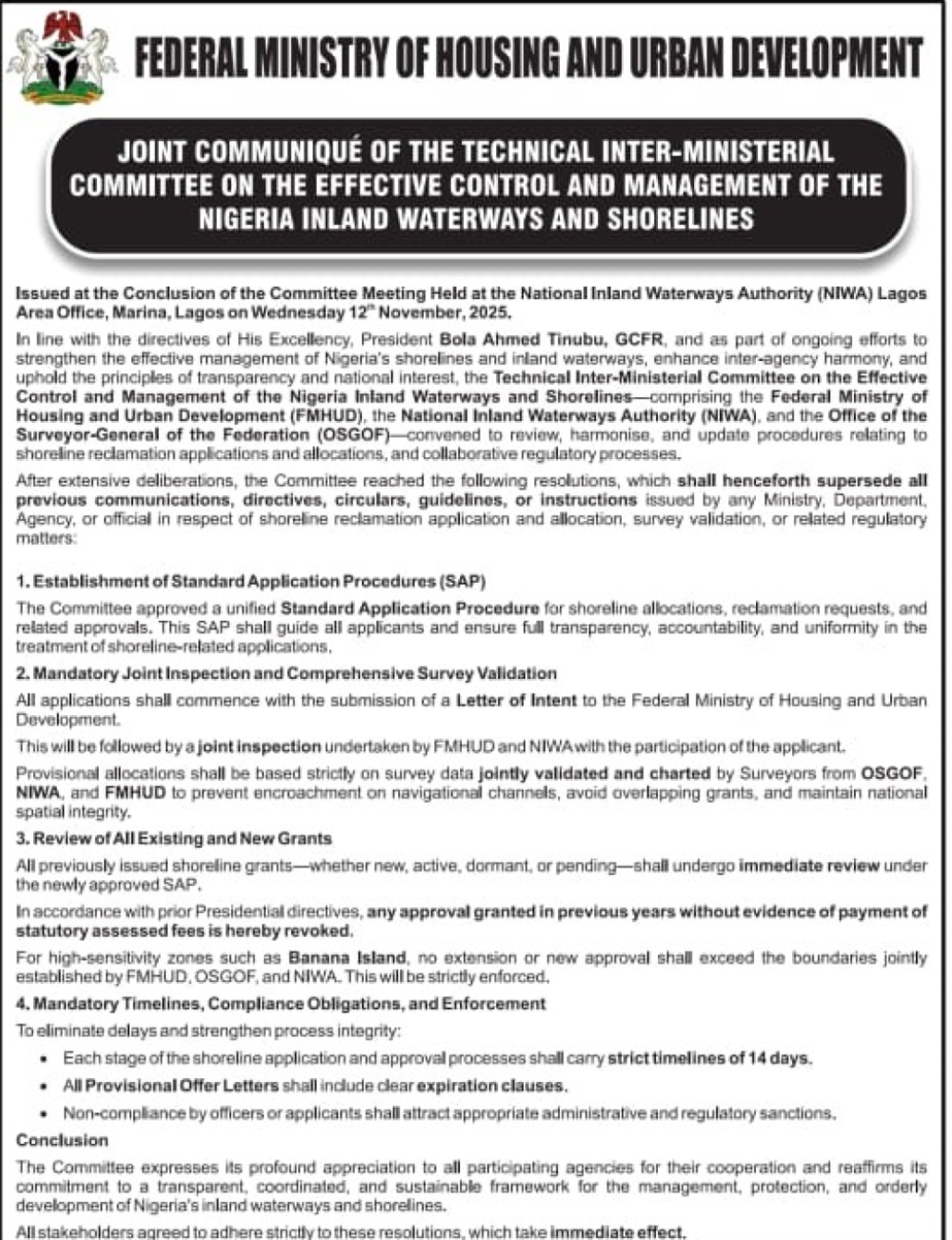
JOINT COMMUNIQUE OF THE TECHNICAL INTER-MINISTERIAL COMMITTEE ON THE EFFECTIVE CONTROL AND MANAGEMENT OF THE NIGERIA INLAND WATERWAYS AND SHORELINES

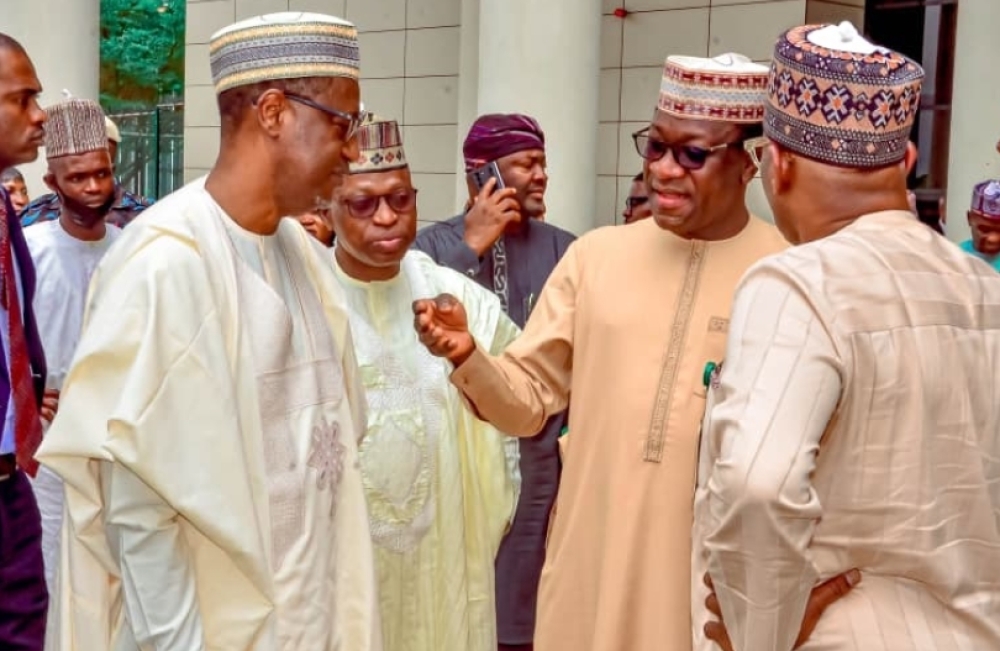
FMHUD MANAGEMENT APPEARS BEFORE REPS COMMITTEE FOR 2026 BUDGET DEFENSE
Hon Minister and Minister of State, FMHUD, Arch Ahmed Dangiwa and Rt Hon Yusuf Ata, led the Management Staff of the Ministry under the Permanent Secretary, Dr Shuaib Belgore to the 2026 Budget Defense before the House of Representatives Committee on Housing and Habitat, Tuesday, January 10th, 2026.
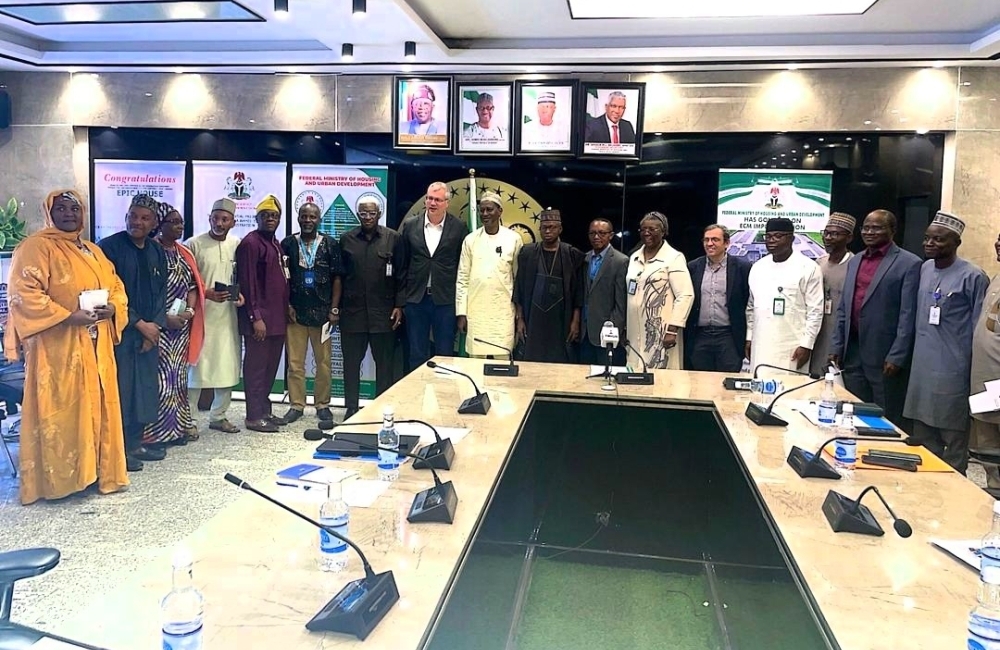
MEETING OF THE HON MINISTER, FMHUD AND HEAD OF UN HABITAT, WEST AFRICA HUB, DAKAR, MR MATHIAS, SPALIVIERO, WEDNESDAY, 25TH FEBRUARY, 2025
Meeting of the Hon Minister, FMHUD and Head of UN Habitat, West Africa Hub, Dakar, Mr Mathias, Spaliviero, Wednesday, 25th February, 2025