Downloads

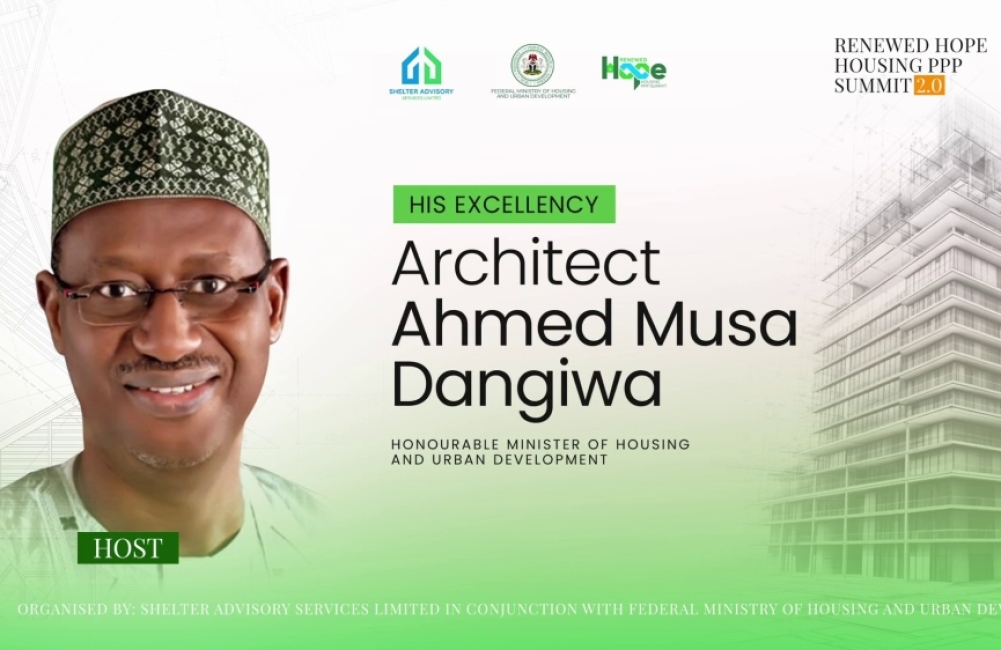
Housing Ministry Trains Agencies, Developers on PPP, Joint Ventures Housing Development
* Training session, part of activities lined up for the Renewed Hope Housing PPP Summit
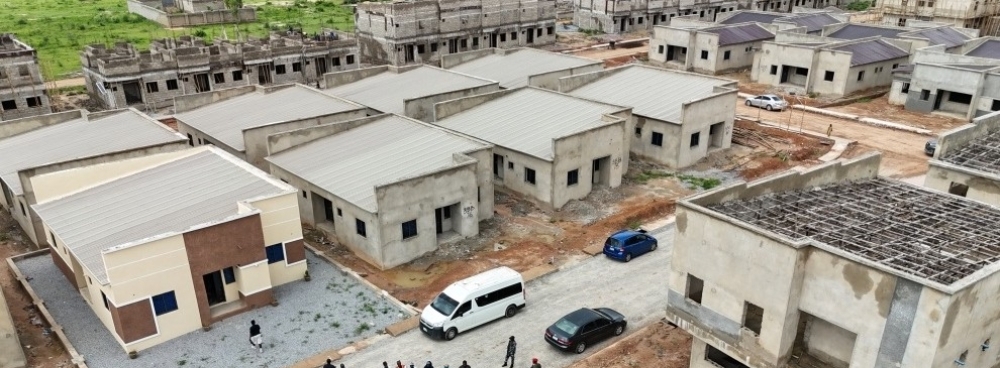
Ministry of Housing and Urban Development is set to train heads of housing agencies and developers on leveraging Public-Private-Partnerships and Joint Ventures for housing development.
The training titled “Leveraging PPPs and Joint Ventures for Housing Development” will be conducted in collaboration with Shelter Advisory Services Limited. It is aimed at structuring housing financing in the implementation of viable housing ppps to accelerate housing delivery in Nigeria.
The training session is part of activities lined up for a Summit on Renewed Hope Housing PPP designed for a high-level policy and transaction platform, dedicated to advancing structured PPP for housing delivery in Nigeria.
Stakeholders from federal and state, policy makers, legislators, institutional investors, developers, and development partners will gather to review and align policy frameworks with implementable housing projects.
Essentially, the Summit seeks to move the housing conversation beyond strategy into sustained delivery, translating policy clarity into investable projects and measurable impact for Nigerian cities and communities.
Minister Dangiwa, stated that the Renewed Hope Housing PPP Summit is aimed at accelerating large -scale housing delivery in Nigeria, under the theme “From Policy to Projects: Financing and Delivering Housing at Scale through PPPs”.
" The central objective of the Renewed Hope Housing PPP Summit: is to bridge the gap between well-articulated policies and tangible, bankable housing projects on the ground", Dangiwa stated.
It will provide a practical, transaction-focused platform where the stakeholders would engage on how to structure, finance, and implement viable housing PPPs, with emphasis to be placed on project pipelines, financing instruments, risk-allocation frameworks, and successful delivery models that can be replicated across states", Dangiwa further stated.
The Chief convener Shelter Advisory, Dr. Olayemi Rotimi-Shodimu, explained that " the Summit recognises Public–Private Partnerships (PPPs) as the most viable pathway for mobilising long-term finance, aligning public land and infrastructure with private sector expertise, and delivering housing at the scale Nigeria urgently requires".
The summit's Keynote will be delivered by Elena Panaritis, Founder of Thought4Action and an international expert in property rights reform, informal economies, and PPP driven housing development.
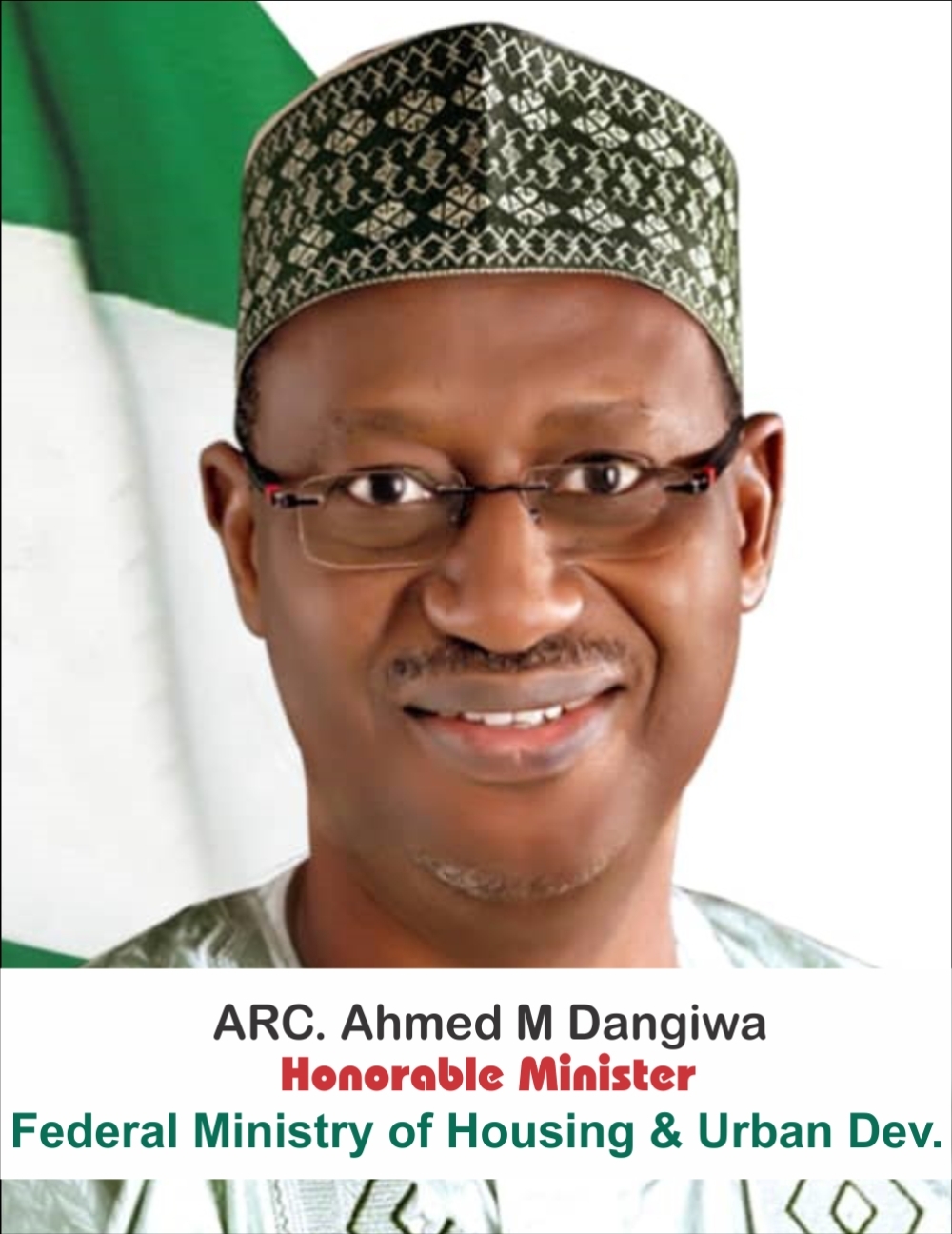
Vice President, Kashim Shettima, is expected to serve as the Special Guest of Honour, with a Ministerial Address to be delivered by Arc. Ahmed Musa Dangiwa, Minister of Housing and Urban Development.
Chairmen of the National Assembly housing commitees in the Senate and House of Representatives are also expected to make presentations at the Summit.




Housing Ministry Trains Agencies, Developers on PPP, Joint Ventures Housing Development Ministry of Housing and Urban Development is set to train heads of housing agencies and developers on leveraging Public-Private-Partnerships and Joint Ventures for housing development. The training titled “Leveraging PPPs and Joint Ventures for Housing Development” will be conducted in collaboration with Shelter Advisory Services Limited. It is aimed at structuring housing financing in the implementation of viable housing ppps to accelerate housing delivery in Nigeria. The training session is part of activities lined up for a Summit on Renewed Hope Housing PPP designed for a high-level policy and transaction platform, dedicated to advancing structured PPP for housing delivery in Nigeria. Stakeholders from federal and state, policy makers, legislators, institutional investors, developers, and development partners will gather to review and align policy frameworks with implementable housing projects. Essentially, the Summit seeks to move the housing conversation beyond strategy into sustained delivery, translating policy clarity into investable projects and measurable impact for Nigerian cities and communities. Minister Dangiwa, stated that the Renewed Hope Housing PPP Summit is aimed at accelerating large -scale housing delivery in Nigeria, under the theme “From Policy to Projects: Financing and Delivering Housing at Scale through PPPs”. " The central objective of the Renewed Hope Housing PPP Summit: is to bridge the gap between well-articulated policies and tangible, bankable housing projects on the ground", Dangiwa stated. It will provide a practical, transaction-focused platform where the stakeholders would engage on how to structure, finance, and implement viable housing PPPs, with emphasis to be placed on project pipelines, financing instruments, risk-allocation frameworks, and successful delivery models that can be replicated across states", Dangiwa further stated. The Chief convener Shelter Advisory, Dr. Olayemi Rotimi-Shodimu, explained that " the Summit recognises Public–Private Partnerships (PPPs) as the most viable pathway for mobilising long-term finance, aligning public land and infrastructure with private sector expertise, and delivering housing at the scale Nigeria urgently requires". The summit's Keynote will be delivered by Elena Panaritis, Founder of Thought4Action and an international expert in property rights reform, informal economies, and PPP driven housing development. Vice President, Kashim Shettima, is expected to serve as the Special Guest of Honour, with a Ministerial Address to be delivered by Arc. Ahmed Musa Dangiwa, Minister of Housing and Urban Development. Chairmen of the National Assembly housing commitees in the Senate and House of Representatives are also expected to make presentations at the Summit.
* Training session, part of activities lined up for the Renewed Hope Housing PPP Summit
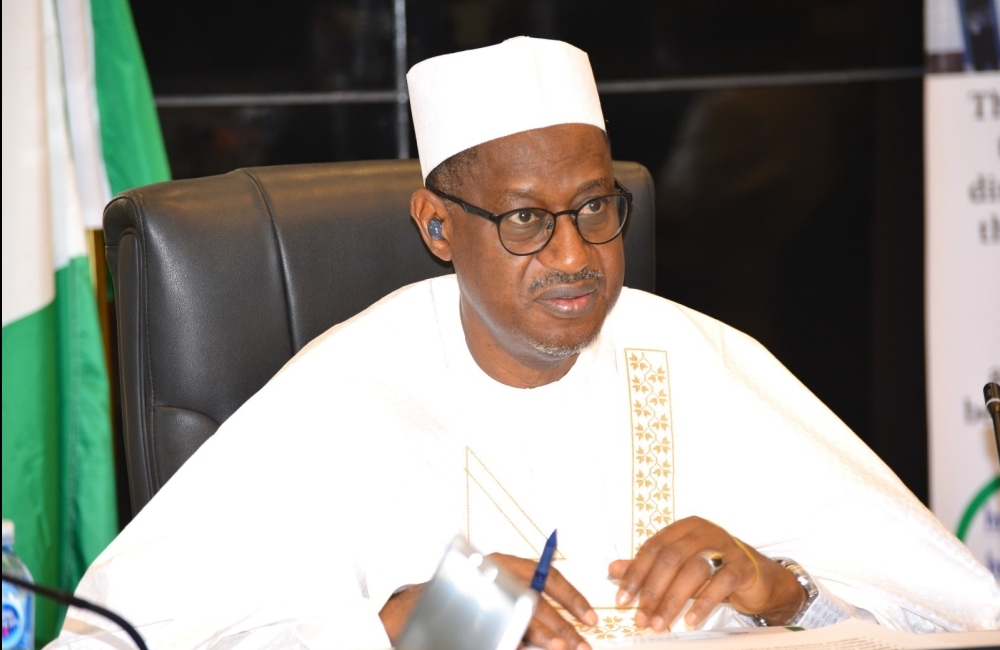
Housing Ministry, NIWA, OSGoF Harmonise Positions for Effective Shoreline Regulations * Approve Unified Procedure for Shoreline Reclamation, Inland Waterways Management Ministry of Housing and Urban Development (FMHUD), National Inland Waterways Authority (NIWA) and Office of Surveyor-General of the Federation (OSGoF) have come up with a unified and transparent framework for the effective control and management of national inland waterways and shorelines. This is part of the resolutions of a meeting of the Technical Inter-Ministerial Committee on the Effective Control and Management of National Inland Waterways and Shorelines. The committee, comprising the Federal Ministry of Housing and Urban Development (FMHUD), the National Inland Waterways Authority (NIWA) and the Office of the Surveyor-General of the Federation (OSGOF), was set up to review, harmonise and update procedures on shoreline reclamation applications, allocations and collaborative regulatory processes. Minister of Housing and Urban Development, Arc. Ahmed Musa Dangiwa, the Managing Director of National Inland Waterways Authority (NIWA), and Surveyor-General of the Federation, set up the tripartite inter ministerial technical committe to carry out the assignment. This is in line with the directives of His Excellency, President Bola Ahmed Tinubu, GCFR, and the aspirations of the Renewed Hope Agenda. The inter ministerial technical committee meeting focused on strengthening inter-agency collaboration, enhancing transparency and safeguarding the national interest in the administration of Nigeria’s shoreline and inland waterways assets. Following extensive deliberations, the Committee approved a unified Standard Application Procedure (SAP) to guide all shoreline allocations, reclamation requests and related approvals, in order to ensure uniformity, accountability and transparency. Under the new framework, all shoreline applications shall commence with the submission of a Letter of Intent to the Federal Ministry of Housing and Urban Development, to be followed by a mandatory joint inspection by FMHUD and NIWA, with the participation of the applicant. The Committee further resolved that provisional allocations shall be based strictly on survey data jointly validated and charted by surveyors from FMHUD, NIWA and the Office of the Surveyor-General of the Federation, in order to prevent encroachment into navigational channels, avoid overlapping grants and safeguard national spatial integrity. In addition, all existing shoreline grants-whether new, active, dormant or pending-shall be subjected to immediate review in line with the newly approved Standard Application Procedure. In accordance with earlier Presidential directives, any approval granted in previous years without evidence of payment of statutory assessed fees has been revoked. For high-sensitivity locations, including Banana Island, the Committee directed that no new approval or extension shall exceed boundaries jointly established by FMHUD, OSGoF and NIWA, adding that strict compliance shall be enforced. To strengthen process integrity and eliminate delays, the Committee approved a mandatory processing timeline of fourteen (14) days for each stage of the shoreline application and approval process. All Provisional Offer Letters shall henceforth carry clear expiration clauses, while non-compliance by officers or applicants shall attract appropriate administrative and regulatory sanctions. The resolutions of the Committee supersede all previous communications, directives, circulars and guidelines issued by any Ministry, Department or Agency in respect of shoreline reclamation, allocation, survey validation and related regulatory matters. The Committee commended the participating agencies for their cooperation and reaffirmed its commitment to a transparent, coordinated and sustainable framework for the management, protection and orderly development of Nigeria’s inland waterways and shorelines. ...
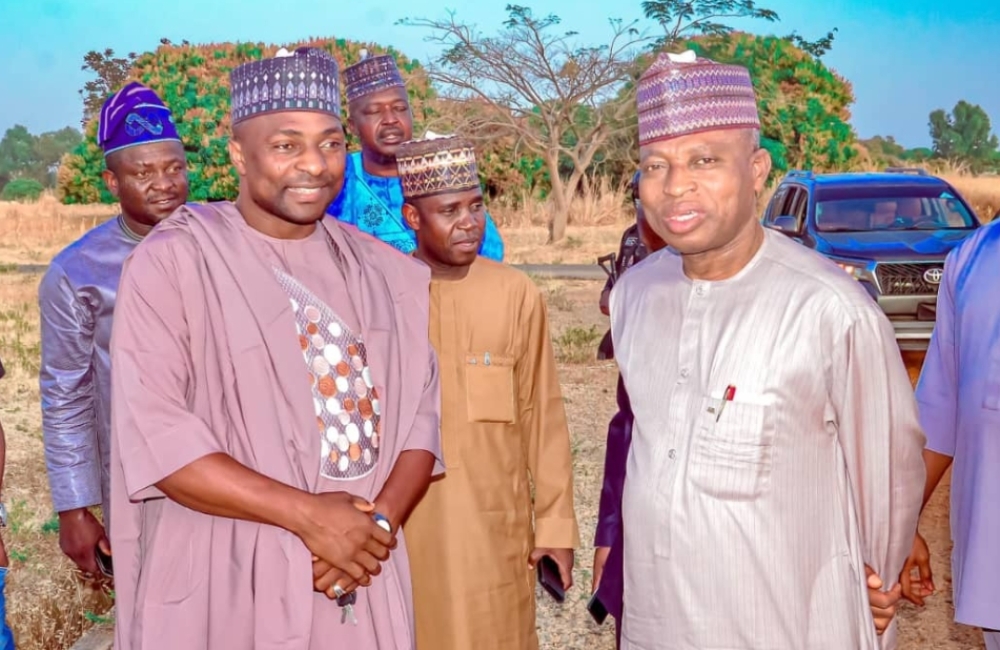
Minister Ata reiterates FG's Commitment to Delivering Affordable Housing * says housing remains a top priority of President Bola Ahmed Tinubu 's Renewed Hope Administration Minister of State for Housing and Urban Development, Rt Hon. Yusuf Abdullahi Ata has reiterated the commitment of the Federal Government to delivering on its promise of providing affordable housing for Nigerians, saying that housing remains a top priority. Ata spoke during an assessment visit to the National Housing Project (NHP) Estate located in Laminga, Jos East local government area, Plateau State. Responding to the request by the Jos east local government for the bulk purchase of some housing units in the estate, Minister Ata said " the Ministry will offer the houses to the local government on current face value, taking in to consideration of some observed delapitation. We will review the initial pricing and address it accordingly" He also reassured the commitment of the Ministry to meeting the housing needs of Nigerians by increasing housing availability and affordability, adding that the administration of President Bola Ahmed Tinubu, GCFR, is working tirelessly to provide housing solutions in the country, through its Renewed Hope Housing Programme. Earlier, the Federal Controller of Housing, Plateau State, Bldr Emmanuel Attah conveyed to the minister the interest of the Jos east local government to bulk- purchase some housing units in the estate and their request for a down review of the initial pricing to enable them take care of the repairs and defray the cost of maintenance for the dilapidated portions in some houses. The NHP Housing Estate in Laminga, Jos Plateau State is expected to provide much-needed housing units, boosting the local economy and improving living standards. The visit by the Hon Minister underscores the government's focus on addressing Nigeria's housing deficit as well as promoting socio - economic well-being of Nigerians ...

Nigeria, Saudi Arabia Deepen Housing Development Cooperation at 2026 Real Estate Future Forum Riyadh, Saudi Arabia, 30 January 2026: As part of Nigeria’s investor engagement on the sidelines of the 2026 Real Estate Future Forum (RFF 2026) in Riyadh, the Honourable Minister of Housing and Urban Development, Arc. Ahmed Musa Dangiwa, held a high-level bilateral meeting with the Saudi Arabian Minister of Municipal and Rural Affairs and Housing (MOMRAH), Majed bin Abdullah Al-Hogail, alongside senior officials of the Ministry. During the meeting, Arc. Dangiwa presented Nigeria’s flagship Renewed Hope Housing Programme, highlighting its scale, structured delivery architecture, and strong alignment with private capital. He also showcased the Federal Government’s Building Materials Manufacturing Hubs initiative, aimed at accelerating local production, reducing construction costs, creating jobs, and strengthening Nigeria’s construction value chain. “Nigeria is positioning housing not just as a social good, but as a major driver of economic growth, industrialisation, and investment,” Arc. Dangiwa said. “Under the Renewed Hope Housing Programme, we are delivering homes at scale across income segments, supported by clear policies, bankable PPP frameworks, and strong demand fundamentals.” He added that Nigeria is actively seeking strategic partnerships with credible Saudi institutions and firms. “We are keen to deepen collaboration with the Kingdom through MOMRAH and to be introduced to reputable Saudi developers, manufacturers, financiers, and technology partners who are ready to enter the Nigerian market. Our Building Materials Manufacturing Hubs, in particular, offer a compelling opportunity for Saudi investors to participate in local production and long-term value creation,” the Minister noted. In his response, Minister Al-Hogail welcomed Nigeria’s reform-oriented housing agenda and expressed openness to enhanced institutional cooperation between both countries. “Saudi Arabia recognises the scale of Nigeria’s housing demand and the seriousness of the reforms being undertaken to unlock private investment,” Minister Al-Hogail said. “There are clear areas of synergy between our housing and urban development objectives, especially in large-scale housing delivery, construction technologies, and local manufacturing.” He further noted that MOMRAH would support engagement with relevant Saudi stakeholders. “We see value in facilitating connections between Nigerian counterparts and reputable Saudi entities with the experience, capital, and technical capacity to contribute meaningfully to Nigeria’s housing and construction sector,” he added. The meeting reinforces Nigeria’s strategy of leveraging global platforms such as RFF 2026 to mobilise investment, share best practices, and forge strategic alliances that accelerate housing delivery and industrial development under the Renewed Hope Agenda. The Federal Ministry of Housing and Urban Development will continue follow-up engagements with MOMRAH and prospective Saudi partners to translate the discussions into concrete investment pathways and project-level collaborations in Nigeria. ...
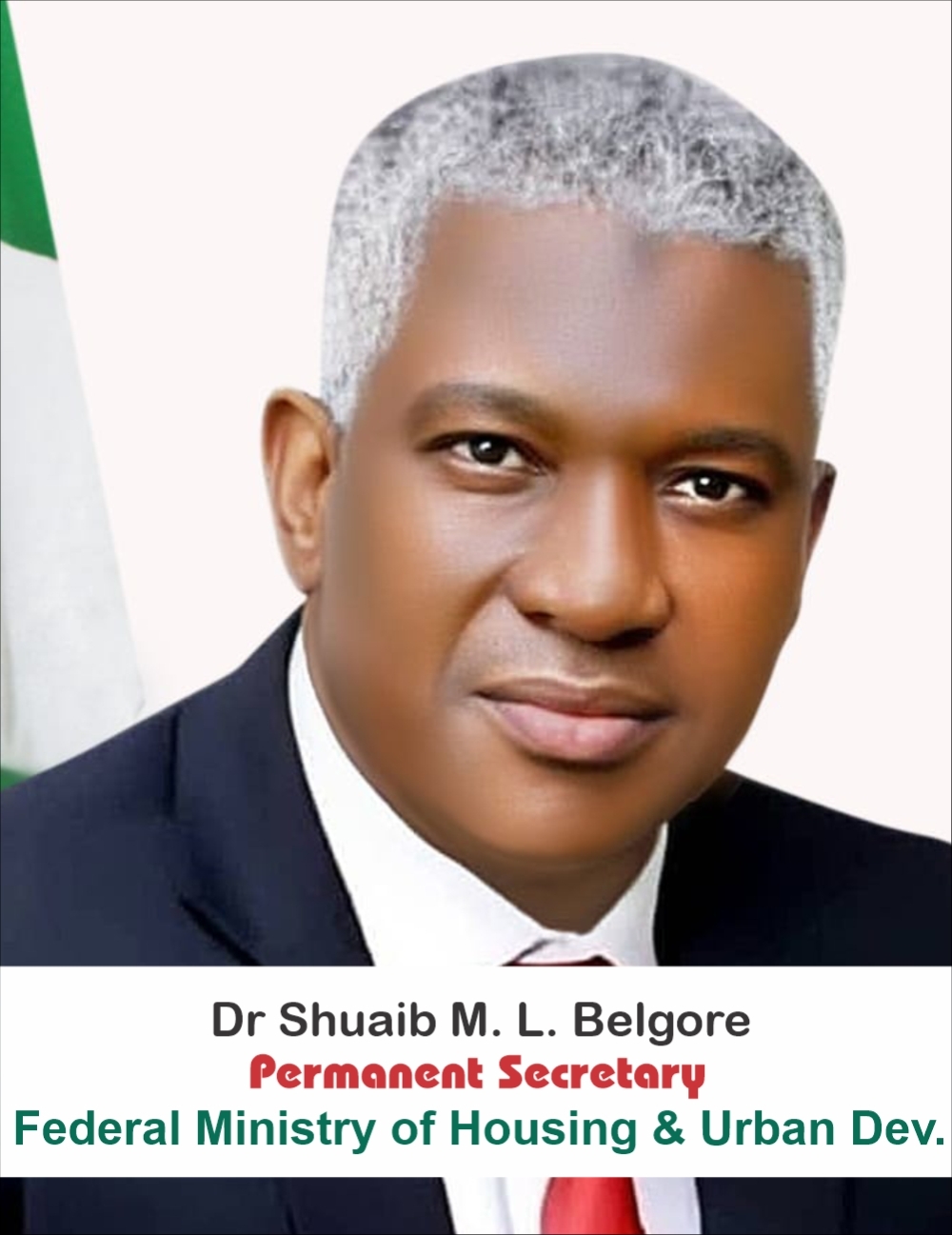

Belgore Inaugurates Staff Recognition Award Selection Committee, Assures Enhanced Service Delivery
* Says initiative will inspire greater productivity, commitment, excellence among staff
In order to ensure institutionalization of a transparent and merit-driven reward and recognition system for staff performance, the Federal Ministry of Housing and Urban Development, has inaugurated the Departmental Award Selection Committee (DASCO).
The Permanent Secretary, Dr. Shuaib Belgore in his remarks, stated that the establishment of DASCO was in compliance with the directive from the Office of the Head of the Civil Service of the Federation (OHCSF) to MDAs
“ The HCSF mandates all MDAs to set up and inaugurate DASCOs in their respective institutions to institutionalize a transparent and merit-driven reward and recognition system for best performing staff ” he said.
Dr. Belgore emphasized that staff motivation is crucial for improved service delivery, organizational harmony, and the realization of the core mandate of the ministry in the housing and urban development sector. He added that promoting a culture of excellence among the staff will drive higher productivity, commitment, and professionalism.
The committee is charged with the responsibilities to; develop and apply objective criteria for the nomination and selection of deserving staff for awards; ensure transparency, fairness, and merit in the screening and recommendation process.
Other committee's responsibilities are; to promote inclusiveness by ensuring representation across all grade levels, cadres, and units; and submit monthly/quarterly reports to the Staff Welfare Unit of the Human Resource Management Department for collation and onward submission to the OHCSF for monitoring.
Dr Belgore noted that members of the Committee were carefully selected based on their integrity, professionalism, and commitment to public service values.
“ You are expected to uphold the highest standards of fairness, objectivity, and confidentiality in carrying out this assignment. The credibility of our reward and recognition framework rests on the impartiality of your work,” he stated.
Earlier, in his address, the Director of Human Resources Management, Dr Akinola Adeshina, underscored the importance of establishing DASCO in the Ministry, and commended the Permanent Secretary for providing an enabling environment for the committee’s work.
" This inauguration demonstrates the unwavering commitment of the Permanent Secretary to ensuring the Ministry’s mandate of providing enhanced service delivery is achieved,” he noted.
HIGHLIGHTS ON THE NATIONAL BUILDING CODE OF NIGERIA
Background and Purpose
• Initiated in 1987 by the defunct National Council of Works and Housing; workshops in 1989 (ASCON, Badagry) and 1990 (Ijebu-Ode) shaped the first draft.
• Formally re-presented at the 2nd National Council on Housing and Urban Development (2005), leading to the 2006 edition.
• The Code was developed to address poor planning of cities, incessant building collapse, fire disasters, quackery, use of substandard materials, and weak regulation.
• Aim: Establish minimum standards for pre-design, design, construction, and post-construction stages of buildings to ensure safety, quality, and professionalism.
Structure of the Code
1. Part I – Administration
o Sets out definitions, scope, and applicability of the Code.
o Establishes the Building Code Advisory Committee (BCAC), under the Minister of Housing & Urban Development, responsible for periodic review and oversight.
o Provides clear interpretations, definitions, and abbreviations of building terms.
2. Part II – Technical (Professionals)
o Building Design Classifications: Categorizes buildings into Use Groups A–L, e.g. Assembly, Business, Educational, Industrial, High Hazard, Institutional, Mercantile, Residential, Storage, Mixed Use, Utility.
o Building Construction Classifications: Provides technical standards for fire safety, structural integrity, materials, and occupancy.
o Defines responsibilities of registered professionals (Architects, Engineers, Builders, Surveyors, etc.) in all stages.
3. Part III – Enforcement
o Divides the building process into four regulated stages:
Pre-Design Stage – planning, approvals, environmental and safety assessments.
Design Stage – adherence to professional standards and safety codes.
Construction Stage – site supervision, materials quality control, and health & safety compliance.
Post-Construction Stage – building use certification, maintenance standards, and inspections.
o Establishes the role of the Code Enforcement Officer (CEO).
4. Part IV – Schedules and References
o Provides supporting documents, data, tables, and approved forms linked to the Code.
o Incorporates referenced standards such as National Fire Safety Code and others.
Key Provisions
• Minimum Standards: All buildings must comply with minimum requirements for safety, durability, and habitability.
• Certification: No building can be occupied without a Certificate of Use and Habitation issued by enforcement officers.
• Fire Safety: Detailed fire hazard classifications and preventive standards.
• Accessibility: Public buildings must make provisions for the physically challenged.
• Zoning & Planning: Integrates urban and regional planning laws, requiring development permits and compliance with zoning regulations.
• Professional Accountability: Only registered professionals may prepare, design, and execute building works.
• Prohibition of Quackery: Prevents use of non-professionals and untested materials.
• Maintenance: Every building must have a Building Maintenance Manual.
• Enforcement: State governments are encouraged to adopt the Code into their laws for effective local implementation.
Significance
• Provides a national benchmark for building standards in Nigeria.
• Aims to reduce building collapse, fire outbreaks, and disasters.
• Encourages professionalism, quality assurance, and compliance across the industry.
• Promotes safety, accessibility, and sustainable urban development.

OPENING REMARKS BY THE PERMANENT SECRETARY, FEDERAL MINISTRY OF HOUSING AND URBAN DEVELOPMENT, DR. SHUAIB M.L. BELGORE, NPOM, OON AT THE NATIONAL LANDS REGISTRATION AND DOCUMENTATION PROGRAMME HELD ON 19TH MARCH 2025, AT TRANSCORP HILTON HOTEL, ABUJA
PROTOCOLS
1.0 I am honoured to make opening remarks at this pivotal National Lands Registration and Documentation Programme. This gathering is a significant step toward strengthening Nigeria’s land administration system, a crucial factor in promoting economic growth, social stability, and national development. I extend my heartfelt appreciation to all our distinguished guests and stakeholders who have taken the time to be here today.
2.0 The Theme of this programme speaks directly to one of the most pressing challenges in Nigeria’s housing and urban development sector—Land Registration and Documentation more especially, Sub-Saharan African Countries. As we are all aware, land ownership and security of tenure remains fundamental to sustainable urban development, real estate investment, agricultural productivity, and infrastructure development.
3.0 The National Lands Registration and Documentation Programme is a response to these longstanding challenges. This initiative, spearheaded by the Federal Ministry of Housing and Urban Development, seeks to advocate for the modernization and streamlining of land registration processes across the country by harmonizing land records, digitizing documentation systems, and enhancing accessibility to land information.
The key objectives of this programme include:
i. Ensuring a unified and efficient Land Registration System by working closely with State Governments and Land Actors and Agencies with the view of creating a standardized approach that will reduce duplication, inconsistencies, and bureaucratic bottlenecks.
ii. Leveraging Technology for land digitization which aims at the transition from manual to digital land records that improves data security, minimize fraudulent activities, and facilitate ease of doing business in the real estate and mortgage sectors in line with global best practices.
iii. Providing legal certainty and security of tenure to attain proper land documentation. Landowners will have the assurance of legal protection, thereby fostering confidence in land transactions.
iv. Enhancing investment opportunities in a well-structured land registration system that will unlock potential of land assets, enabling access to credit facilities and boosting investments in housing, agriculture, and infrastructure.
v. Reducing Land Disputes and Promoting Social Stability in a clear, well-documented land titles system to reduce land-related conflicts that have hindered development and economic prosperity in many communities.
4.0 I am using this medium to laud the significant initiative of the Honourable Minister, Federal Ministry of Housing and Urban Development in driving this process. I will also use this opportunity to thank the State Governments, the World Bank, Organizers of this programme and all collaborating institutions for their commitment to addressing this critical issue. The road ahead may be challenging, but with collective efforts, strategic planning, and sustained commitment, we can establish a land registration system we can be proud of.
5.0 Once again, I warmly welcome you all and look forward to a productive and insightful engagement.
Thank you, and God bless the Federal Republic of Nigeria.

KEYNOTE ADDRESS BY THE HON. MINISTER OF HOUSING AT THE STAKEHOLDER FORUM ON DEVELOPMENT OF FISCAL INCENTIVES FOR MANUFACTURERS OF LOCAL BUILDING MATERIALS COMPONENTS IN NIGERIA
Protocols:
God bless the Federal Republic of Nigeria.

Housing Ministry, Shelter Advisory Convene Summit on Renewed Hope Housing PPP

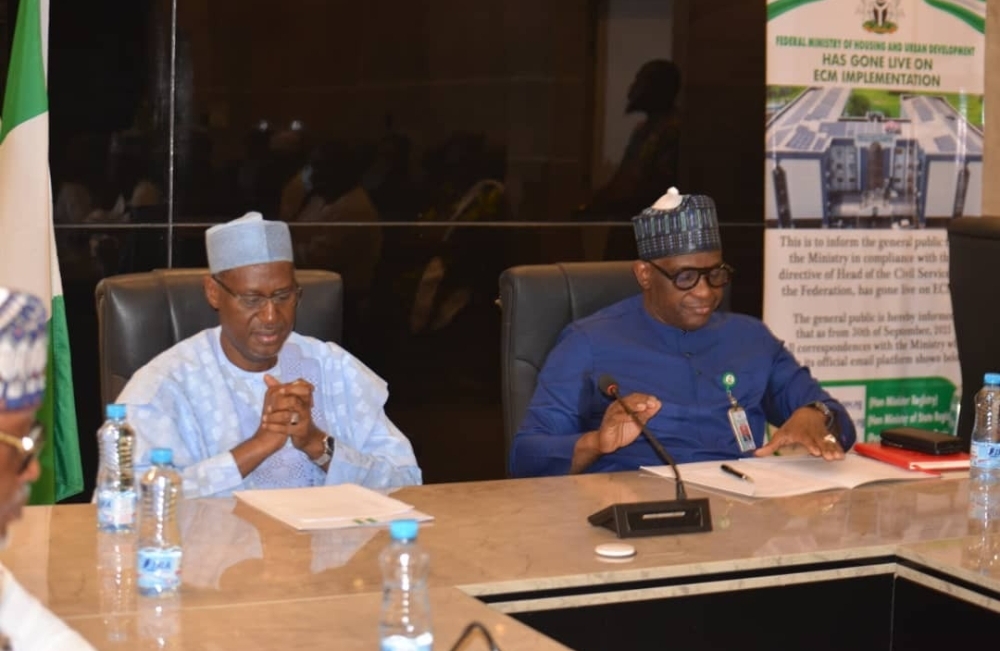
FMHUD 2025 STAFF AWARDS & RECOGNITION CEREMONY, MONDAY, MARCH 30, 2026
FMHUD 2025 STAFF AWARDS & RECOGNITION CEREMONY, Monday, March 30, 2026
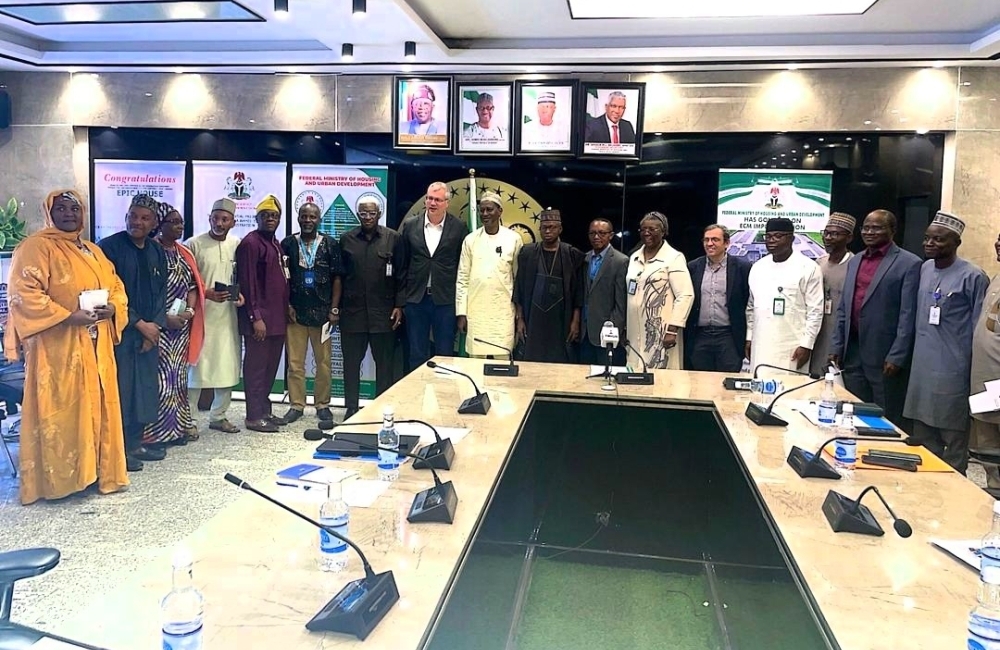
MEETING OF THE HON MINISTER, FMHUD AND HEAD OF UN HABITAT, WEST AFRICA HUB, DAKAR, MR MATHIAS, SPALIVIERO, WEDNESDAY, 25TH FEBRUARY, 2025
Meeting of the Hon Minister, FMHUD and Head of UN Habitat, West Africa Hub, Dakar, Mr Mathias, Spaliviero, Wednesday, 25th February, 2025