Housing Ministry Honours Outstanding Staff at 2025 Ministerial Awards Ceremony
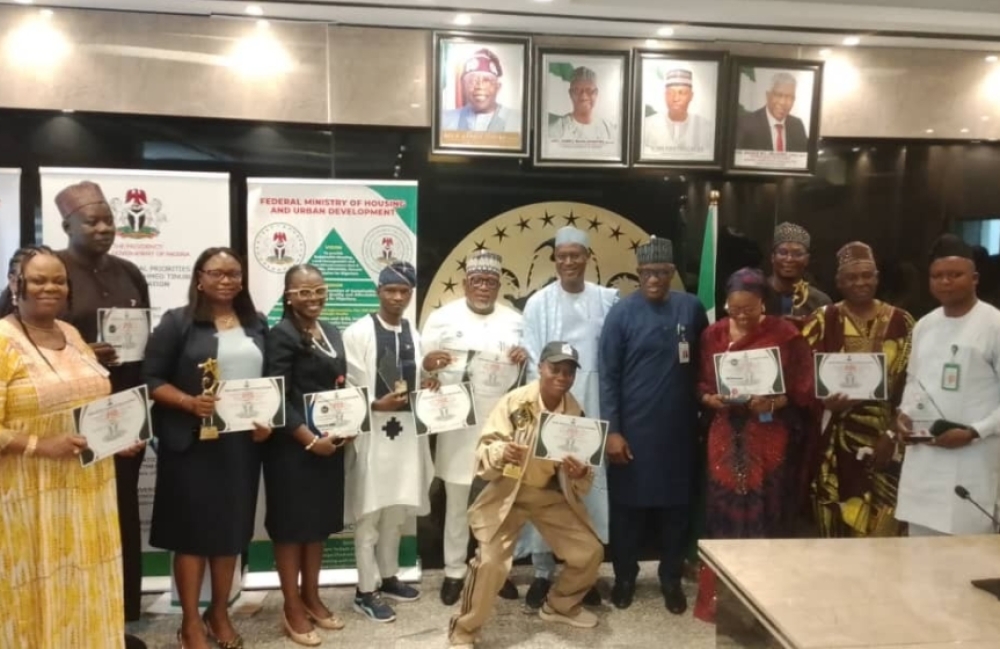
The Federal Ministry of Housing and Urban Development has held its 2025 Ministerial Rewards and Recognition Award Ceremony, reaffirming its commitment to promoting excellence, integrity, and outstanding service delivery within the Civil Service.
The colourful ceremony, which took place at the Ministry’s Headquarters in Abuja, brought together top management staff, directors, and employees to celebrate eleven exceptional officers whose dedication, professionalism, and performance distinguished them among their peers.
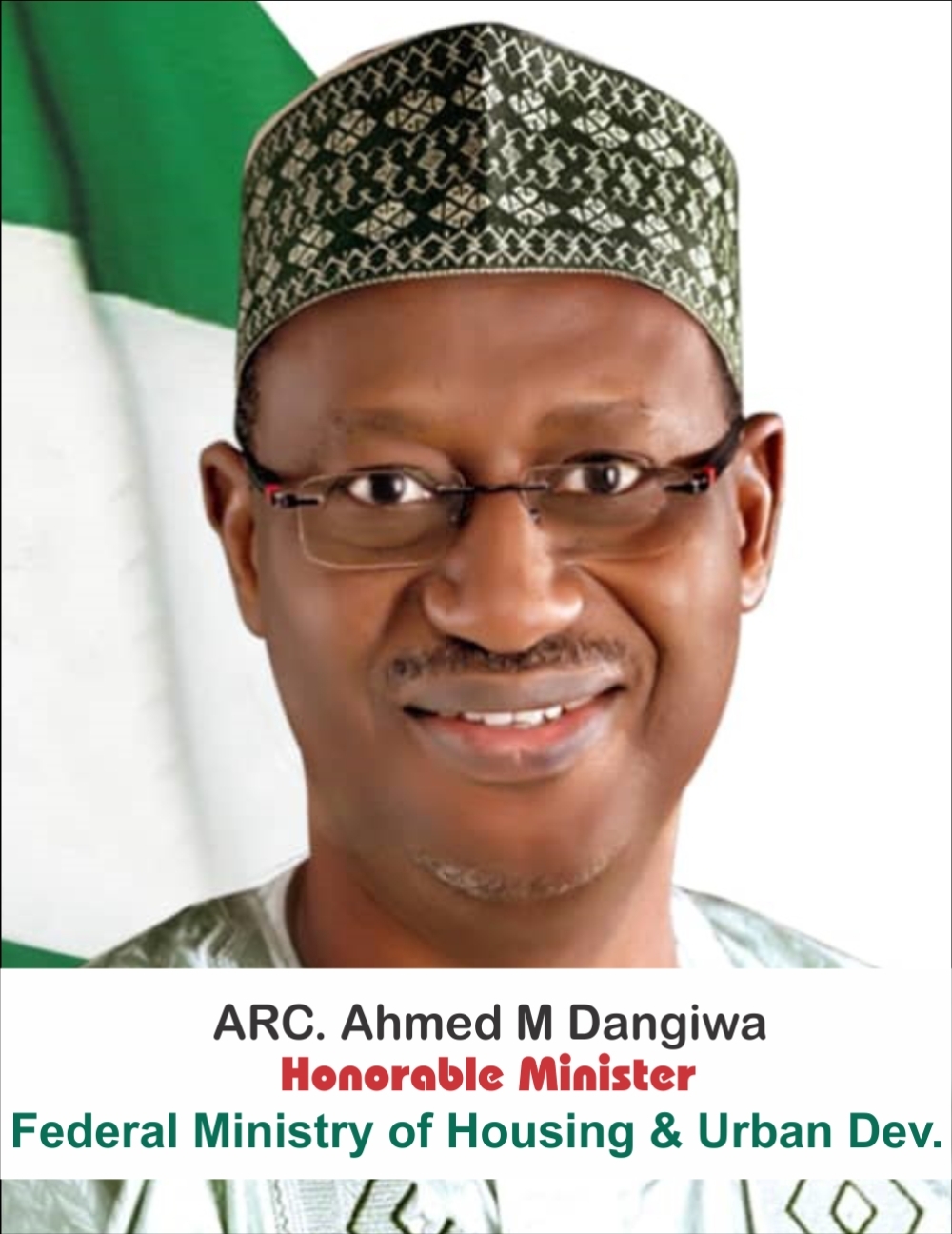
The Honourable Minister of Housing and Urban Development, Arc. Ahmed Musa Dangiwa, stated that the initiative aligns with the directive of the Head of the Civil Service of the Federation to institutionalize a culture of merit-based recognition, productivity, and excellence across Ministries, Departments, and Agencies.
The Minister expressed deep appreciation to the Award Selection Committee for their diligence and transparency in the screening process, noting that their efforts ensured that only truly deserving staff were honoured.
“This occasion is one of the proud moments for the Ministry. I am particularly pleased with the spread of award categories and the quality of awardees selected from across various departments,” he said.
Arc. Dangiwa further emphasized the importance of mentorship in the service, urging Directors and senior officers to deliberately groom and guide younger officers before exiting the system. According to him, sustained mentorship is critical to preserving institutional knowledge and strengthening the future of the Civil Service.
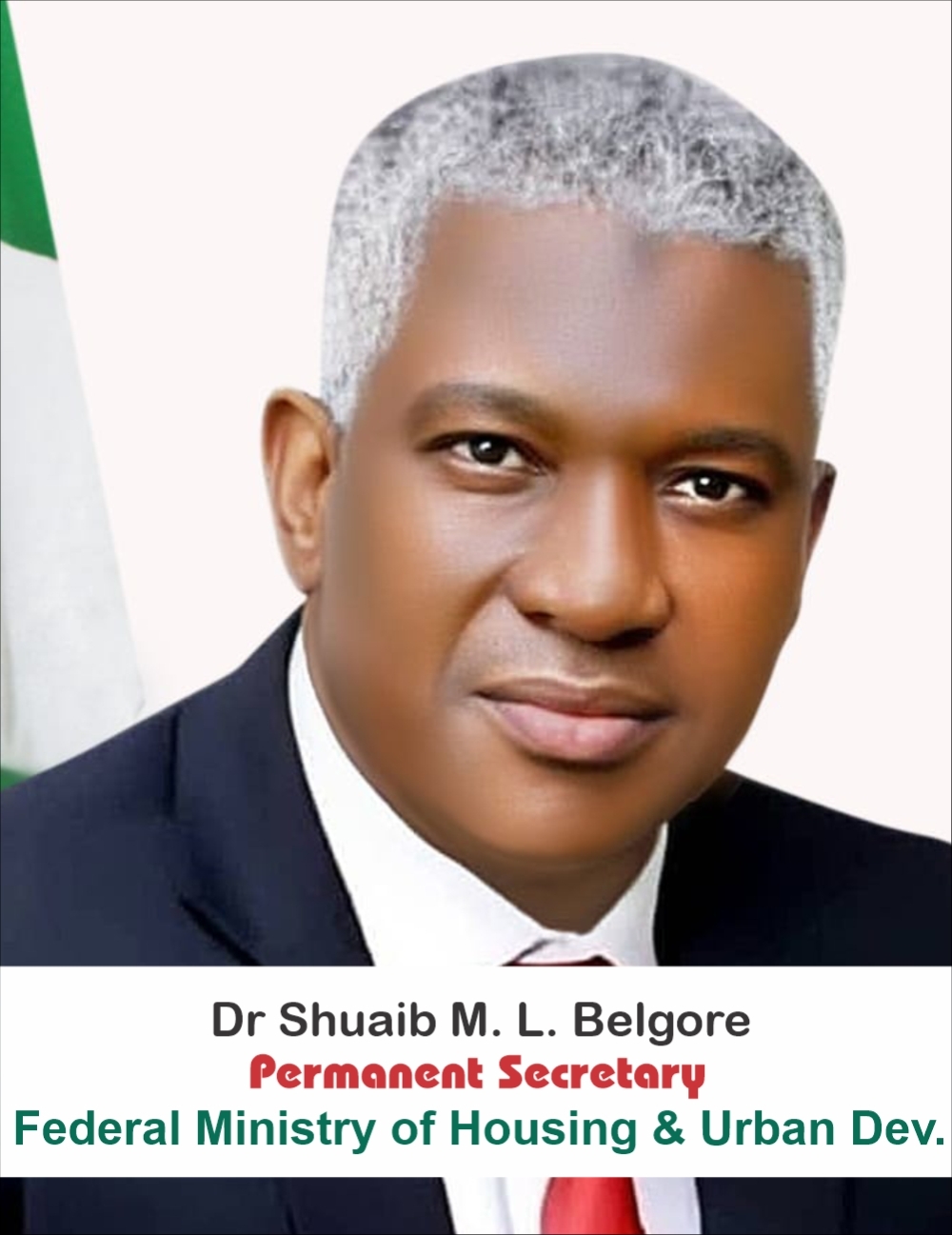
In his opening remarks, the Permanent Secretary, Dr. Shuaib Belgore, described the awards ceremony as a strategic initiative to motivate staff, encourage healthy competition, and reinforce a culture of excellence and accountability.
He noted that the Ministry’s performance at previous national Civil Service Awards, where some staff emerged winners, has further inspired the drive to achieve greater recognition at the national level.
“Our goal this year is not only to participate but to excel by winning multiple awards, including the overall best in the Civil Service category, which comes with significant incentives such as houses, vehicles, and computers,” he stated.
Dr. Belgore explained that while many officers are deserving of recognition, the awardees represent the peak of performance, having emerged through a rigorous and merit-driven selection process. He added that the Ministry has institutionalized a robust recognition system, including monthly staff awards and departmental “Staff of the Month” displays, culminating in the selection of overall best performers.
“Those honoured today have demonstrated consistent excellence and have earned their recognition through hard work and commitment to duty,” he added.
Earlier in his welcome address, the Director of the Special Projects Unit, Mr. Olatunde Ajayi, described the ceremony as a platform to celebrate excellence and inspire others to strive for higher standards of service delivery.
He assured that the selection process adopted by the Ministerial Awards Selection Committee was thorough, transparent, and strictly guided by Federal Public Service policies and guidelines. According to him, the criteria focused on measurable performance, accountability, commitment to service delivery, and continuous improvement.
The 2025 Ministerial Rewards and Recognition Award Ceremony underscores the Ministry’s unwavering commitment to building a motivated workforce driven by excellence, professionalism, and dedication to national development.



The Federal Ministry of Housing and Urban Development has held its 2025 Ministerial Rewards and Recognition Award Ceremony, reaffirming its commitment to promoting excellence, integrity, and outstanding service delivery within the Civil Service. The colourful ceremony, which took place at the Ministry’s Headquarters in Abuja, brought together top management staff, directors, and employees to celebrate eleven exceptional officers whose dedication, professionalism, and performance distinguished them among their peers. The Honourable Minister of Housing and Urban Development, Arc. Ahmed Musa Dangiwa, stated that the initiative aligns with the directive of the Head of the Civil Service of the Federation to institutionalize a culture of merit-based recognition, productivity, and excellence across Ministries, Departments, and Agencies. The Minister expressed deep appreciation to the Award Selection Committee for their diligence and transparency in the screening process, noting that their efforts ensured that only truly deserving staff were honoured. “This occasion is one of the proud moments for the Ministry. I am particularly pleased with the spread of award categories and the quality of awardees selected from across various departments,” he said. Arc. Dangiwa further emphasized the importance of mentorship in the service, urging Directors and senior officers to deliberately groom and guide younger officers before exiting the system. According to him, sustained mentorship is critical to preserving institutional knowledge and strengthening the future of the Civil Service. In his opening remarks, the Permanent Secretary, Dr. Shuaib Belgore, described the awards ceremony as a strategic initiative to motivate staff, encourage healthy competition, and reinforce a culture of excellence and accountability. He noted that the Ministry’s performance at previous national Civil Service Awards, where some staff emerged winners, has further inspired the drive to achieve greater recognition at the national level. “Our goal this year is not only to participate but to excel by winning multiple awards, including the overall best in the Civil Service category, which comes with significant incentives such as houses, vehicles, and computers,” he stated. Dr. Belgore explained that while many officers are deserving of recognition, the awardees represent the peak of performance, having emerged through a rigorous and merit-driven selection process. He added that the Ministry has institutionalized a robust recognition system, including monthly staff awards and departmental “Staff of the Month” displays, culminating in the selection of overall best performers. “Those honoured today have demonstrated consistent excellence and have earned their recognition through hard work and commitment to duty,” he added. Earlier in his welcome address, the Director of the Special Projects Unit, Mr. Olatunde Ajayi, described the ceremony as a platform to celebrate excellence and inspire others to strive for higher standards of service delivery. He assured that the selection process adopted by the Ministerial Awards Selection Committee was thorough, transparent, and strictly guided by Federal Public Service policies and guidelines. According to him, the criteria focused on measurable performance, accountability, commitment to service delivery, and continuous improvement. The 2025 Ministerial Rewards and Recognition Award Ceremony underscores the Ministry’s unwavering commitment to building a motivated workforce driven by excellence, professionalism, and dedication to national development.
Housing Ministry Honours Outstanding Staff at 2025 Ministerial Awards Ceremony
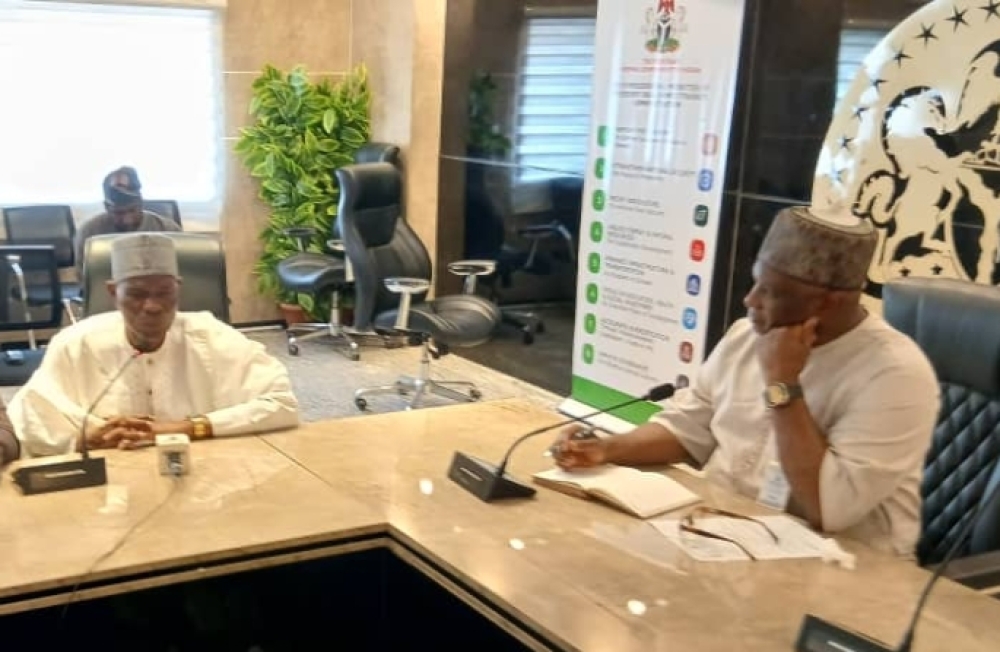
Belgore Receives ARCON's Leadership, Pledges closer collaboration The Permanent Secretary, Federal Ministry of Housing and Urban Development, Dr. Shuaib Belgore has played host to the leadership of the Architect Registration Council of Nigeria (ARCON) on a visit to the Ministry, pledging to work closely with them to move the housing sector forward. Dr Belgore, in his remarks, affirmed the importance of Architects in nation building, saying architects turned inhabitable sites to beautiful cities for human beings to live. He expressed his happiness to the delegation, that the lingering disputes among the professional bodies in the built environment has been resolved amicably, adding that the housing sector was now professionally stronger to deliver services. On the closer collaboration, Belgore stated "I understand that when it comes to any structure, building, architects are extremely important, therefore you can be assured of my cooperation." While reminding them of the ministry's projects; such as the National Housing Program and the Renewed Hope Housing Projects, he told them that he would continue to seek more clarification from their end, assuring that the Ministry will work closely with them to succeed. Comparing the current city of Abuja to what it was when it was first created as the Nigeria's capital, Dr Belgore said that Architects had turned a forest to a beautiful liveable city through their expertise, noting that their role in nation building was very visible for everyone to see. Speaking earlier, the ARCON President, Arch. Dipo Ajayi, who led a high - powered delegation of architects from various fields, emphasized the importance of collaboration in transforming Nigeria’s built environment. Arch Ajayi highlighted that tapping into the wealth of experience of the Permanent Secretary would significantly impact the architectural landscape, enabling growth and innovation. " Collaborating with the Ministry and leveraging the Permanent Secretary's expertise will take architecture to new heights and redefine Nigeria’s landscape," he stated. Reaffirming ARCON’s readiness to contribute, Arc. Ajayi expressed the council’s willingness to assist the Ministry in any capacity, urging the Permanent Secretary to empower architects by entrusting them with assignments that would allow them to execute and implement projects effectively. "We are ready to support the Ministry in every possible way. We seek empowerment that will enable us to maximize our potential in executing and implementing architectural projects for national development," he added. The meeting underscores ARCON’s dedication to fostering a strong partnership with the government to ensure architectural policies and projects align with the nation’s developmental goals. ...
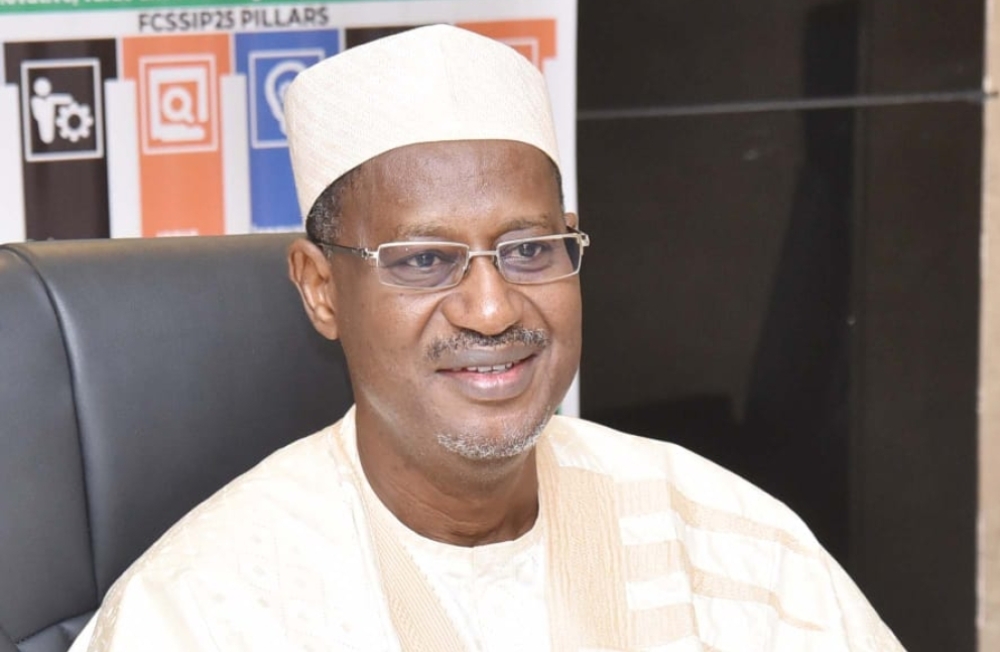
Dangiwa Lauds Mr. President for FEC Approval of N31bn Access Road to Karsana Renewed Hope City Abuja, Nigeria – Tuesday, February 4, 2025 – The Honourable Minister of Housing and Urban Development, Arc. Ahmed Musa Dangiwa, has extended his deepest appreciation to His Excellency, President Bola Ahmed Tinubu, GCFR, for his bold vision for housing development and consistent support towards achieving the goals of the Renewed Hope Agenda for housing and urban development. This commendation follows the approval of N31.66 billion by the Federal Executive Council (FEC) for the construction of a critical access road to the 3,112 Housing Unit Renewed Hope City in Karsana, Federal Capital Territory (FCT). The approval was granted during the FEC meeting held today, following the presentation of a memo by the Honourable Minister of the Federal Capital Territory (FCT), Bar. Nyesom Wike. The memo was in line with the Presidential Directive issued last year during the launch of the Karsana Renewed Hope City project by President Tinubu. The directive emphasized the need for proper infrastructure and accessibility to all Renewed Hope Housing Project sites across the country. Arc. Dangiwa described the approval as a significant milestone in the Tinubu administration’s efforts to address Nigeria’s housing deficit and ensure sustainable urban development. He noted that the construction of the access road will not only ease transportation to the Karsana Renewed Hope City but also open up the axis for rapid housing development and economic activities. “This approval demonstrates Mr. President’s unwavering commitment to providing affordable housing for Nigerians and ensuring that all Renewed Hope Housing Projects are supported with the necessary infrastructure. The construction of this road will enhance accessibility to the Karsana Renewed Hope City, making it easier for Nigerians to benefit from this landmark housing project,” Arc. Dangiwa stated. The Karsana Renewed Hope City is a flagship project under the Tinubu administration’s Renewed Hope Housing Programme, designed to deliver 3,112 housing units to Nigerians. The project is part of a broader strategy to bridge Nigeria’s housing gap and provide decent, affordable housing for all citizens. The Honourable Minister also commended the Honourable Minister of the FCT, Bar. Nyesom Wike, for his diligence in presenting the memo and ensuring that the project aligns with the administration’s vision. He reiterated the Ministry of Housing and Urban Development’s commitment to working closely with all stakeholders to deliver the Renewed Hope Housing Projects on time and to the highest standards. The construction of the access road is expected to commence soon, with the project being closely monitored to ensure timely delivery. ...
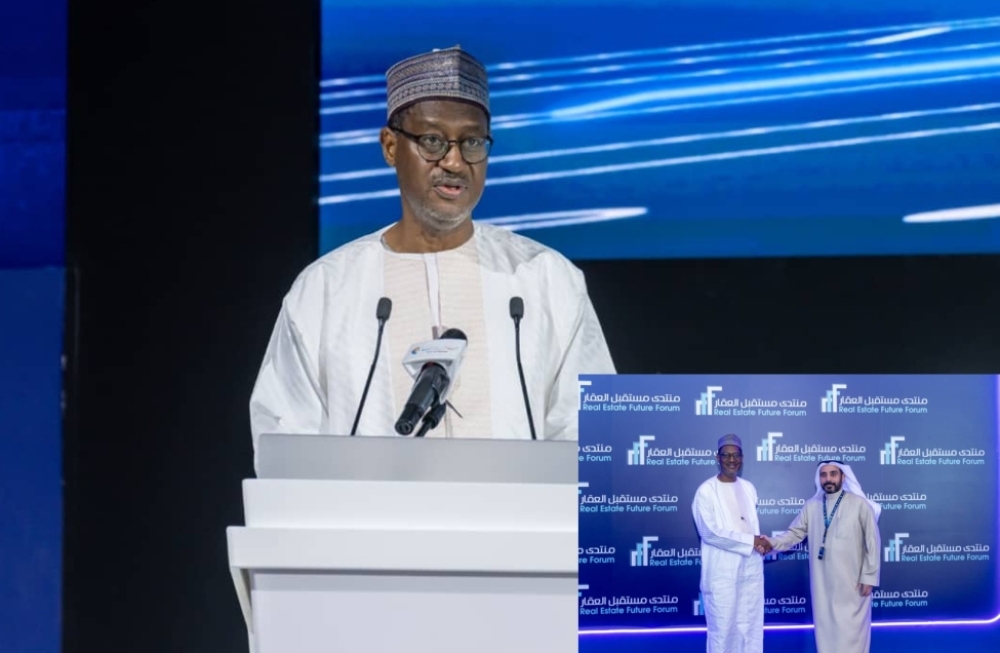
Housing Deficit a Big Opportunity for Transformative Change – Dangiwa • Advocates Public-Private Partnerships at the Saudi Arabia Real Estate Forum Riyadh, Saudi Arabia – The Honourable Minister of Housing and Urban Development, Federal Republic of Nigeria, Arc. Ahmed Musa Dangiwa, has described Nigeria’s housing deficit as both a challenge and an opportunity for transformative change. Speaking on Wednesday 29th January 2025 at the 4th Edition of the Real Estate Future Forum in Riyadh, Saudi Arabia, the Minister highlighted the Nigerian government’s commitment to addressing the housing shortfall through a blend of government finance and strategic public-private partnerships (PPP). Dangiwa commended the Kingdom of Saudi Arabia for its advancements in housing and urban development, noting that well-planned housing is essential for sustainable urban growth, economic prosperity, and improved living conditions. “With a housing deficit of over 20 million units and a rapidly growing population, Nigeria presents a vast opportunity for investment in affordable housing,” the Minister stated. “To bridge this gap, we need to build about 500,000 housing units annually over the next decade. He outlined Nigeria’s ambitious Renewed Hope Cities and Estates Programme, a government-driven initiative to deliver 100,000 housing units in the first phase. These developments, designed as integrated communities, will cater to all income levels, including high-end residences and affordable units for low- and middle-income earners. The Hon. Minister emphasized that affordability is central to the programme’s success, with mortgage loans, rent-to-own options, made available through the Federal Mortgage Bank of Nigeria. Beyond housing construction, Dangiwa listed the government’s plans to establish Building Materials Manufacturing Hubs (BMMHs) in each of Nigeria’s six geo-political zones. These hubs aim to reduce dependence on imported building materials, lower construction costs, and drive industrial growth. Additionally, he noted that the government is working to implement a Comprehensive Nationwide Social Housing Delivery Programme targeting vulnerable groups, aiming to provide 100,000 social housing units across Nigeria’s 774 Local Government Areas. Recognizing the scale of investment required, the Minister called on international investors, housing finance institutions, and reputable global developers to partner with the Nigerian government through Public-Private Partnerships. He assured investors of a conducive environment, including access to land, bankable offtake guarantees, and necessary concessions to ensure mutually beneficial collaborations. “The housing challenge in Nigeria is not just a problem; it is a massive opportunity for investment,” Dangiwa concluded. “By partnering with us, investors can play a crucial role in shaping the future of Nigerian housing while securing substantial returns on investment.” The Honourable Minister reaffirmed the government’s dedication to fostering an inclusive and sustainable housing sector and invited stakeholders to collaborate in building a prosperous and resilient urban future for Nigeria. The last day of the Saudi Real Estate Foprum featured presentations from notable international figures such as the former President of the United States, Mr. Bill Clinton, Mr. Tucker Carlson, Global Media Influencer and several other high profile speakers. ...
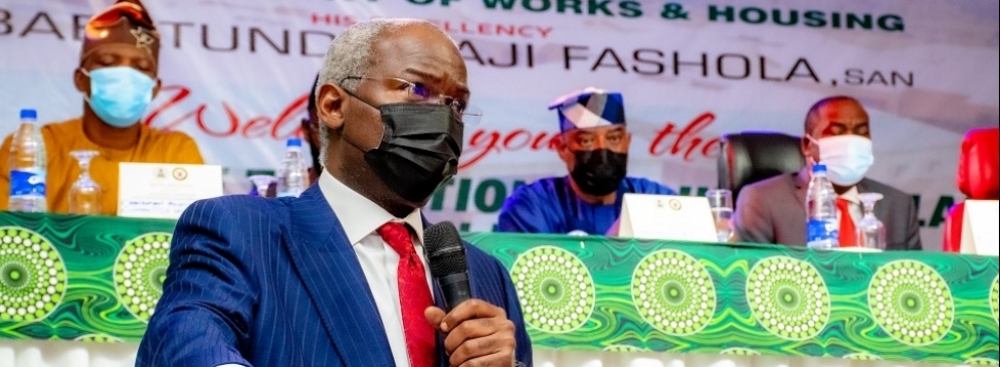
SPEECH DELIVERED BY H.E BABATUNDE RAJI FASHOLA, SAN AT THE 10TH MEETING OF THE NATIONAL COUNCIL OF LANDS, HOUSING AND URBAN DEVELOPMENT AT THE MARRIOTT HOTEL IKEJA LAGOS ON 21ST OCTOBER 2021
Ladies and gentlemen, let me start by thanking the Government, the Governor and people of Lagos, my home state, for accepting to host this 10th meeting of our National Council and for the top-class facilities they have placed at the disposal of the Council for this purpose.
My appreciation also goes to all the technical staff and resource persons who have worked since Monday the 18th to bring us to this climactic last day.
The unsung and unseen contributors who have worked behind the scenes, whose work is visible but whose faces are rarely seen I thank you for lending your hands to nation building.
To the Government and people of Lagos, I bring the goodwill and best wishes of the Federal Government and President Muhammadu Buhari for outstanding progress and success in your developmental goals and objectives and assure you of the Federal Government’s support.
At this year’s meeting we have decided to focus on how to create more jobs, foster social inclusion and accelerate economic development and this much is obvious in the theme of this meeting which is “Housing development as a catalyst for job creation, social inclusion and economic development.”
This decision is informed by many reasons including the unquestionable need to expand opportunities for Nigerian citizens by collective action of Government and private sector actions.
The decision is also informed by the commitment made by President Muhammadu Buhari on June 12, 2019 on behalf of Nigeria, to attempt to lift 100 million people out of poverty in a decade.
The decision is further informed by the reality that this commitment is a national and not a Federal Government commitment, because the Federal Government alone cannot achieve this objective without the state and local governments.
ALL OF GOVERNMENT ACTION
One reason why this will require an All of Government Action is the fact that land is a critical component of capital formation and it is controlled by the states (not the Federal Government) and I am persuaded that appropriate, targeted and purposeful use of land, such as for the development of housing by the states and private sector, will unleash prosperity in all states that aggregates to national prosperity.
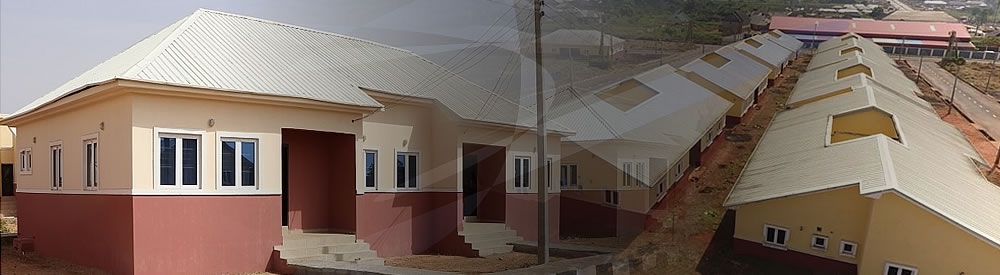
As you know, the Federal Government is undertaking a National Housing Program in all states (except Lagos and Rivers which has not started) aggregating to about 5,000 housing units, and trying to complete an inherited ministerial pilot housing scheme across the states which has a little over 6,000 units.
The Federal Housing Authority and Federal Mortgage Bank are also intervening as federal agencies in respective housing development directly, through cooperative societies and the provision of development loans and mortgage loans.
But all these account for only a small amount of the need across the nation for many reasons not excluding the limited amount of land available to these federal agencies.
These are some of the reasons why I seek to persuade all of you to go back to your states to persuade your Governors to re-commit to housing development.
I said recommit, because I am aware that many states are doing something, but you will agree that there is a scope to improve and scale up.
Lagos, since the days of the LEDB, LSDPC, Lateef Jakande has been and today in the time of Babajide Sanwo-Olu, remains an example of what state governments can do to deepen housing supply and reap the benefits that come with it.
Permit me to reflect on the benefits of some of them.
HOUSING, ECONOMIC DEVELOPMENTS AND JOBS
The first is that most of the land held by the states that is not developed either for farming, manufacturing housing or other use, is idle, less valuable, and therefore dead capital that earns little if any income and generates little if any economic activity.
But from the day a decision is made to build, activity is created, people are galvanized, manpower is required, jobs are created and an economic exchange that leads to productivity starts.
Bulldozers employed in clearing are hitherto idle plant and equipment that get put to use, they require diesel to operate, which has to be bought and supplied, transporters are involved to deliver them just as operators are employed to operate the bulldozers.
But before all this happens, some people have been employed in design, layout planning, soil test and other pre-construction activities.
When construction actively starts, the economic explosion happens, supplies of sand, cement, reinforcements, roofing, plumbing, painting, and other components get to work.
This drives a critical business in all our states, the micro small and medium enterprises who make or supply these building components.
The delivery of building materials engages transporters, drivers and lubricant suppliers, but this is only part of the story.
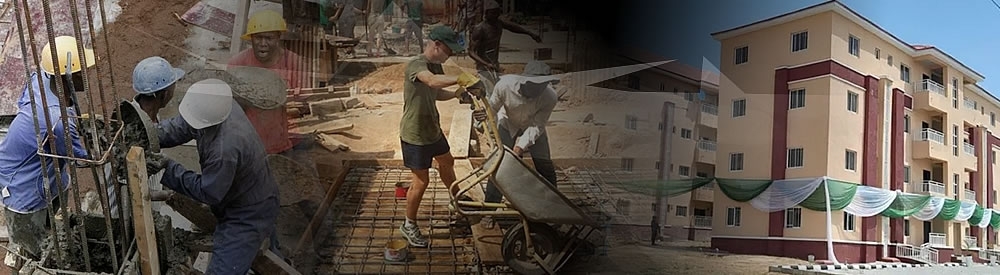
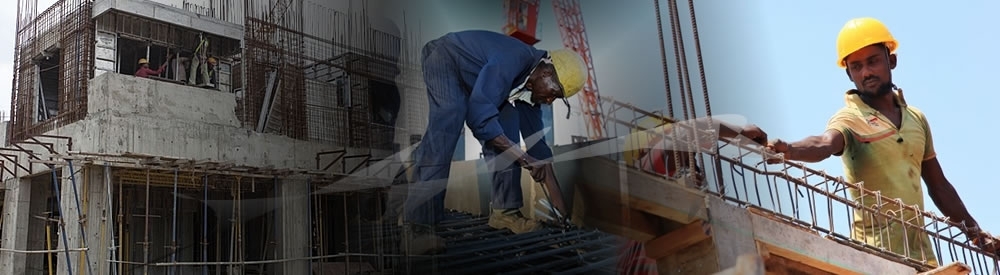
The final leg is the inclusion of the urban poor, the people who depend on daily or weekly wages, the skilled and unskilled workers, bricklayers, carpenters, welders, painters, plumbers, electricians and others who work the materials into the construction of a house.
Of course, there is indirect employment in vendors who supply food, water and sustenance to the workers daily for months.
This is personal income, that is taxable by the states and Lagos State has shown the example of what is possible not only with personal income tax as a source of prolific internally generated revenue, but also the impact of property tax with the Lagos land-use charge as an example.
If we can imagine the picture I am painting we can only see a picture of gainful employment, inclusiveness and income that heralds prosperity as the opposite of poverty.
But the story is not finished. It also leads to furnishing; carpets, beds mattresses, curtains, and other household equipment usually purchased when people move to new homes.
However, let me be clear, not every government can afford to build houses on scale and not all residents want government built homes. So some of the things that the government can also do is to provide infrastructure, roads, connection to electricity and water in site and service schemes, allocated to citizens to build according to their budget but in conformity with the planning order.
CAPITAL APPRECIATION AND PROPERTY TAXES
Apart from some of the benefits that come with building which I have highlighted above, the investment in infrastructure alone adds 30 to 40% to the value of the land which was hitherto of little or no value. Estate surveyors will confirm this to you.
Land that appreciates in value, yields more revenue when property taxes are computed without necessarily raising the rate of taxation.
Every time I visit a housing site that is under construction, I pay particular attention to the people working on site.
They are often happy; they have dignity; they are proud to work instead of beg.
They can go home to their families and put food on the table for their children.
More importantly, they feel included.
But the matter does not end there.
PLANNING/CONSTRUCTION PERMITS AND URBAN PLANNING
I have had the privilege of sitting as a member of the committee set up by President Buhari to facilitate the ease of doing business across Nigeria; a national rather than a federal government business.
One of the parameters where we need to improve upon, and which has hampered our rating as a country, is the number of days and the length of time it takes to get a construction permit or planning approval; and the cost of it.
We in government must consciously improve on the bureaucracy around granting of construction permits or planning approval by taking steps to reduce the number of people involved, introducing some level of automation, such as online submission of applications and reducing the cost of approval.
We must see revenue in a more broader sense, such as reduced income for planning approval, and increased income from consequential construction like income tax of employees on site, and a broader land use charge from more houses built.
Please permit me to make one final point about planning before I leave it.
All over the developed world it is easy to observe sports and tourist facilities connected by interstate highways and interstate rail.
It is not accidental that thousands of people go by train or buses to a sports or entertainment event and return by it. It is the result of planning.
I urge you to take the opportunity as the Federal Government continues to connect the interstate roads and build the national rail network to challenge your land managers and Town Planners to take large tracts of land, plan them for residential and business purposes and set aside land for sports, recreation and entertainment.
You will be investing in the future of prosperity of your states and your indigenes if you do so now.
LAND TITLE AND DOCUMENTATION
It is impossible to address such a gathering of policymakers without touching on title documentations of land.
An untitled land, in the words of Hernando De Soto is “dead capital.”
It is a cause of exclusion, because the land is not formatted into a recognizable way that enables a financial institution identify the owner.
Therefore, untitled land cannot attract credit like a mortgage or development finance because it is not in transferable form to constitute security or collateral.
All states who seek prosperity and inclusion for the people must commit to expeditious processing, GIS mapping and titling of their land.
Lagos state will tell you how much IGR comes from land transactions, but you must find out how much has been invested in GIS mapping, scanning of millions of pages of Land title documents and automation of the issuance of certificates of occupancy.
RENT
My dear colleagues, there is no debate that the world is a place of inequality; among nations and amongst people.
While we cannot make the world equal, we can commit to reducing inequality.
We may not be able to make all people homeowners, but we can reduce the number of those who lack shelter or live on the edge every so often when rent is falling due.
I am sure that our country will be a much better place when three years rent in advance, two years rent in advance or one year rent in advance for middle class and working family residential homes becomes monthly rent, payable at the end of the month.
Why we may not get there immediately, this is an area of immense exclusion that we can remedy by legislative action at state level.
This is a matter in which the Federal Government has no legislative competence. It is a matter for the states, and I urge you not to turn your backs.
Three years rent in advance of monthly salary paid in arrears lies at the heart of affordability of access to shelter.
All state legislators must see this as an important area of representation of their people to make life easier.
So must Governors and Commissioners through Executive bills.
I will close by asking these questions.
If not us, then who?
If not now, then when?
Thank you for listening.
Babatunde Raji Fashola, SAN
Honourable Minister of Works and Housing
Thursday 21st October 2021
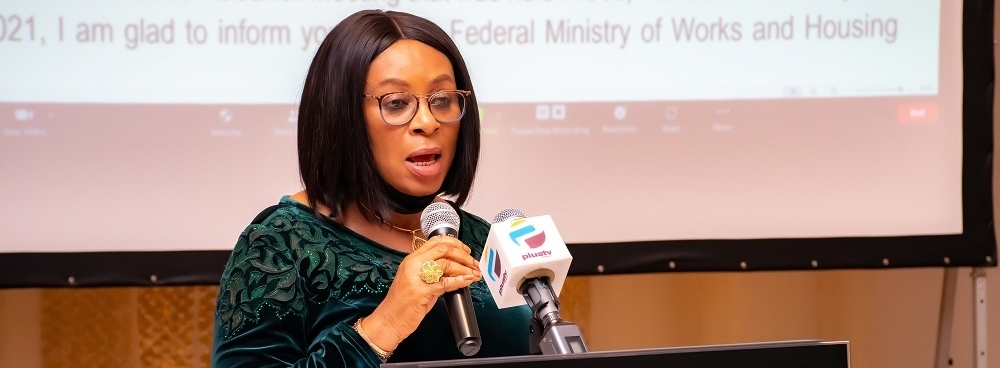
ADDRESS BY THE PERMANENT SECRETARY, FEDERAL MINISTRY OF WORKS AND HOUSING, ALHAJI BABANGIDA HUSSAINI, AT THE 10TH NATIONAL COUNCIL ON LANDS, HOUSING AND URBAN DEVELOPMENT, HELD AT MARRIOTT HOTEL, IKEJA, LAGOS ON WEDNESDAY, 20TH OCTOBER, 2021
Protocols
It is my pleasure to warmly welcome you to this crucial Technical Session (Permanent Secretary’s Segment) of the 10th Meeting of the National Council on Lands, Housing and Urban Development with the theme “Housing Development as a Catalyst for Job Creation, Social Inclusion and Economic Development”, holding right here in the beautiful and commercial City of Lagos State.
2. Our appreciation goes to Almighty Allah who graciously accorded us the opportunity to be alive today and granted us safe journeys to this meeting, having travelled from far and near.
3. May I seize this great privilege to commend the impressive support of the Government and good people of Lagos State for hosting this Meeting, especially His Excellency, Babajide Olusola Sanwo-Olu, the Executive Governor of the State to host this crucial National Meeting and also providing us with a conducive environment for this Meeting. The Officials of the Lagos State Government have also worked assiduously with the Staff of the Federal Ministry of Works and Housing, preparatory to these Meetings. These exemplary gestures clearly demonstrate the Lagos State Government’s commitment and support to all Projects, Programmes and various Initiatives of the Federal Government.
4. This year’s Theme “Housing Development as a Catalyst for Job Creation, Social Inclusion and Economic Development” is apt and timeous considering the commitment of the present Administration of President Muhammadu Buhari to address critical economic challenges confronting the Country and lifting 100Million Nigerians out of poverty through the creation of jobs and creating a just and egalitarian society through Social Inclusion.
5. Since the last 9th Council Meeting that was held in Jos, Plateau State this year, 2021, I am glad to inform you that the Federal Ministry of Works and Housing embarked on the construction of decent and affordable mass housing Nationwide under the “National Housing Programme” (NHP) and strengthened corroboration with the organized private sector under the “Public Private Partnership” (PPP) Programme to provide quality and affordable houses to Nigerians.
6. Completed Projects under this Programme have impacted massively on the National Economy through creation of direct and indirect jobs. The Federal Ministry of Works and Housing has assiduously worked with and supported the Federal Mortgage Bank (FMBN) and the Federal Housing Authority (FHA) to provide decent and affordable Houses to Nigerians in line with the Ministry’s Mandate and also the resolve of this Administration to expand the Infrastructure and Housing Stock of the Nation.
7. Ladies and Gentlemen, the task of ensuring that housing development serves as a catalyst for job creation, social inclusion and economic development rests on the shoulders of all the Stakeholders in the Industry. While we provide the leadership for achieving the set objectives, I urge all stakeholders in the Industry to make good use of the opportunity provided by this Council Meeting to deliberate on Memoranda submitted towards formulating and strengthening Policies that would address Housing Development in Nigeria.
8. While welcoming you once again, I wish you fruitful deliberations.

Housing Ministry, Shelter Advisory Convene Summit on Renewed Hope Housing PPP

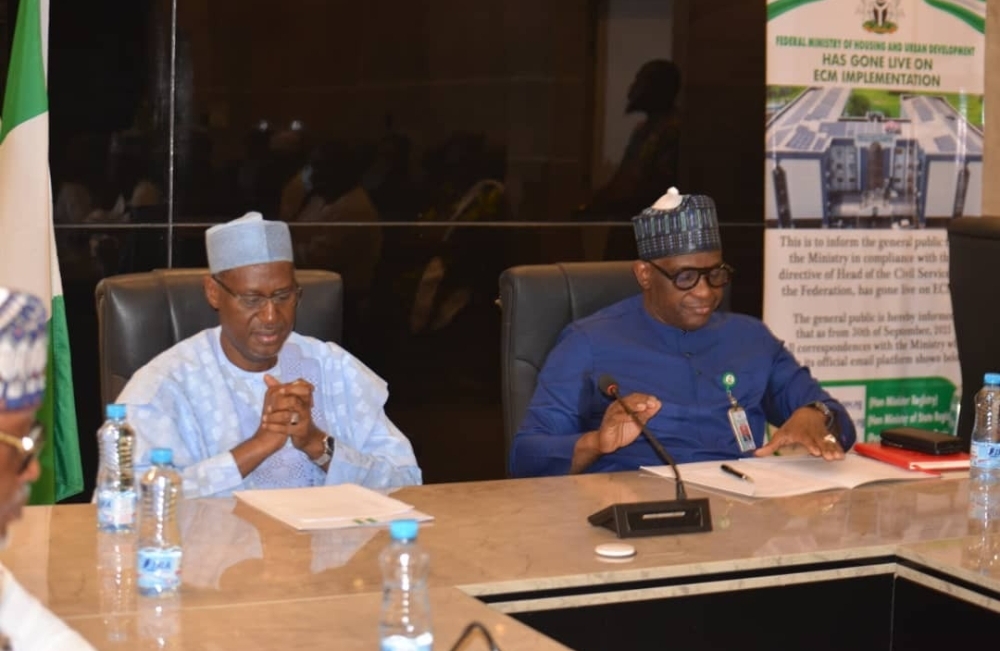
FMHUD 2025 STAFF AWARDS & RECOGNITION CEREMONY, MONDAY, MARCH 30, 2026
FMHUD 2025 STAFF AWARDS & RECOGNITION CEREMONY, Monday, March 30, 2026
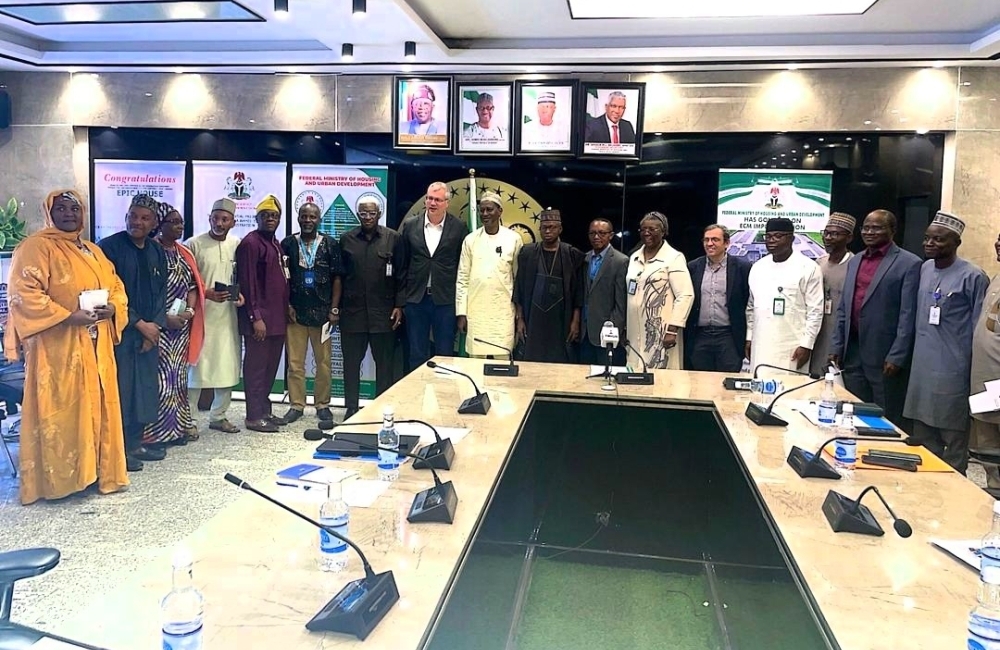
MEETING OF THE HON MINISTER, FMHUD AND HEAD OF UN HABITAT, WEST AFRICA HUB, DAKAR, MR MATHIAS, SPALIVIERO, WEDNESDAY, 25TH FEBRUARY, 2025
Meeting of the Hon Minister, FMHUD and Head of UN Habitat, West Africa Hub, Dakar, Mr Mathias, Spaliviero, Wednesday, 25th February, 2025